10 Social Media Strategy Books Worth Your Time (And How to Pick the Right One)
Most social media advice has a shelf life of about a week. Algorithms shift, formats trend and die, and the “hack” that worked last month quietly stops working. Books are the antidote: they trade fleeting tactics for the durable principles behind why people notice, trust, and share.
This guide covers ten titles worth reading, sorted by what problem each one solves. There’s also a comparison table so you can match a book to your current gap in about thirty seconds, plus a short list of classics if you want to go deeper.
How to choose the right book for you

Start with your actual gap, not the bestseller list. A few honest questions:
- Are you missing fundamentals or advanced tactics? Newcomers get more from principle-driven books like This Is Marketing or Influence. Experienced marketers get more from execution-focused titles.
- Is your weak spot strategy, psychology, visuals, or community? Each maps to a different book below.
- Do you need timeless thinking or current-platform specifics? Principles age well; platform-specific advice (algorithm changes, AI tools) dates faster and needs a more critical read.
Pinpoint the gap first, and every chapter you read does more work.
Quick comparison
| Book | Author(s) | Best for | Level |
|---|---|---|---|
| The Guide to Going Viral | Brendan Kane | Repeatable, shareable content | All levels |
| This Is Marketing | Seth Godin | Audience-first strategy | Beginner → Advanced |
| Platform | Cynthia Johnson | Personal branding | Beginner → Intermediate |
| Design Better and Build Your Brand in Canva | Laura Goodsell (with Janine Friston & Heather Palfreyman) | Visual content skills | Beginner |
| Building Brand Communities | Carrie Melissa Jones & Charles H. Vogl | Turning followers into a community | Intermediate → Advanced |
| Influence | Robert Cialdini | Persuasion psychology | All levels |
| Effective Social Media Marketing | Trailblazer Strategies (Troy Jolley) | Algorithms & AI basics | Beginner |
| Clear Thinking | Shane Parrish | Decision-making & focus | All levels |
| Faster, Smarter, Louder | Aaron Agius & Gián Clancey | Agency-tested growth tactics | Intermediate |
| Stories That Stick | Kindra Hall | Storytelling craft | All levels |
The ten books
1. Mastering virality — The Guide to Going Viral by Brendan Kane
Full title: The Guide to Going Viral: The Art and Science of Succeeding on Social Media. Kane, founder of the agency Hook Point and author of One Million Followers and Hook Point, argues that going viral is a process, not luck. Drawing on his background in film and digital strategy, he frames content creation like directing: you’re the writer, producer, and director of a short story built to be watched and shared.
The book’s core tools — his “Viral Content Model,” “Viral Formats,” and “Communication Algorithm” — give you a repeatable way to structure content for attention. Worth noting: some readers find it stronger on why things go viral than on granular step-by-step how-to, and it leans toward video. If you want a framework for thinking about shareability, it delivers.
2. Seeing through the noise — This Is Marketing by Seth Godin
This Is Marketing: You Can’t Be Seen Until You Learn to See is Godin’s argument for empathy over attention-grabbing. Rather than pushing messages at everyone, he pushes you to understand the specific people you serve and to focus on the “smallest viable audience” — the people who genuinely care about your work.
The payoff is a mindset that survives algorithm changes: serve before you sell, build trust through consistency, and let word of mouth expand your reach. It’s short on platform tactics by design, and long on the thinking that makes any tactic land.
3. Building a personal brand — Platform by Cynthia Johnson
Platform: The Art and Science of Personal Branding treats your online identity as seriously as a résumé. Johnson gives you a practical method for auditing your current image, tightening your messaging, and keeping your voice consistent across channels.
The strength here is accessibility — you don’t need a marketing background to follow it. It’s especially useful if your goal is credibility, industry authority, or opening career doors, rather than selling a product.
4. Design that converts — Design Better and Build Your Brand in Canva by Laura Goodsell
Written by Canva design coach Laura Goodsell (with contributors Janine Friston and Heather Palfreyman, published by Packt), this is a hands-on beginner’s guide to producing professional graphics without prior design experience. It walks through setting up a brand kit, using templates, and creating presentations, video, and animated posts.
It’s narrowly focused — this is a Canva skills book, not a strategy book — which is exactly its value if visuals are your bottleneck. Note that Canva’s interface changes often, so specific menus may look different from the book’s screenshots, but the design principles hold.
5. Fostering community — Building Brand Communities by Carrie Melissa Jones & Charles H. Vogl
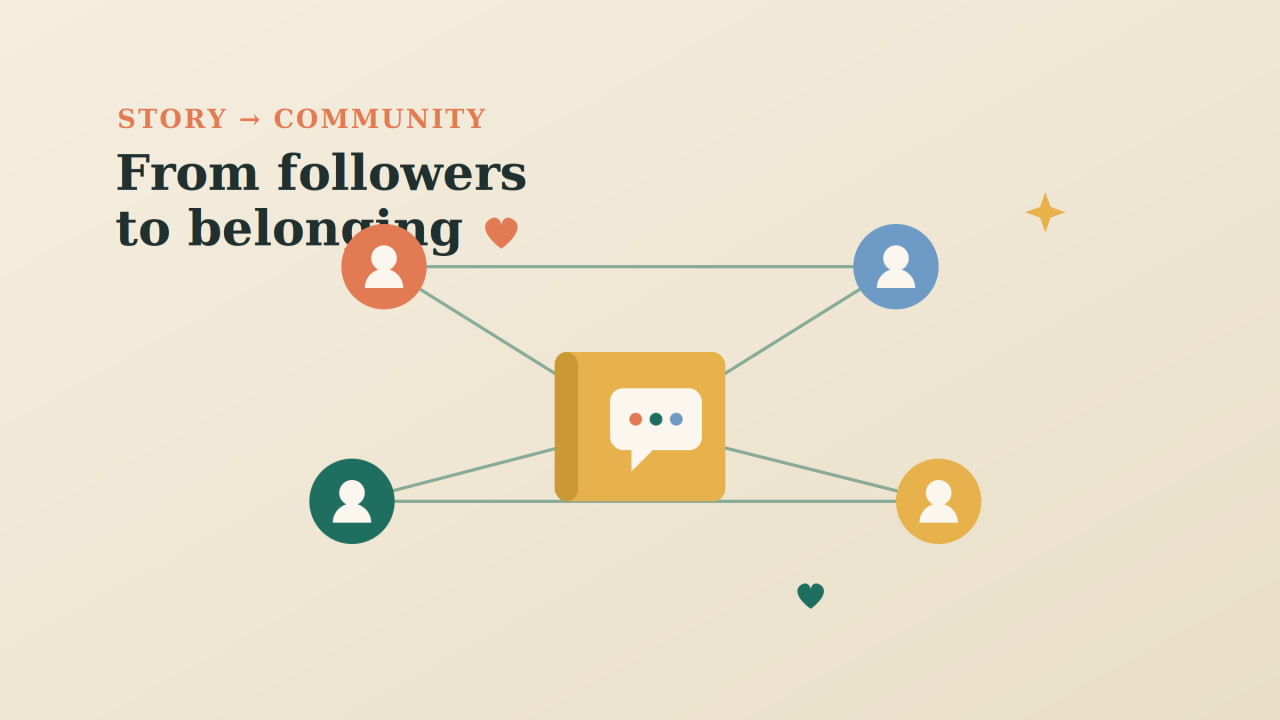
This one shifts attention from follower counts to belonging. Jones and Vogl make the case that people want to be part of something, not just consume content, and they lay out how rituals, shared purpose, and consistent engagement turn passive audiences into active contributors.
It’s more conceptual than tactical, so pair it with a hands-on book if you want implementation detail. But for understanding why communities cohere — and how advocacy spreads from genuine inclusion — it’s one of the clearest treatments available.
6. Winning with psychology — Influence by Robert Cialdini
Influence: The Psychology of Persuasion is the classic on why people say yes. Cialdini’s six principles — reciprocity, commitment and consistency, social proof, authority, liking, and scarcity — underpin an enormous amount of effective marketing.
For social media, the applications are direct: testimonials as social proof, expert positioning as authority, genuine rapport as liking. The book isn’t about manipulation; it’s about understanding motivation. And because it’s grounded in human psychology rather than platforms, it doesn’t date.
7. Adapting to change — Effective Social Media Marketing by Trailblazer Strategies
This one focuses on current platform mechanics: how algorithms shape reach, and how AI tools now drive recommendations and ad targeting. It aims to make automation and optimization feel approachable for entrepreneurs and small-business owners.
A note on context: this is a self-published title (Trailblazer Strategies is the brand of author Troy Jolley), not an established industry text like the others on this list. That doesn’t make it useless — it’s a reasonable beginner primer on algorithms and AI — but treat platform-specific claims critically and verify anything time-sensitive, since this category ages fast.
8. Clarity in strategy — Clear Thinking by Shane Parrish
Parrish’s book isn’t about social media specifically — it’s about making better decisions. For marketers stuck in reactive mode, always scrambling to respond to the latest change, it offers a way to move from autopilot to deliberate choice: recognize opportunities, prioritize high-impact work, and avoid the traps of scattered thinking.
If decision fatigue and constant firefighting are your real problem, this addresses the root cause that tactical books skip over.
9. Amplifying your impact — Faster, Smarter, Louder by Aaron Agius & Gián Clancey
Faster, Smarter, Louder: Master Attention in a Noisy Digital Market comes from the founders of the agency Louder.Online, drawing on real client work with brands like Salesforce and IBM. The emphasis is on building genuine engagement and a distinct voice, rather than churning out generic content calendars.
Its strength is practicality — it reads like lessons from people who’ve done the work — with a throughline on adaptability as platforms shift.
10. Unforgettable storytelling — Stories That Stick by Kindra Hall
Hall gives you a practical framework for building narratives that hold attention in a crowded feed. Rather than chasing viral trends, she shows how authentic stories create lasting impressions and turn casual viewers into loyal followers.
The value is in the actionable structure: how to craft a story, when to use one, and how storytelling builds genuine connection. If your content is technically fine but forgettable, this is the fix.
Going deeper: enduring classics
Once you’ve covered the essentials, these older titles remain influential on authenticity, trust, and community:
- The Cluetrain Manifesto — markets as human conversations
- Trust Agents by Chris Brogan & Julien Smith — building online credibility
- Enchantment by Guy Kawasaki — winning people over ethically
- The New Rules of Marketing and PR by David Meerman Scott — reaching audiences directly
- Inbound Marketing by Brian Halligan & Dharmesh Shah — attracting rather than chasing customers
FAQ: What’s the single best book for online marketing?
There isn’t one — it depends on your gap. But if forced to recommend starting points:
- Fundamentals and mindset: This Is Marketing (Godin)
- Persuasion psychology: Influence (Cialdini)
- Hands-on digital tactics: The New Rules of Marketing and PR (Scott)
- Attracting customers with content: Inbound Marketing (Halligan & Shah)
- Personal brand or community: Platform (Johnson) or Building Brand Communities (Jones & Vogl)
The bottom line
The right book gives you more than tactics — it gives you a foundation that outlasts the next algorithm update. Pick one title that matches your current challenge, whether that’s mastering Canva or understanding persuasion, and put a single idea into practice this week. Small, deliberate changes compound faster than another scroll through trending tips.

Related Posts