
If you want better AI search visibility, you need to stop thinking only about rankings and start thinking about AI citations. ChatGPT, Perplexity, and Gemini do not cite businesses just because a brand exists. They cite pages that are easy to retrieve, easy to understand, and easy to trust. That means your goal is not “be everywhere.” Your goal is to become one of the AI answer sources that these systems can confidently pull into an answer.
This guide is built for action. You will learn how to get cited by AI, which pages are most likely to earn ChatGPT citations, Perplexity citations, and Gemini citations, how to structure your content so systems quote it accurately, and how to audit citation accuracy before you publish anything that depends on a generative AI citation. If you apply the workflow below, you can start improving your odds immediately.
What “AI citations” means for a business
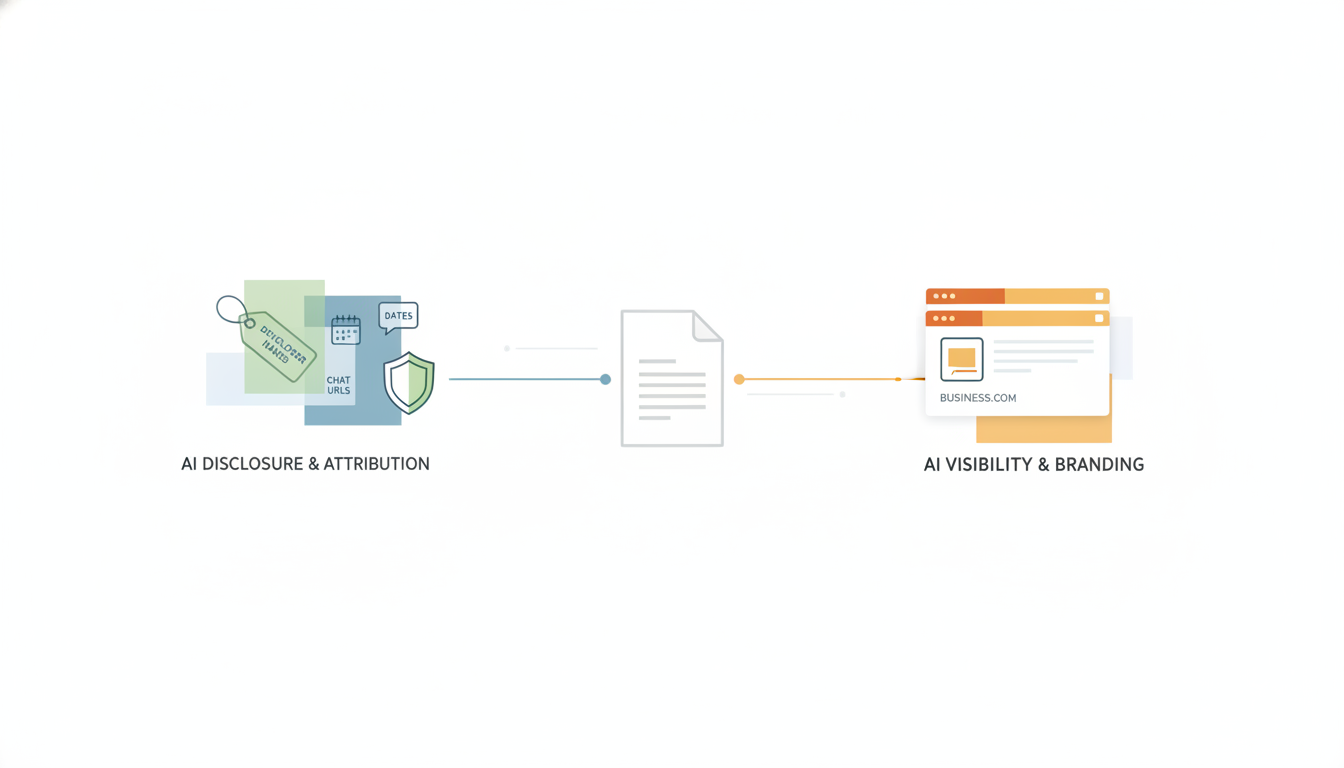
For businesses, AI citations matter in two different ways, and mixing them up creates bad strategy. One meaning is disclosure: AI citations are used to disclose and attribute generative AI use for transparency and proper attribution. The other meaning is discoverability: a business wants its own pages to be cited as sources inside AI-generated answers.
This article focuses mainly on the second meaning, but the first still matters. If your team used AI to help create writing, summarizing, translating, editing, brainstorming, or code generation, that use should be disclosed and cited when appropriate. Modern AI chat tools often provide unique URLs for individual chats, which makes citing a specific conversation possible. A citation for a specific AI chat usually includes the developer, date, title, a bracketed description such as generative AI chat, the tool or model name, and the chat URL. When citing the tool generally, the reference usually includes the company, year, tool or model name, a description such as large language model, and the tool URL. Prompts are usually documented in the text, a methods section, or an appendix rather than formal references, and version numbers are no longer the default priority when a model name is available.
That disclosure layer is about trust. The discoverability layer is about visibility. Businesses need both.
The shortest path to getting cited by AI
If you need the quick answer, here it is: publish source-worthy pages that answer narrow questions clearly, show who is responsible for the information, and make important facts easy to extract without guesswork. AI systems are much more likely to cite clean, attributable, well-scoped pages than broad marketing copy.
- Choose questions people actually ask AI tools.
- Create a page that answers one question better than your homepage or sales page can.
- Add precise facts, definitions, steps, limits, and examples that can be quoted safely.
- Show clear ownership, update responsibility, and business identity.
- Test the page in ChatGPT, Perplexity, and Gemini with multiple prompts.
- Fix ambiguity where the systems misquote, overgeneralize, or skip your page.
That is the operating model. Everything else in this guide helps you execute it with fewer mistakes.
How ChatGPT, Perplexity, and Gemini choose citation targets differently enough to matter
You do not need a perfect reverse-engineered model of each system. You do need a practical understanding of what each one tends to reward, because the same page can perform very differently across tools.
| System | What it often does well | Common citation risk | What your business should optimize for |
|---|---|---|---|
| ChatGPT | Can provide inline citations or a sources panel when search is enabled | Quoted data, technical claims, and references still need verification | Clear claim-to-source alignment and quotable passages |
| Perplexity | Frequently foregrounds source links as part of the answer experience | May surface a source that is topically related but not the strongest support for a specific claim | Direct answers near the top of the page and strong passage clarity |
| Gemini | May cite sources used in workspace-based answers | May miss a source it used or cite a source that does not directly support a specific claim | Explicit wording, source transparency, and low ambiguity |
The decision rule is simple. Do not optimize for “brand mention density.” Optimize for extractability. If a model can lift a passage, preserve the claim, and attach it to a clear source, you are in a much better position to earn AI source attribution.
Which pages are most likely to earn AI citations
Not every page on your site is equally useful to an answer engine. If you want your business cited, start by building pages that function like reliable reference points, not just conversion assets.
Pages that define something precisely
Glossary pages, explainer pages, standards pages, and policy pages often work well when they are specific and not padded with sales language. AI systems like pages that answer “what is,” “how does,” “when should,” and “what is the difference between” in plain language.
Pages that document a process step by step
Tutorials, implementation guides, setup instructions, migration checklists, and troubleshooting pages give AI systems something highly usable: ordered information. A model can cite one step, compare steps, or summarize the whole page while preserving structure.
Pages that state a business’s original position clearly
Your homepage usually tries to do too much. A better citation target is a focused page that says exactly how your product works, what it supports, what it does not support, and which scenarios it fits. That kind of clarity helps both users and answer engines. When teams are improving these pages, many of the same habits overlap with seo content best practices, but the AI-citation layer is stricter about passage clarity and attribution.
Pages with named ownership and maintenance signals
Pages become more trustworthy when a business makes responsibility visible. That can mean a clear company name, author or editorial owner, last reviewed note, support contact, and internal consistency across the site. AI tools do not need every page to look academic, but they do benefit from pages that feel attributable rather than anonymous.
How to structure your content so AI systems cite it accurately
This is where most businesses underperform. They publish useful information, but the page is written in a way that forces an AI system to infer too much. If you want citation accuracy, reduce inference. Good AI citation targets are pages that can be excerpted cleanly without distorting the meaning.
Use a claim-evidence pattern inside the page
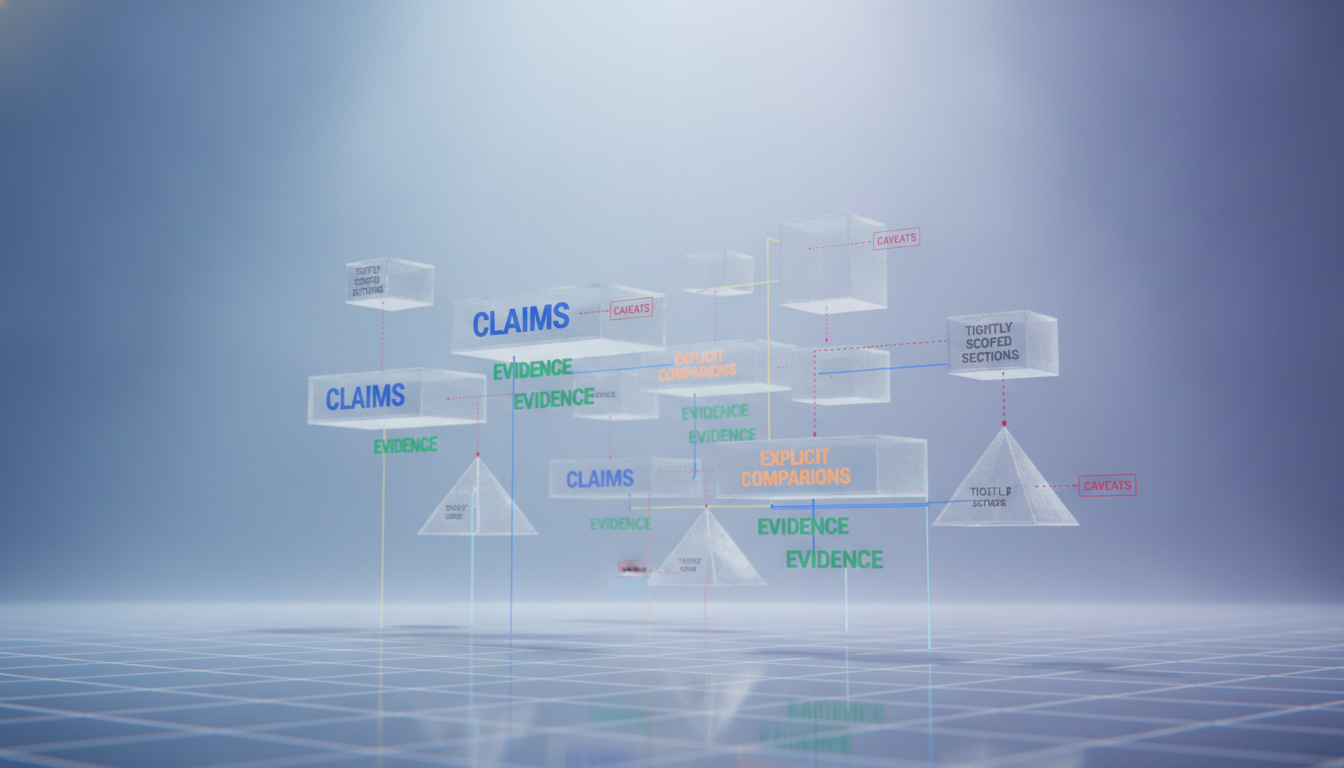
State the answer first, then support it immediately. A weak pattern is three paragraphs of context followed by one buried takeaway. A stronger pattern is a direct answer sentence, a short explanation, and then examples, exceptions, or steps. That layout gives an AI system a clean citation unit.
Keep each section tightly scoped
One section should answer one sub-question. Do not define a term, compare alternatives, pitch your service, and discuss pricing all in the same block. When sections are mixed-purpose, models often pull the wrong sentence to support the wrong claim.
Write passages that survive being quoted out of context
A citation target should still make sense if only two or three sentences are extracted. Replace vague references like “this,” “it,” and “they” with the actual noun where needed. Repeat the entity name when clarity matters. If you are writing about onboarding software, say “the onboarding workflow” rather than “this process” when the paragraph could be lifted on its own.
Put caveats next to the claim, not 600 words later
If a statement has limits, add them nearby. This is critical for product capability pages. A system may cite the first clean claim it sees and miss the qualification buried later in the article. Tight claim-and-limit pairing improves citation accuracy and reduces misleading extractions.
Prefer explicit comparisons over implied ones
If your page says a tool is “better,” define better. Faster setup? Fewer approvals? More suitable for small teams? Answer engines are much more reliable when the comparison criteria are written plainly instead of implied through marketing tone.
For businesses publishing at scale, this discipline matters even more than volume. A smaller library of tightly structured, source-worthy pages usually beats a large library of generic posts generated with ai content marketing tools and left unedited.
A practical workflow to create pages that get cited
You do not need a giant content program to start. You need a repeatable editorial workflow that turns customer questions into citation targets.
- Collect real prompts. Pull questions from sales calls, support tickets, demos, community posts, and internal search logs.
- Cluster by intent. Group questions into definitions, comparisons, how-to tasks, troubleshooting, policy clarification, and product fit.
- Create one primary page per cluster. Each page should solve one user problem completely enough that an AI model can rely on it.
- Answer in layers. Start with a direct answer, then steps, then edge cases, then examples.
- Add attribution signals. Make the publisher, editor, reviewer, and update ownership visible where appropriate.
- Test extraction. Ask major AI tools the target question and see whether your page is cited, misread, or ignored.
- Revise for extractability. Tighten headings, sharpen answer blocks, and move key qualifiers closer to the claims they limit.
This is also where topical authority building becomes useful. AI systems do not judge a page only in isolation. A surrounding body of consistent, well-scoped content helps reinforce that your business is a credible source on a subject.
How to improve your chances of getting cited in each platform
The core rules travel well across tools, but the testing mindset should be platform-specific. If your business serves a niche audience, small wording changes can affect which source a model chooses.
For ChatGPT citations
When search features are active, ChatGPT can show inline citations or a sources panel. That is helpful, but not enough by itself. To increase your chances, make your source page easy to quote in one pass: a direct headline, a short answer block near the top, and clear supporting detail below it. If your best explanation starts halfway down the page after a brand story, ChatGPT may never treat that page as the strongest extractable source.
For Perplexity citations
Perplexity often behaves like a synthesis engine with visible sourcing. Pages that perform well there usually answer a narrow question directly and avoid burying the answer under lead-generation copy. Your page should read like something a researcher would save, not just skim. Definitions, how-to steps, and product capability clarifications tend to work better than slogan-heavy category pages.
For Gemini citations
Gemini may cite sources in workspace-based answers, but source matching can still be imperfect. That means ambiguity is expensive. If your content includes statements that require conditions, put those conditions in the same paragraph. If a product feature applies only to one plan, one region, or one workflow, say so immediately. Gemini is more useful to you when your page leaves little room for optimistic interpretation.
How to audit AI-generated citations before you publish business content
This is the step many teams skip, and it is where reputational mistakes happen. If you are publishing articles, reports, landing pages, or thought leadership that reference AI-generated outputs, do not trust the citation layer blindly. ChatGPT and Gemini both make verification necessary, even when they provide source references.
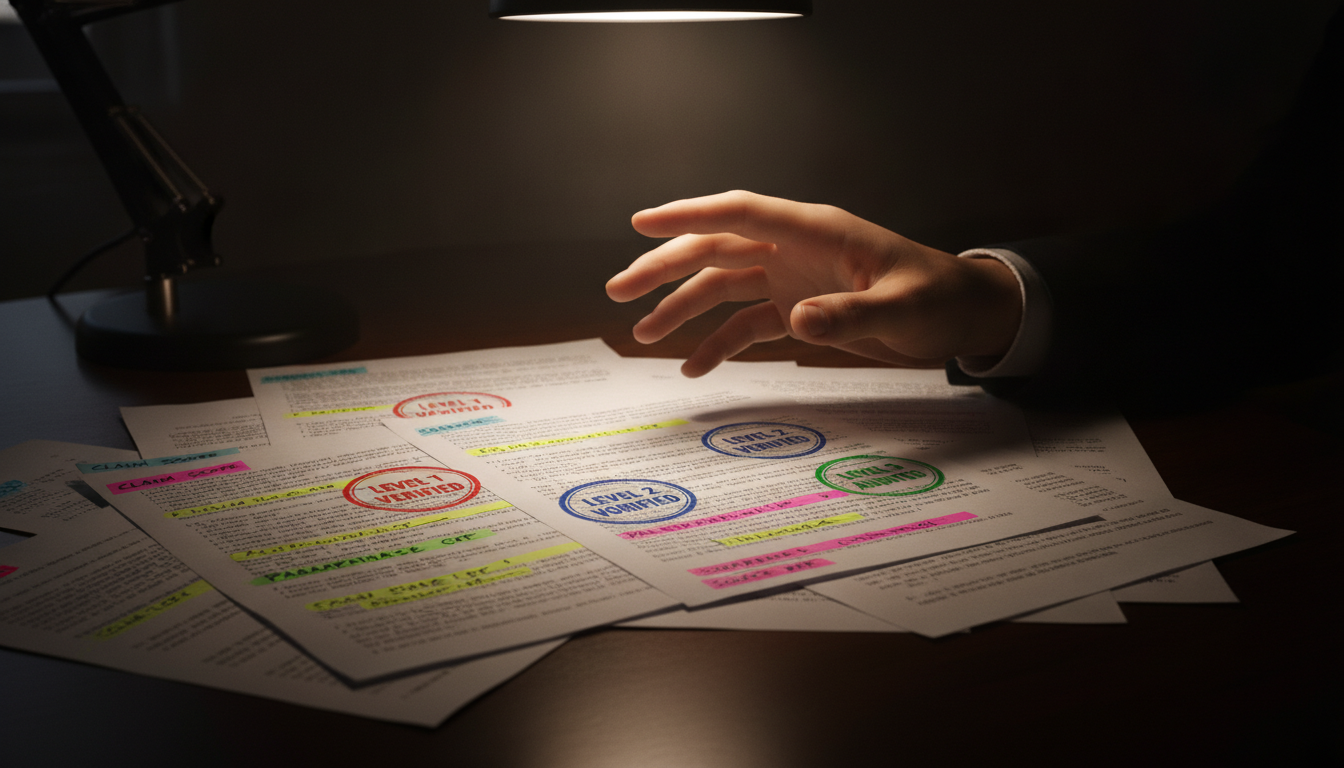
Run a three-level citation check
Check every AI-provided source at three levels: first, does the cited page exist and load; second, does it actually contain the claim; third, does it support the exact wording and scope used in your draft. Many citation failures happen at level three. The source is real, but the claim in your article is stronger, broader, or more specific than what the source actually says.
Match claim scope carefully
If the AI answer says “best for enterprise teams,” open the source and verify whether the page truly supports “enterprise,” “best,” and “teams.” Very often the source only supports a softer claim such as “used by larger organizations” or “includes admin controls.” Your published wording must shrink to match the evidence, not the other way around.
Check quote integrity and paraphrase drift
If the AI output gives you a quote, compare it character by character against the original page. If it gives you a paraphrase, compare meaning. Generative systems can compress, blend, and round off wording in ways that look harmless but change legal, technical, or commercial meaning.
Document the AI use separately from the source evidence
If your team used an AI system to brainstorm, summarize, or draft, disclose that use where appropriate. If you need to cite a specific chat, use the unique chat URL and standard reference elements. But do not confuse that disclosure with source verification. A generative AI citation tells readers how AI was used; it does not prove that the underlying factual claim is supported.
A simple prompt set to test whether your pages are citation-ready
You do not need advanced tooling to start diagnosing weaknesses. Ask the same question in several ways and compare whether your page appears, disappears, or gets misrepresented.
- “What is [topic]?”
- “How does [topic] work?”
- “Best practices for [task]”
- “Compare [your category] vs [adjacent category]”
- “When should a company use [your approach]?”
- “Common mistakes in [your workflow]”
Then review the answers for three signals:
- Your page is cited and the claim is reproduced accurately.
- Your page is cited but the answer distorts your meaning.
- Your page is not cited, but a weaker or less precise source is.
Each signal tells you what to fix. Distortion usually points to ambiguous wording. Non-citation often points to poor page targeting, weak extractability, or a lack of a clean answer block near the top.
Common reasons businesses fail to earn AI source attribution
Most citation problems are not technical mysteries. They are editorial problems. Businesses often publish pages that make retrieval and extraction harder than necessary.
- The page tries to do too many jobs. It explains, sells, compares, and captures leads all at once.
- The answer is buried. Key information appears only after long intros, brand positioning, or repeated CTAs.
- The wording is vague. Pronouns and implied comparisons force the model to infer meaning.
- Claims lack visible limits. Qualifications appear too late or not at all.
- The source looks anonymous. No clear owner, editor, or company responsibility signal.
- The site has shallow topical depth. One decent page can help, but a coherent set of related pages usually helps more.
Notice what is missing from that list: hacks. There is no reliable shortcut that replaces clear information architecture and disciplined writing.
What to build in the next 30 days
If your business wants practical momentum, do not start by rewriting every page. Start with a small set of citation-focused assets and improve them based on real AI retrieval behavior.
- Create three high-intent pages: one definition page, one how-to page, and one comparison or decision page.
- Add a direct answer section within the first screen of each page.
- Rewrite each major section so it can be quoted independently without losing meaning.
- Add visible ownership and review signals where appropriate.
- Test the pages in ChatGPT, Perplexity, and Gemini using multiple prompts.
- Log where the systems cite you, miscite you, or ignore you.
- Revise the pages based on those observations, not guesswork.
This plan is manageable for most teams, and it creates a feedback loop quickly. You are not just publishing content. You are training your site to behave like a dependable citation target.
Why the best AI citation strategy looks more like editorial design than SEO theater
The businesses that win AI citations are usually not the ones chasing novelty. They are the ones publishing pages that answer a question cleanly, own their claims, and reduce ambiguity enough that an answer engine can safely reuse the passage. That is why this work sits somewhere between technical SEO, editorial standards, and product documentation.
If you remember one rule, make it this: write for extraction without writing out of context. Your page should satisfy a human reader from top to bottom, but every important section should also stand on its own when a model lifts it into an answer. That is the operating standard for durable AI search visibility.
Turning your business pages into reliable AI citations
Getting cited in ChatGPT, Perplexity, and Gemini is not mainly about persuading the model to like your brand. It is about making your information safe to quote. A source-worthy page has a tight scope, a direct answer, visible ownership, and claims that are paired with their limits. When those elements are present, AI answer sources have less room to misread you and more reason to cite you.
The other half of the job is discipline after publication. Test your pages in the major systems, watch where citation accuracy breaks, and revise for clarity instead of chasing tricks. Businesses that treat AI citations as an editorial quality problem will usually outperform businesses that treat them as a visibility hack. That is the practical path to better generative AI citation outcomes in 2026.
If you want to know where you stand right now, scan your site free to check whether ChatGPT, Perplexity, and Gemini actually cite your business — no credit card needed.

Related Posts