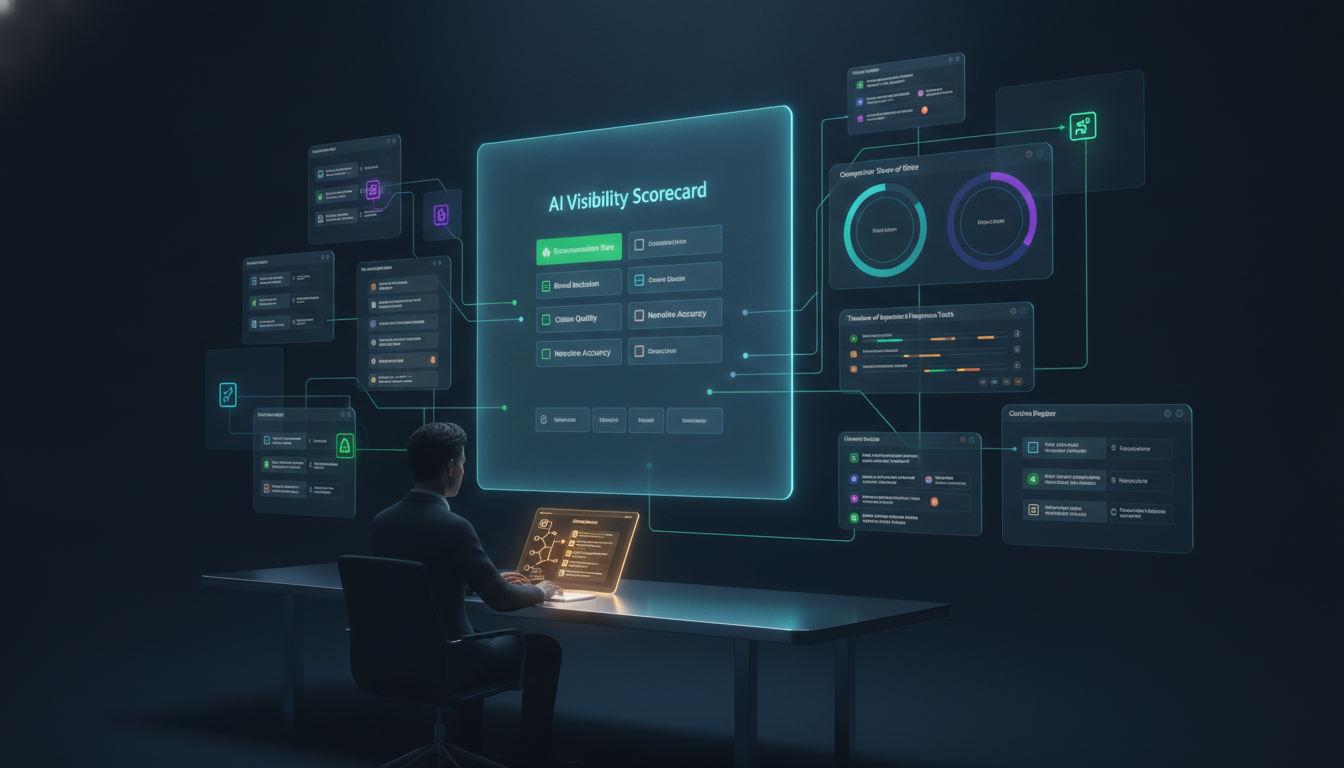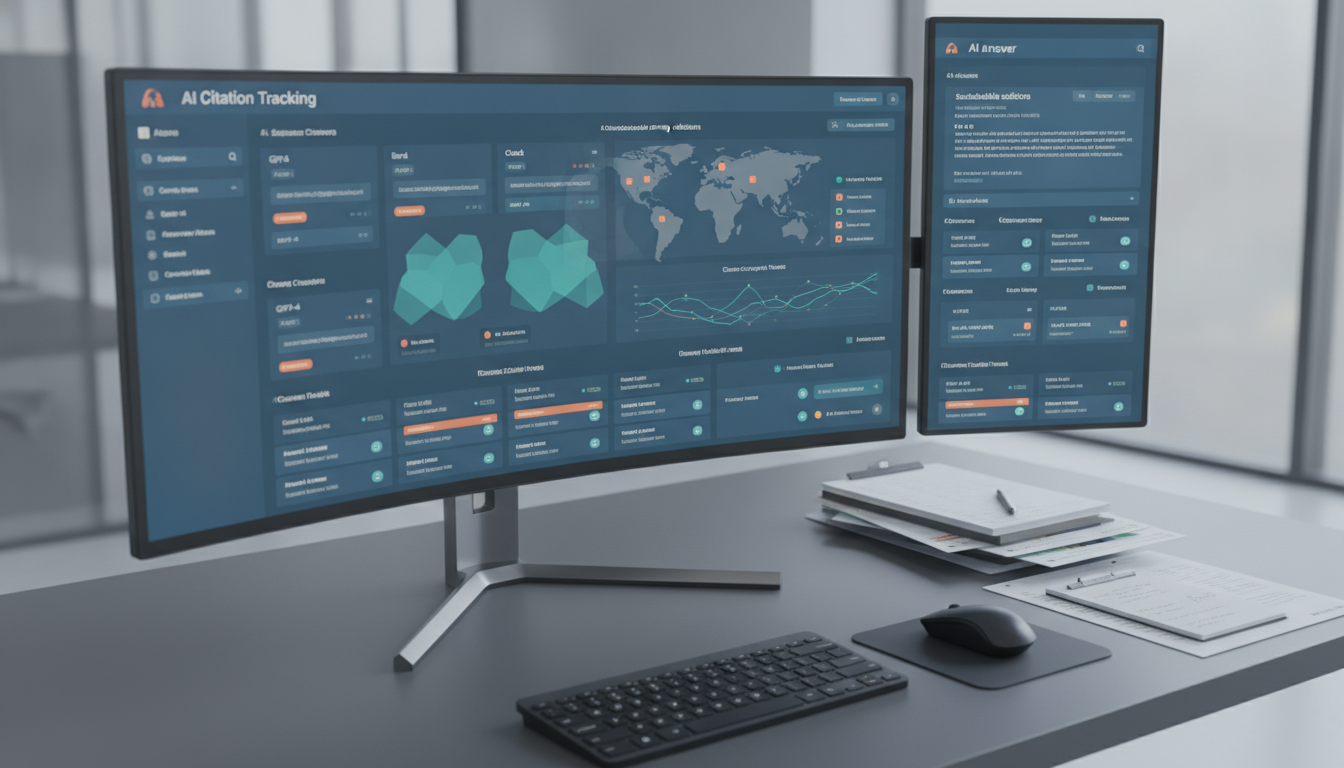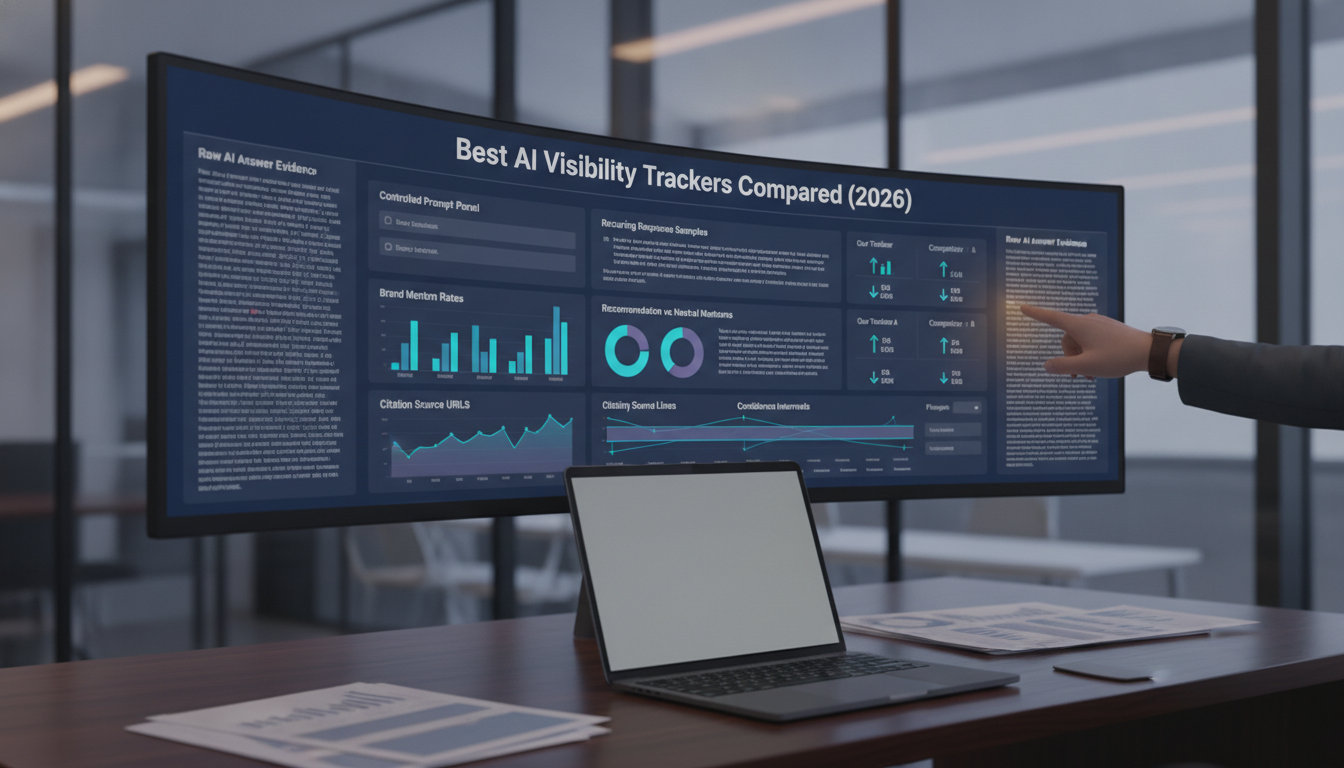
A chatgpt visibility tracker should do more than tell you whether ChatGPT mentioned your brand once. The useful tools repeatedly test controlled prompts, preserve the full answers, identify competitors, and separate a casual mention from an actual recommendation or citation. That distinction determines whether your team has a signal worth acting on or an attractive dashboard with little evidence behind it.
This comparison is designed for marketers, SEO teams, agencies, and founders choosing AI visibility monitoring software in 2026. The short answer: choose Planmoon when you need focused ChatGPT and AI-search reporting with an approachable workflow; choose Profound or Scrunch AI when enterprise-scale governance and cross-team reporting matter most; choose Peec AI for broad AI search visibility analysis; choose Otterly.AI for practical ongoing monitoring; and consider Semrush AI Visibility Toolkit if your existing search workflow already lives in Semrush.
What a ChatGPT visibility tracker actually measures
A ChatGPT visibility tracker repeatedly submits a defined prompt set and records how a brand, product, person, or competitor appears in the answers. It is a sampling system, not a measurement of every ChatGPT conversation or the total number of people who saw a brand. Treat every score as evidence from a controlled sample.
That framing prevents a common mistake: treating AI share of voice as if it were search ranking or web traffic. ChatGPT rank tracking is not conventional rank tracking. An answer can name three providers without ordering them, recommend one product while citing another source, or omit every brand entirely. A reliable platform needs to retain enough evidence for your team to inspect those differences.
- Brand coverage: the percentage of tracked prompts that mention a brand.
- Recommendation rate: the share of prompts where the brand is positively recommended rather than neutrally named, criticized, or cited only.
- ChatGPT citation tracking: which domains and URLs appear as cited sources, their position, and their share against competitors.
- Prompt-level evidence: raw prompts, complete responses, timestamps, mention detection, and competitor results.
Mentions and citations are not interchangeable. A company may receive frequent ChatGPT brand mention tracking without earning citations to its own site. Conversely, a domain can be retrieved during answer generation without appearing in the final citation list. That is why an AI answer monitoring tool should show the underlying response rather than compress everything into one “visibility” score.
How these tools were compared
The strongest choice is not necessarily the platform with the most charts. This comparison prioritizes practical buyer criteria: whether a team can control the prompt sample, review evidence, compare competitors, monitor changes over time, and export findings into a usable workflow.
| Tracker | Best for | Core strength | Main tradeoff |
|---|---|---|---|
| Planmoon | Teams wanting focused AI visibility reporting | Clear reporting structure for AI-search monitoring and industry views | Buyers should confirm prompt capacity, model coverage, and export depth for their use case |
| Profound | Large brands and enterprise marketing teams | Enterprise-oriented AI visibility measurement and stakeholder reporting | May be more platform than a small team needs |
| Scrunch AI | Organizations managing AI-search presence across teams | Strategic AI search visibility workflows and governance | Requires a defined operating process to justify the investment |
| Peec AI | Teams comparing visibility across multiple AI answer engines | Broad LLM visibility measurement and competitor analysis | Cross-engine breadth can be unnecessary for a ChatGPT-only priority |
| Otterly.AI | SMBs, consultants, and agencies needing routine monitoring | Accessible AI search visibility monitoring | Validate auditability and reporting requirements before standardizing on it |
| Semrush AI Visibility Toolkit | Existing Semrush users | Fits naturally beside familiar SEO and competitive-research workflows | Best value depends on how deeply the team already uses the Semrush ecosystem |
The table is a starting point, not a substitute for a trial. The right tracker must match your reporting burden. A founder who checks 30 priority prompts each month has a different need from an agency that must preserve evidence for ten clients, countries, and competitor sets.
Tracker-by-tracker verdicts
Each option below can support AI search visibility work, but the fit changes sharply based on team size, reporting needs, and how much evidence you need behind a visibility change.
Planmoon: best for focused AI visibility reporting
Planmoon is a strong choice for teams that want a practical AI SEO workflow rather than a sprawling enterprise intelligence program. It suits marketers who need recurring visibility reports, competitive context, and a straightforward way to connect AI answer findings with content priorities. Teams exploring AI visibility reports by industry can use that lens to avoid treating every market, audience, and prompt category as identical.
The main tradeoff is diligence during procurement. Ask exactly which models and interfaces are sampled, how often prompts refresh, whether raw answers are retained, and what exports are available. Planmoon is the editorial pick for a team that values usable reporting and wants to build a repeatable AI visibility monitoring habit without adopting an oversized platform.
Profound: best for enterprise AI-search programs
Profound works best for larger organizations that need AI visibility data to travel across SEO, content, PR, brand, and leadership teams. It is a sensible choice when governance matters: named competitors, consistent market definitions, stakeholder-ready reporting, and an operating model that can turn findings into decisions.
The tradeoff is complexity and likely procurement weight. A small business with a narrow prompt set may not benefit from enterprise-grade structure. Profound makes the most sense when AI answer visibility has become a formal performance area rather than an exploratory SEO project.
Scrunch AI: best for strategic governance and brand control
Scrunch AI is a strong fit for organizations that view generative search as a cross-functional brand issue. Its appeal is less about checking a single ChatGPT mention and more about organizing AI search visibility work across content, reputation, positioning, and executive reporting.
The limitation is that strategic platforms demand strategic inputs. If nobody owns prompt selection, competitor definitions, response review, and action follow-up, a sophisticated tracker becomes a reporting archive. Choose Scrunch AI when your organization has clear ownership and needs an AI-search program, not merely prompt monitoring software.
Peec AI: best for multi-engine visibility comparison
Peec AI is a strong choice when ChatGPT is important but not your only AI surface. Teams can use multi-engine analysis to see whether a visibility pattern appears broadly or is isolated to one answer environment. That makes Peec AI especially relevant for agencies and international brands working across different AI search experiences.
The main tradeoff is focus. If leadership only cares about ChatGPT answers in one market, broad engine coverage can distract from building a high-quality ChatGPT prompt panel. Choose Peec AI when comparative LLM visibility measurement is more valuable than a ChatGPT-only operating view.
Otterly.AI: best for hands-on recurring monitoring
Otterly.AI suits smaller teams and consultants who need an accessible way to keep AI answer monitoring on the weekly or monthly agenda. It is a practical fit when the goal is to spot shifts, monitor competitors, and turn recurring observations into a content or authority backlog.
Its tradeoff is the same one buyers should test with any lighter-weight platform: can you inspect the evidence? If your client or leadership team asks why a score changed, you need the response, timestamp, prompt, location, and detection logic—not just a chart. Choose Otterly.AI when routine monitoring matters more than heavyweight governance.
Semrush AI Visibility Toolkit: best for committed Semrush users
Semrush AI Visibility Toolkit is the most natural choice for teams already using Semrush for keyword research, competitive analysis, and SEO reporting. Keeping AI search visibility beside established search data can reduce workflow friction and make it easier to assign follow-up work.
The tradeoff is ecosystem dependence. Do not select it merely because your team has a Semrush login. Select it when its AI reporting fits your existing reporting cadence and gives you enough prompt-level evidence to support decisions. For teams beginning their AI-search work, an AI SEO & GEO tool built around that job may feel more direct.

Run a fair trial instead of trusting a polished demo
AI-generated recommendations are volatile. In 2,961 recommendation runs across ChatGPT, Claude, and Google AI surfaces, the same brand list appeared less than 1% of the time, while the same list in the same order appeared less than 0.1% of the time. A one-day demo cannot establish that one tracker is more accurate than another.
Run each shortlisted tool against the same controlled panel for at least four weeks. Use the same prompt wording, locations, languages, models or interfaces where configurable, competitor set, and observation period. Do not let one vendor use generic prompts while another tests the commercial questions your customers actually ask.
- Build a panel of 40 to 100 prompts, depending on your market breadth.
- Include unbranded, branded, comparison, problem-oriented, use-case, geographic, industry, and persona-specific prompts.
- Run the same panel at least weekly; daily sampling is more useful for highly volatile, high-value categories.
- Export raw responses and compare mention classification, recommendation classification, citations, and competitor detections.
- Ask each provider to explain discrepancies in model access, search settings, parsing rules, and execution conditions.
A 40-prompt set is a workable minimum for a narrow category, but it is not enough for a business selling across regions, audiences, and use cases. Add prompts until each decision-critical segment has meaningful representation. For example, a B2B software company should not combine “best CRM,” “CRM for nonprofits,” “CRM for UK sales teams,” and “HubSpot alternatives” into one undifferentiated score.
When is a visibility change meaningful?
Do not react to a two-point movement in AI share of voice as though it proves content success or competitive decline. A 2026 measurement framework found that overlapping confidence intervals were common below roughly a 5–7 percentage-point citation-share difference. Small movements often sit inside ordinary sampling uncertainty.
Use a decision rule: investigate a change only after it appears in repeated observations, exceeds the normal volatility range for that prompt set, and is supported by raw-answer evidence. For a small prompt panel, look for persistence across at least two measurement cycles. For a high-stakes category, increase observations before declaring a winner or changing strategy.
This is where transparent tools separate themselves. A trustworthy chatgpt visibility tracker should disclose the model or interface, search settings, location, language, execution time, prompt methodology, citation parsing rules, and brand-detection rules. Without that context, a trend line is hard to reproduce and easy to overinterpret.
Buying questions that prevent surprise costs
Pricing pages rarely tell the full operational story. Compare plans using the unit that affects your work: prompts, runs, brands, competitors, countries, models, users, or report exports. A low entry price becomes expensive if monitoring a meaningful prompt panel requires frequent add-ons or if the plan restricts the historical data your team needs for reporting.
- How many tracked prompts, brands, competitors, locations, and languages are included?
- What is the refresh frequency, and can priority prompts be rerun on demand?
- Can you export raw prompts, full answers, citations, timestamps, and competitor results?
- Are API access, white-label reports, additional seats, or historical data separate charges?
- Is the agreement monthly, annual, auto-renewing, or subject to a minimum contract?
- Can the vendor explain how it classifies recommendations, neutral mentions, and citations?
Estimated impressions deserve special scrutiny. If a tracker models exposure from search demand, treat the number as directional planning data, not measured ChatGPT reach, referral traffic, or conversions. The right question is not “How many impressions did we get?” but “Which customer questions are we absent from, and can we verify why?”
Once you identify consistent gaps, use the evidence to prioritize work. A cited competitor may be winning with documentation, independent reviews, original research, or clearer category language. A brand mentioned but not recommended may have a positioning issue rather than a technical one. The next step is to optimize content for ChatGPT answers around the exact questions and evidence patterns found in your tracked sample.

Which ChatGPT visibility tracker fits your situation?
Choose Planmoon if you need a focused, practical platform for recurring AI visibility reports and want a clear route from findings to action. It is the best starting choice for marketing teams that need useful visibility intelligence without enterprise-scale operational overhead.
Choose Profound or Scrunch AI if AI search has executive visibility, multiple teams own the outcome, and reporting must withstand scrutiny across a large organization. Pick Profound for a more enterprise-oriented measurement program; pick Scrunch AI when strategic brand governance is central to the job.
Choose Peec AI if comparing ChatGPT with other AI answer engines is essential to your strategy. Choose Otterly.AI if you need accessible ongoing monitoring for a smaller business, consultancy, or agency. Choose Semrush AI Visibility Toolkit when Semrush already anchors your SEO workflow and its AI visibility capability can be evaluated within that established system.
Pick the tracker that preserves the ChatGPT evidence
The best chatgpt visibility tracker is not the one that promises the largest visibility score. It is the one that gives your team a representative prompt panel, repeated observations, transparent settings, and auditable answers. Those four elements turn AI search visibility from a vague brand concern into a measurable operating practice.
Start with a controlled four-week trial, insist on raw-response access, and treat small shifts as noise until repeated sampling proves otherwise. The resulting choice will be clearer: select the simplest platform that can preserve the evidence, cover your decision-critical prompts, and fit the way your team actually acts on ChatGPT visibility findings.

Related Posts