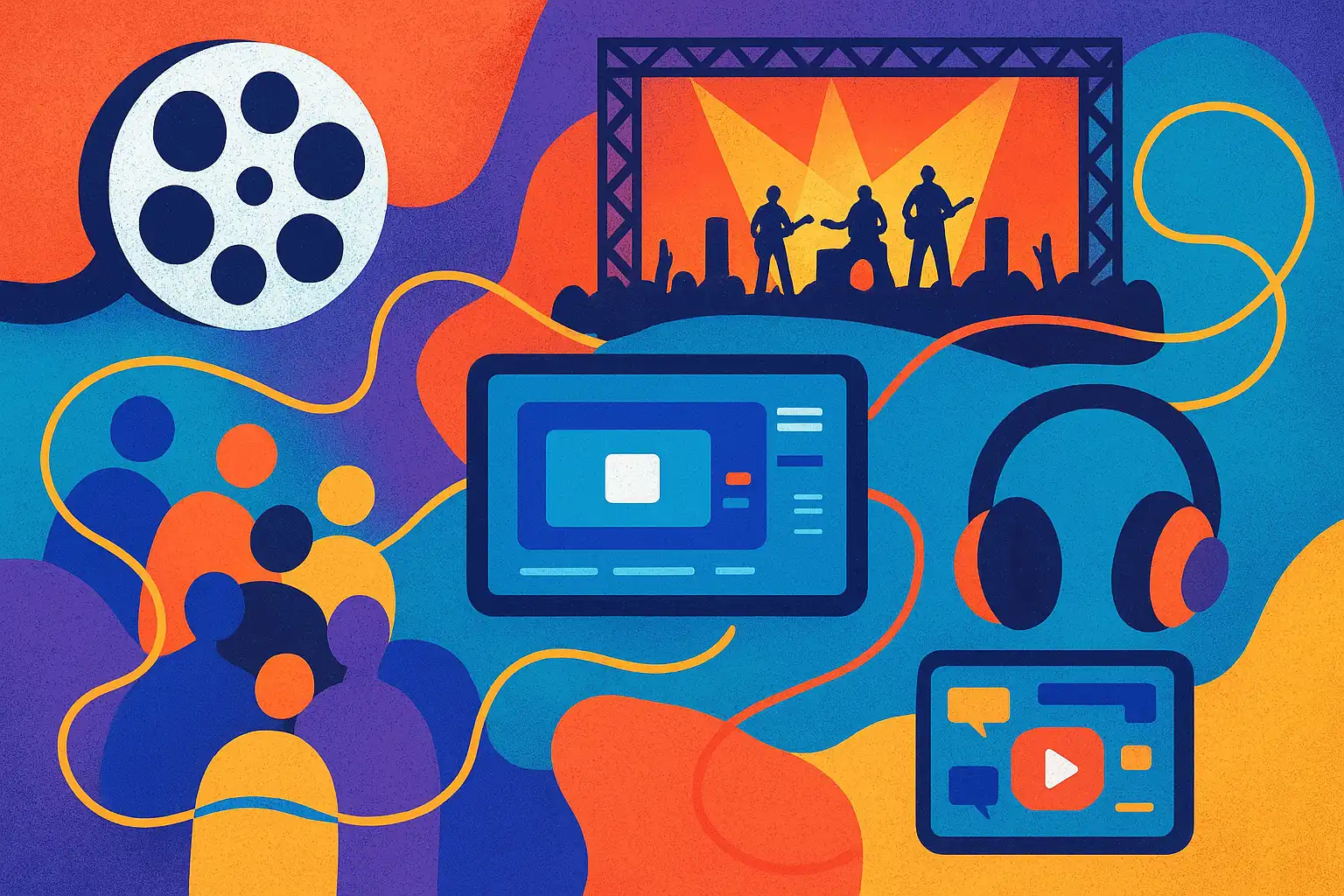
Branded content is any content a brand creates or funds that delivers genuine value to an audience — through entertainment, education, or emotional connection — rather than directly promoting a product or service. It’s one of the oldest marketing disciplines (Michelin’s restaurant guides date to 1900) and one of the most versatile.
The challenge isn’t understanding that branded content exists — it’s knowing which format serves which purpose, and how to match format decisions to business goals, audience preferences, and available resources. This guide covers every major type of branded content, what makes each format distinct, its strengths and limitations, and the criteria for choosing between them.
What are the main types of branded content?
- Branded video content — Short films, documentaries, or web series produced by brands to entertain or inform.
- Branded podcasts — Audio series that explore topics related to a brand’s mission, often educational or entertaining.
- Branded events and experiences — Live or virtual experiences that deliver value through entertainment, education, networking, or community.
- Branded content hubs and platforms — Dedicated websites or online magazines offering articles, videos, and resources under a brand’s umbrella.
- Interactive and experiential content — Games, quizzes, calculators, or virtual reality experiences involving active user participation.
- Influencer and creator partnerships — Content co-created with well-known personalities to boost credibility and reach.
- Branded social media campaigns — Challenges, hashtag campaigns, and user-generated content initiatives designed for social distribution.
Type 1: Branded video content
Video is one of the most popular types of branded content because it combines visual storytelling with broad reach. Subtypes range from short-form social videos to full documentary features:
- Short-form branded video (under 3 minutes): Brand values, product stories, customer testimonials. Primary channel: social media and YouTube.
- Web series: Multi-episode episodic content with recurring characters or hosts (example: Lenovo’s “Late Night I.T.” comedic tech series).
- Documentary and long-form: In-depth exploration of topics aligned with brand values (example: Dove’s “Real Beauty Sketches”).
Best for: Emotional storytelling, demonstrating brand values, building awareness at scale.
Limitations: High production cost for quality content; short-form video has low retention; long-form requires significant audience development before ROI becomes clear.
Type 2: Branded podcasts
Podcasts create intimacy through voice — listeners often feel they know the host personally, creating a depth of brand affinity that’s difficult to replicate in other formats. Effective models include expert interview formats, narrative storytelling, educational series, and roundtable discussions.
Best for: B2B brands building thought leadership; creating deep loyalty among an existing audience; long-form content consumption.
Limitations: Podcast audience building is slow; discoverability is genuinely difficult without distribution partnerships.

Type 3: Branded events and experiences
Live or virtual experiences create memorable brand encounters beyond product exposure. Subtypes include brand-owned conferences (example: Salesforce Dreamforce, HubSpot INBOUND), community events, pop-up experiences, virtual summits, and workshops.
Best for: Creating memorable brand experiences; building community among existing customers; demonstrating expertise.
Limitations: High cost for in-person events; difficult to scale; virtual events face engagement fatigue.
Type 4: Branded content hubs and platforms
Owned digital properties dedicated to content in a subject area, operating like media publications but built and funded by a brand. Unlike scattered content on a brand’s website, a content hub is purpose-built as a destination. Models include brand-published magazines, resource libraries, community platforms, and educational platforms.
Best for: B2B brands building authority; SEO-driven organic traffic acquisition; brands with complex products requiring extensive education.
Limitations: Requires significant ongoing content investment; results compound over years, not months.
Type 5: Interactive and experiential content
Content requiring active participation from the audience — assessments, games, calculators, quizzes, simulations, augmented reality. Unlike passive content formats, interactive content delivers personalized results based on user input, dramatically increasing engagement time and conversion rates.
Best for: High-conversion lead capture; delivering personalized value; generating intent data for sales.
Limitations: Higher production cost than static content; requires technical development.
Type 6: Influencer and creator partnerships
Content co-created with or distributed through individuals with established audiences — the brand borrows the trust and credibility of the creator rather than building its own from scratch. Models include long-term brand ambassadorships, co-created content series, sponsored content, and creator takeovers.
Best for: Rapid audience expansion into new segments; building social proof quickly; product launches requiring broad awareness.
Limitations: Brand equity depends on creator behavior; authenticity is difficult to maintain at scale; ROI measurement is complex.
Type 7: Branded social campaigns
Content campaigns designed primarily for social media distribution — UGC challenges, hashtag campaigns, cultural moment tie-ins. Unlike other branded content formats, successful social campaigns are designed to spread through user participation and resharing.
Best for: Building brand awareness quickly; creating community participation; generating social proof.
Limitations: Highly dependent on platform algorithm; trends move fast; organic social reach has declined significantly on most platforms.
For a deeper look at how these different branded content formats work in practice, the collection of branded content examples that inspire shows how leading brands execute each type with real campaigns. The storytelling element is central to all of them — this guide to storytelling content that resonates covers the narrative principles that make branded content memorable rather than forgettable.

Why storytelling is important in branded content
At the heart of all these types of branded content lies strong storytelling. Instead of focusing on product features, brands use stories to share values, evoke emotion, and build trust:
- Storytelling appeals to emotions, making messages stick.
- It helps brands stand out from competitors by being relatable.
- Stories turn ordinary information into memorable experiences.
- People are more likely to share content that feels personal.
How to choose the right branded content format
Use these criteria to narrow your format choices:
By primary objective: Awareness → branded video, influencer partnerships, social campaigns. Trust and authority → content hubs, podcasts, branded events. Lead generation → interactive content, educational hubs. Customer retention → branded community platforms, educational events.
By resource realities: High budget, one-time → branded event, documentary. High budget, ongoing → content hub, podcast, web series. Moderate budget, ongoing → influencer partnerships, social campaigns. Lower budget → branded blog content, community building, user-generated content campaigns.
By time horizon: Short-term results needed → social campaigns, influencer partnerships. Long-term compounding value → content hubs, podcasts, educational platforms.
Connecting your branded content decisions to a broader content planning and strategy framework ensures that each format serves a specific role in your overall marketing system rather than existing as isolated initiatives.
FAQ: Types of branded content
What’s the difference between branded content and content marketing?
Content marketing is a broad strategy that includes any content created to attract and retain an audience — including SEO articles, how-to guides, and informational resources. Branded content is specifically content that creates an emotional or entertainment-driven connection with a brand — typically more story or experience-driven than purely informational. All branded content is content marketing; not all content marketing is branded content.
What makes branded content different from traditional advertising?
Branded content focuses on entertainment or education rather than direct selling. While traditional ads aim for immediate sales, branded content builds long-term connections by sharing stories, insights, or experiences that matter to the audience.
Do you need a large budget to create effective branded content?
No. Some of the most effective branded content formats (podcasts, content hubs, UGC campaigns) have lower entry costs than traditional advertising. The investment required depends heavily on format — a branded podcast can launch for a few thousand dollars in equipment; a branded documentary or major experiential event requires significantly more.
Can small businesses use branded content?
Yes. Small businesses can create unique stories, collaborate with local personalities, host community events, or launch engaging social media campaigns to connect with their communities and grow their presence without large production budgets.
How do you measure the success of a branded content campaign?
Measurement varies by format and objective. Brand lift studies measure awareness and perception changes. Engagement metrics (time spent, completion rates, shares) indicate content quality. Lead attribution tracks conversion impact. Community growth and retention rates measure loyalty impact. Define success metrics before production, not after.

Related Posts