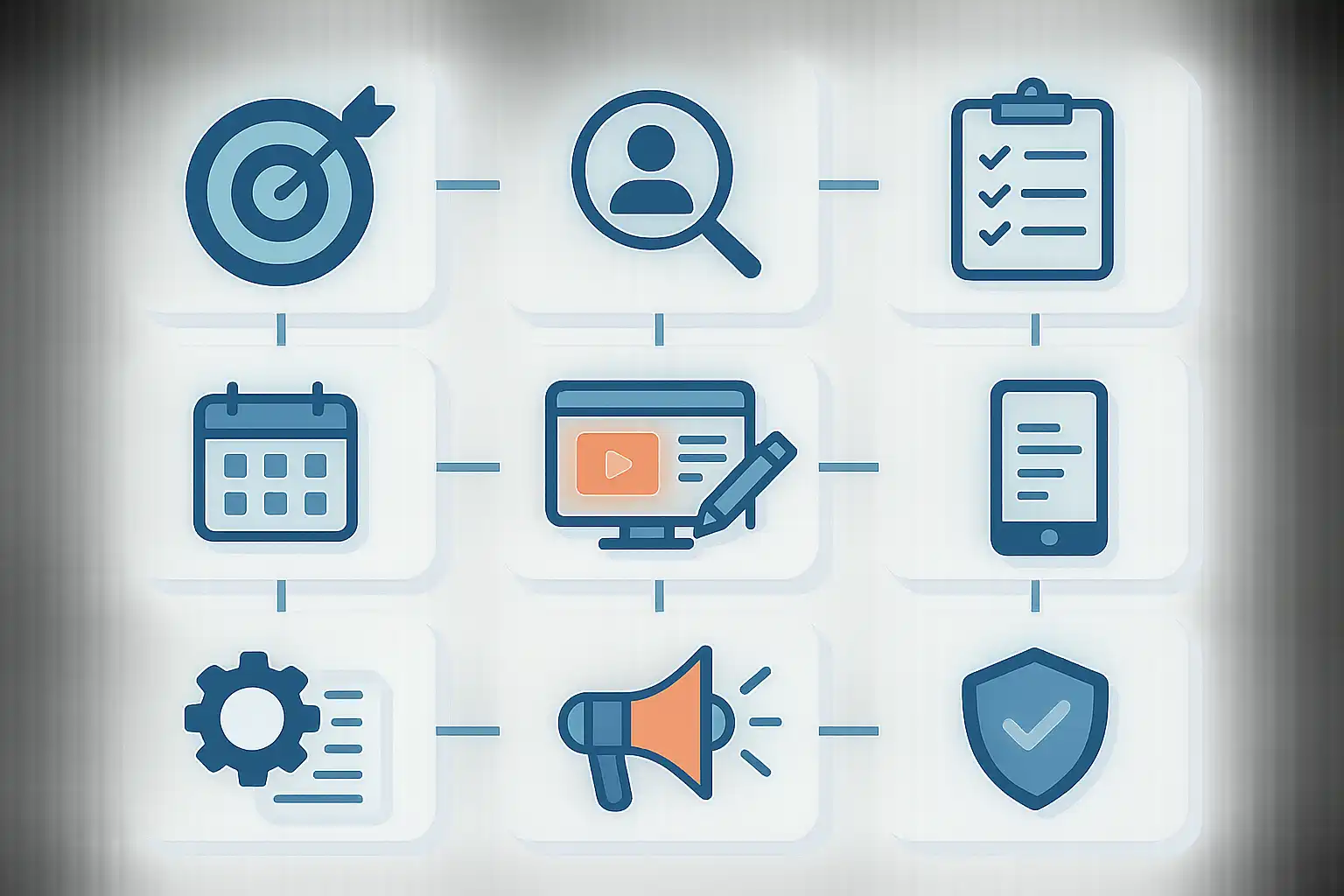
If you’re building a startup and facing limited resources, you need a practical content strategy template for startups that is easy to use and delivers results. This article provides a step-by-step framework so you can create and execute a focused content plan—even with a small team and minimal budget. Within a few minutes, you’ll understand the core components, see actionable steps, and discover useful tools for planning, creation, and distribution tailored for growing startups. Let’s get started with straightforward solutions you can apply right away.
What does a content strategy template for startups need to include?
Every effective content strategy template for startups starts by clarifying what success means to your business. Begin by stating your main business goals. For example, are you aiming to build brand awareness, increase leads, or support customer retention? Use the SMART goals framework—Specific, Measurable, Achievable, Relevant, Time-bound—to define these clearly. This focus ensures you prioritize actions with the highest return for your limited resources.
Identify your target audience
Knowing who you are creating content for is essential, especially for startups. Develop audience personas with basic demographics, challenges, and needs. Free templates for buyer personas are widely available and can help you quickly gather insights. Instead of guessing, survey your early users or look at similar brands for inspiration. This way, you can create content that truly resonates and moves your business forward.
Audit your existing content
Before crafting new material, review what you already have. A quick content audit helps you spot valuable assets you can refresh or reuse. Check your blog, social posts, newsletters, product guides, or videos—even drafts or old presentations might be repurposed. This saves you time and effort, letting you focus on high-impact content instead of starting from scratch.
Choose your content types and channels wisely
Not every format fits every startup. Start with one or two content types your audience prefers and your team can handle—commonly, blog articles, simple videos, or infographics. Test where your target users spend time online: LinkedIn for B2B, Instagram for lifestyle, Twitter for tech, or niche forums for communities. Select a few priority channels for consistent efforts, rather than spreading too thin.
Outline the content creation process
Establish how ideas move from concept to published content. Even simple workflows help your team avoid confusion and bottlenecks. Here’s a sample process for a small team:
- Brainstorm topics (weekly or monthly)
- Assign roles: creator, reviewer, publisher
- Draft content using an outline
- Review for clarity and accuracy
- Publish, schedule, and promote
Free editorial calendar templates (such as those by HubSpot or Google Sheets) keep everyone on track—no software required.
Measurement and analytics: Track what matters
With limited resources, focusing on a few key metrics is vital. Select Key Performance Indicators (KPIs) that align with your goals—page views, newsletter sign-ups, social shares, or leads generated. Use free tools like Google Analytics, HubSpot analytics, or built-in platform insights (Facebook, LinkedIn, Twitter). Reviewing this data monthly helps you understand what’s working so you can double down on your best efforts.
Content governance: Maintain consistency and quality
Set clear style and brand guidelines, even if they’re brief. Define your tone (friendly, expert, casual), preferred language, formatting, and visual standards. As your library grows, schedule periodic reviews to update or remove outdated material. This keeps your content fresh and maintains professionalism as your brand evolves.
Strategic extras: Amplify your impact
If you have capacity, add components like:
- Brand voice guide
- Content clusters around core topics for SEO authority
- Mapping content to customer journey stages (awareness, consideration, decision)
- SWOT analysis (Strengths, Weaknesses, Opportunities, Threats)
- Competitive content research
Many of these elements can be filled out using free online templates—just search for “startup content marketing templates and resources.”

How can a startup prioritize content creation with a limited team and budget?
Deciding what to create first is a common challenge for bootstrapped startups. The key is to work smarter, not harder. Let’s explore practical strategies for efficiently prioritizing content.
1. Prioritize goals and audience needs
Rank your content ideas based on how directly they support your top business goals and whether they help your ideal customer solve a real problem. Use a simple scoring system if helpful: rate each idea 1-5 on potential business impact and relevance to your users. Pick the top few—these become your first pieces of planned content.
2. Leverage what you already have
Revisit your previous content. Update older blog posts with new information, turn popular social posts into longer articles, or convert presentations into downloadable guides. Repurposing saves time and often yields high engagement.
3. Focus on high-ROI formats
Short, well-written blog posts (1,000–2,000 words), infographics, and helpful templates usually bring the best results for startups. These formats balance effort and potential reach. Downloadable checklists or email courses also work well for building your mailing list.
4. Use brainstorming and research tools
Tools like Feedly help you track trends in your industry, while BuzzSumo or HubSpot’s Website Grader can surface top-performing topics and keywords. These insights let you create content people are already searching for, increasing your impact per piece.
5. Keep your schedule realistic
Don’t overcommit. Even one solid post or video per week is enough to build momentum. Editorial calendars, such as Google Sheets or free HubSpot templates, keep you on a sustainable track without overloading your team.
6. Track and adapt
Regularly review your analytics. Double down on channels and topics that generate leads, sign-ups, or shares. If something isn’t working, refine your approach rather than pouring time into low-ROI activities. Focusing on steady progress puts your startup ahead, even with limited resources.

What are the best tools and templates to support the process?
Startups benefit from using tools that are free, affordable, and easy to learn. Here are reliable options for each stage of the content strategy cycle:
- Content management: HubSpot CMS (free tier), WordPress (plugins available), Google Docs for collaboration
- Content ideation: Feedly for trends, BuzzSumo for most-shared topics, BlogAbout for brainstorming titles
- Editorial calendars: Google Sheets templates, Trello boards, or HubSpot editorial calendar template
- Graphics and visuals: Canva (free version), Piktochart for infographics
- SEO optimization: HubSpot Website Grader, Google Search Console, Ubersuggest (limited free searches)
- Analytics: Google Analytics, HubSpot analytics (free plan)
- Templates: HubSpot offers free editorial calendars, buyer persona templates, SWOT analysis forms, and SMART goal worksheets you can adapt instantly.
For startups just beginning, start with a simple spreadsheet to track ideas and publishing dates. As your processes mature, you can layer in more advanced solutions.
Distribution and promotion
Select the channels your target audience already uses. This might mean focusing on LinkedIn posts, Medium articles, a company blog, Twitter threads, or even podcasts. Use scheduling tools (Buffer, Hootsuite, or native platform schedulers) to post regularly without manual effort each day. Leverage employee and founder networks for early distribution—personal shares frequently generate more initial traction than company accounts.
Governance and growth
Document your processes—how often you review content for freshness, who approves final drafts, and your publishing frequency. This lays the groundwork for scaling your strategy as your team grows. Regularly revisit your approach, updating priorities based on what your analytics reveal about audience behavior.
Tracking and improvement
Monthly reporting on key KPIs—traffic, engagement, conversions—helps you spot trends and refine your efforts. For example, entry level content strategy is especially valuable for new startups wanting to understand and apply fundamental practices right away. Review your reports with your team and decide on one small improvement to test each month.
How does a sample content strategy template for startups look?
A practical template for startups is concise yet covers all the essentials. Here’s a sample you can copy and adapt:
| Section | Description |
|---|---|
| 1. Goals & Metrics | List your main business goals and the KPIs you’ll use to measure success. |
| 2. Audience Personas | Summarize target customer details, needs, and pain points. |
| 3. Content Audit | Log existing assets you can update, reuse, or expand. |
| 4. Content Types & Channels | Specify formats (blogs, videos) and channels (LinkedIn, blog, newsletter) you will prioritize. |
| 5. Content Calendar | Outline your publishing plan by week/month with assigned owners. |
| 6. Creation & Review Process | Describe your workflow for ideation, drafting, review, and publication. |
| 7. Promotion Plan | Choose methods and channels for sharing and amplifying content. |
| 8. Analytics & Reporting | Define how and when you will review performance and adjust tactics. |
| 9. Governance | Note brand guidelines, style preferences, and review schedules. |
For a detailed breakdown, resources like Content Strategy Structure provide more in-depth templates and examples for startups.
Tips for first-time content strategists
- Start small: One channel, one or two formats.
- Document every process, even if it’s simple.
- Involve team members in brainstorming and reviews.
- Regularly revisit and refine your strategy.
- Celebrate small wins to keep momentum high.
Why is a clear content strategy so critical for startups?
In the fast-moving world of startups, every hour and dollar counts. Without a clear strategy, it’s easy to waste resources on content that doesn’t align with business goals. An effective template ensures everyone moves in the same direction, saves time by preventing duplication of effort, and builds a brand presence even on a shoestring budget. When you follow a proven process and use the right tools, your startup can punch above its weight in a crowded digital landscape.
As you develop your plan, keep in mind that a well-defined content strategy is not just a nice-to-have—it’s the foundation for growth and long-term success. If you’re unsure where to start or want a step-by-step walkthrough, a reliable content strategy guide offers practical blueprints tailored to new businesses.
Frequently Asked Questions
What is the first step when creating a content strategy for a startup?
The very first step is to identify and document your startup’s business goals. Understanding what you want to achieve helps you prioritize content that moves the needle. Next, define your target audience so that every piece you produce speaks to the right people. This streamlined approach ensures your time and resources are invested where they matter most.
How can I track content performance with minimal tools?
You don’t need expensive software to monitor results. Google Analytics provides basic traffic and engagement stats for free. Most social platforms (LinkedIn, Twitter, Facebook) have built-in analytics to track likes, shares, and comments. Set monthly reminders to review these numbers and note which content formats or topics are getting the most traction.
What are the most efficient content formats for startups with a small team?
For most startups, concise blog posts, instructional infographics, and short videos offer a good balance between creation effort and potential reach. Templates and checklists (for download) also drive engagement and collect leads efficiently. Choose formats that match your team’s skills and your audience’s preferences for best results.
Where can I find free templates to get started?
HubSpot offers a library of free templates, including editorial calendars, buyer personas, SWOT analyses, and SMART goal worksheets. You can also find customizable templates in Google Docs, Notion, and Airtable, or by searching for “startup content marketing templates and resources.” These resources can save you time and help organize your strategy from day one.

Related Posts