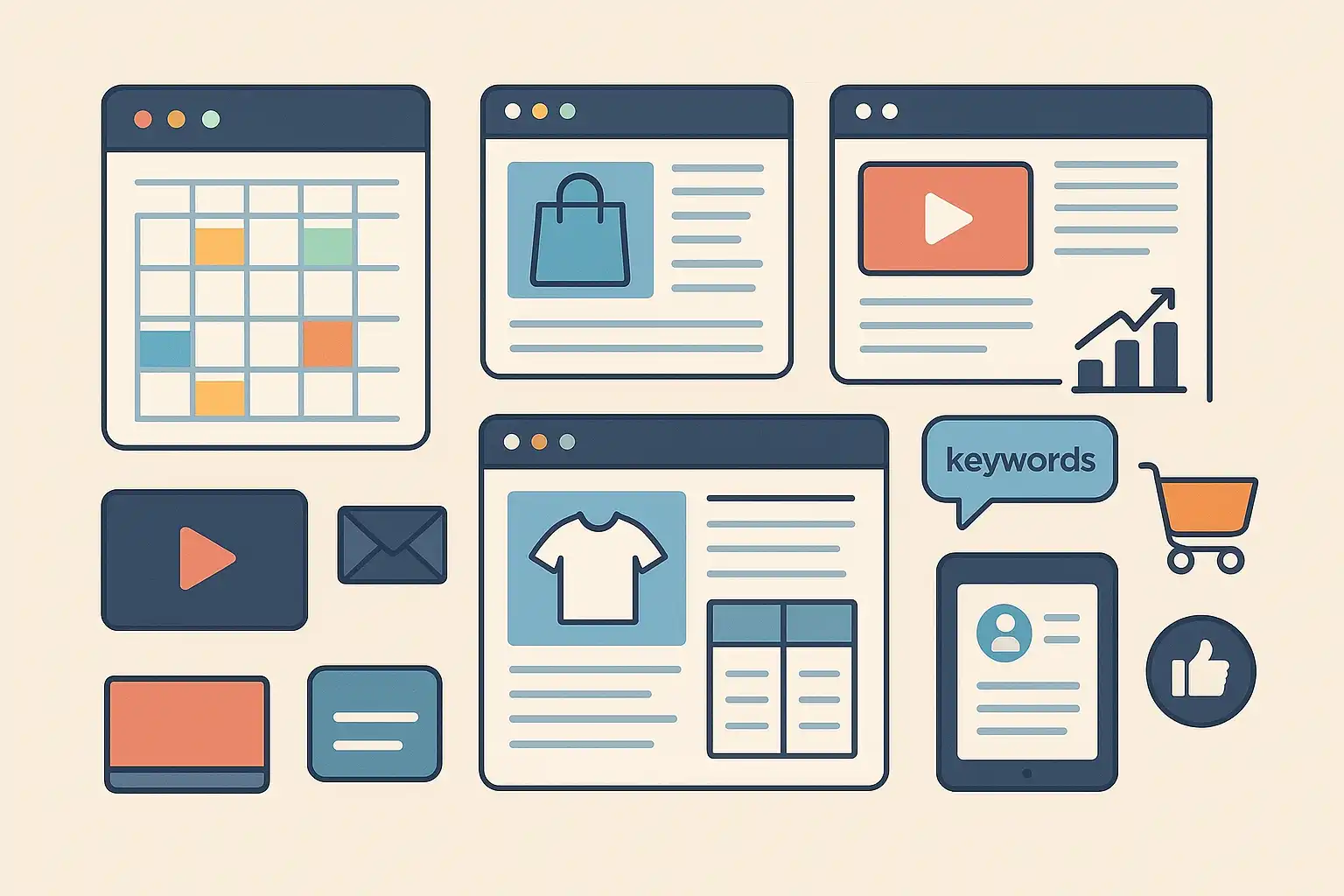
Every successful ecommerce business relies on clear, effective content to attract visitors and turn them into loyal customers. If you are wondering how to design a content strategy for ecommerce websites that genuinely drives growth, this guide will show you exactly where to begin and how to keep improving. In just a few minutes, you will learn the essential steps, proven tactics, and practical tools that help ecommerce sites compete – without jargon or unnecessary complexity.
Summary
A content strategy for ecommerce websites is a practical plan for planning, creating, and sharing information that talks directly to your customers. It does more than just fill up your store with words and images. Instead, it’s about connecting your products to real people by offering useful advice, answering questions, and guiding shoppers through their journey. To build trust and grow your ecommerce business, you’ll need to understand your audience, use the right keywords, publish a variety of helpful content, and track what works best. This approach helps you reach more shoppers and increases the chances they’ll buy from you rather than a competitor.
For example, if you run an online shop that sells sports shoes, a well-thought-out content strategy helps you rank higher on Google, educates shoppers about shoe types, and gives them confidence through reviews and guides. Success comes from matching your content with what your customers are searching for, using the right channels, and making improvements based on real results.
What are the key elements of a successful content strategy for ecommerce websites?
At the heart of every strong ecommerce content strategy are a few core building blocks. Each plays a unique role, but all work together to move shoppers from discovery to purchase and, ideally, to becoming repeat customers.
Understand your audience
First, get to know your customers. Who are they? What do they need, want, or worry about? Spend time researching their preferences, shopping habits, and the problems they want solved. Creating “buyer personas” — simple profiles of your typical customers — will help guide your content direction.
Research keywords and topics
Next, discover which search terms your audience uses when looking for products like yours. Keyword research reveals the phrases they type into Google. By targeting these, you make it easier for new visitors to find your store. For instance, someone searching for “best running shoes for beginners” may appreciate a detailed guide or product comparison.
Choose your content types
Effective ecommerce content goes beyond product listings. Shoppers want information, reassurance, and a bit of inspiration before they buy. Consider including:
- Helpful blog posts or articles (e.g., “How to choose the right running shoe”)
- Product guides and buying advice
- Customer reviews and testimonials
- High-quality product images and videos
- FAQs that address common concerns
- Comparison charts (showing differences between models)
- How-to videos or step-by-step tutorials
For brands seeking a competitive edge, planning for content strategy that adapts to audience needs is essential, especially as trends in ecommerce shift rapidly.
Create a content calendar
Consistency helps your brand stay top-of-mind. Plan your content in advance using a calendar. Decide how often you’ll share new posts, videos, or social updates. This calendar keeps your messaging organized, ensures you cover seasonal trends, and simplifies your team’s workflow.
Keep quality high
Original, well-crafted content stands out. Avoid copying from competitors, and focus on addressing your audience’s real questions. Invest time in clear writing, attractive photos, and honest product details to earn trust and encourage sharing.
Distribute across channels
Your content should appear where your customers spend time. Use multiple channels, such as social media, email marketing, and search engines, to reach shoppers at different stages. Think about tailoring your message: short videos for Instagram, in-depth guides for your blog, or quick tips in your newsletter.
Track and optimize
Use data to see what’s working. Tools like Google Analytics show which pages bring in the most visitors and which ones turn visitors into buyers. Regularly update old content and test new ideas based on what your audience responds to.

How can ecommerce businesses create content that drives traffic and sales?
Turning site visitors into paying customers is the main goal of any ecommerce content strategy. Here’s a practical process to help you create content that attracts, engages, and converts.
- Start with user intent: Every piece of content should answer a real question or solve a problem. Conduct keyword research and look for common pain points among your buyers. For example, “How do I know if these shoes fit true to size?”
- Mix up content formats: Don’t just stick to written pages. Use photos, videos, how-to guides, and infographics. These formats boost engagement, especially on mobile devices where visuals are key.
- Highlight social proof: New visitors trust other shoppers. Feature customer reviews, ratings, and testimonials. User-generated photos or stories give your brand credibility and make it more relatable.
- Optimize every page for search: Use relevant keywords in your product descriptions, blog posts, and headers. This helps search engines match your pages to shopper queries.
- Encourage next steps: Add clear calls-to-action. For example, after a product guide, direct shoppers to “Browse all men’s running shoes” or “See our bestsellers.”
- Stay consistent: Use a content calendar to publish regularly. Consistency builds trust with both customers and search engines.
- Personalize when possible: Tailor recommendations based on browsing or purchase history. AI and automation tools now make this easier, adding a personal touch that can boost conversions.
As you refine your plan, consider setting clear eCommerce content goals to track your progress and celebrate wins.
Examples of ecommerce content types that increase conversions
Brands like Warby Parker, Allbirds, and Casper have built loyal followings with content that educates and reassures. Here are a few proven formats:
- How-to articles: “How to Measure Your Foot for the Perfect Fit” helps reduce returns.
- Video reviews: Short clips featuring real customers using your products.
- Comparison tables: Breaking down the differences between similar products at a glance.
- FAQ sections: Quickly answer common questions about shipping, returns, or product care.
If you’re still unsure which type of content to begin with, analyzing your competitors’ strategies or testing formats with your own audience will reveal what resonates most.
Why is content calendar planning important for ecommerce sites?
Publishing content on the fly can lead to inconsistency, gaps, or missed opportunities. A content calendar offers structure, ensuring steady growth and better results over time.
Benefits of a content calendar
- Consistency: Posting regularly helps search engines trust your site and encourages repeat visits.
- Better timing: Align your posts with product launches, holidays, or sales. For example, share gift guides before the holiday season or summer essentials in spring.
- Improved teamwork: Calendars make it easier for your team to plan, assign, and review content together.
- Data-driven adjustments: Track which topics work best and adjust future plans accordingly.
In today’s fast-moving online market, a well-structured content calendar for ecommerce can be the difference between random results and steady growth.
Which channels and formats work best for ecommerce content?
No single content format or channel fits all businesses. Successful brands use a mix of the following to reach shoppers at every stage:
| Content Type | Best Used For | Example |
|---|---|---|
| Product descriptions | Highlighting product features and benefits | “Lightweight running shoes with extra cushioning” |
| Blog articles | Educating, inspiring, and capturing organic search traffic | “How to choose gym clothes for every workout” |
| Short videos | Quick product demos, reviews, or tips | Instagram Reels or TikTok |
| Social media posts | Building community and sharing promotions | Share behind-the-scenes or limited-time sales |
| Email newsletters | Engaging customers and promoting new arrivals | “5 exclusive deals this week” |
| User-generated content | Building trust with real-life customer stories | Photos shared by happy buyers |
Choosing the right mix depends on your brand personality, audience, and resources. Test new formats and monitor the results to see which get the best response.
What tools and metrics should you use to measure content strategy success?
Effective measurement is the foundation of improvement. With so many analytics options available, you might wonder which to prioritize.
Essential metrics to track
- Organic traffic: The number of visitors finding your site from search engines.
- Bounce rate: The percentage of visitors who leave after viewing just one page.
- Time on page: How long shoppers spend reading your content.
- Click-through rate (CTR): The share of users who click a specific link or product.
- Conversion rate: The percentage of visitors who complete a desired action (purchase, sign-up, etc.).
- Return on investment (ROI): Calculates whether your content strategy is driving profits.
Recommended tools for ecommerce content analytics
Many tools make it easy to understand your content’s performance and spot opportunities for improvement.
- Google Analytics: Track key metrics like traffic, sources, and user behavior.
- Google Search Console: See which keywords bring visitors and help improve rankings.
- Hotjar or Crazy Egg: Visualize how shoppers interact with your site via heatmaps.
- SEMrush or Ahrefs: Analyze search performance and competitor strategies.
- Klaviyo or Mailchimp: Email analytics for monitoring engagement and conversions.
- AI and automation tools: Use machine learning to suggest topics, schedule content, or personalize user journeys. This is explored in depth in our AI digital content plan guide.
It’s important to review your data regularly. If a certain type of article gets more time on page or a product page leads to more sales, consider creating more of that content and updating less effective pages.
How do you optimize an ecommerce content strategy for SEO?
SEO (Search Engine Optimization) is the process of making your content more visible on search engines like Google. For ecommerce, this means making sure your products, articles, and guides show up when customers search for what you offer.
Steps to optimize for search
- Use the right keywords: Include search terms your buyers use in your content naturally.
- Title tags and meta descriptions: Add descriptive and inviting summaries to improve click rates.
- Internal linking: Link between related pages in your store to keep shoppers engaged and help search engines understand your site structure.
- Mobile-friendly design: Most shoppers use phones or tablets, so your content and website must look great on every screen size.
- Fast loading speeds: Compress images, use a good hosting provider, and minimize code to ensure shoppers don’t leave out of frustration.
- User experience (UX): Clear navigation, easy search, and simple checkout encourage visitors to browse more and buy more.
- Fresh content: Update old posts and regularly add new content to signal to search engines that your site is active and relevant.
Common SEO mistakes to avoid
- Duplicate product descriptions copied from manufacturers or other sites
- Ignoring technical SEO, such as broken links or missing image alt text
- Not optimizing for local searches (if you have a physical presence)
- Publishing content without a clear keyword or user intent focus
Learning from successful businesses can be helpful. By studying an established ecommerce content strategy, you can spot patterns and adapt proven techniques for your own store.
What role does social proof play in ecommerce content strategy?
For online shoppers, trust is everything. Because buyers cannot see or touch products in person, they rely heavily on reviews, testimonials, and social signals to feel confident in their choices.
Ways to incorporate social proof
- Display customer reviews and star ratings on product pages
- Share user photos and real-life stories on social media or your homepage
- Highlight awards, certifications, or media mentions
- Add trust badges for secure payment and data privacy
By weaving social proof throughout your content, you show new visitors that your business is reliable and popular with others, which can significantly improve conversion rates.

How can you future-proof your ecommerce content strategy?
As digital trends evolve, so do shoppers’ expectations. To stay ahead in ecommerce, your content strategy must be flexible and ready for change.
Key areas to watch
- Personalization powered by AI: Use data to recommend products or customize experiences for individual shoppers.
- Video-first content: Short, engaging clips are popular, especially on mobile and social platforms.
- Voice search optimization: Prepare your content for questions spoken into phones or smart speakers.
- Sustainability and purpose-driven messaging: Shoppers increasingly value brands with ethical practices and clear missions.
- Omnichannel strategies: Coordinate messaging across your website, social profiles, email, and even offline experiences.
Staying flexible and open to new channels or technologies will help your brand stand out, no matter how the ecommerce landscape changes.
- Effective content strategy for ecommerce websites starts with a deep understanding of your customers.
- Mixing content types—from product guides and reviews to videos and FAQs—keeps shoppers informed and engaged.
- Regularly planning and publishing content builds trust and visibility.
- Tracking results and optimizing based on real data is crucial for ongoing success.
- Staying updated on new tools, channels, and trends ensures your strategy remains effective in a changing market.
Building a content plan is not a one-time task. For best results, review your progress, learn from your analytics, and adjust your approach every few months.
FAQ
What are some quick ways to improve my ecommerce content?
Start by updating outdated product descriptions and adding more detail about features, benefits, and sizing. Include high-quality images and videos. Feature customer reviews to build trust, and organize your content with clear headings and bullet points. Even small improvements can make your site easier to use and more appealing to shoppers.
How often should I create new content for my online store?
Ideally, publish fresh content at least once a week, whether it’s a new blog post, video, or updated product guide. Consistency helps build momentum with both visitors and search engines. Use a content calendar to plan ahead and stay on track.
Do I need to hire a professional writer or marketing team?
Not always. Many small ecommerce owners create great content themselves by focusing on clarity and their real expertise. However, if you have a larger store, hiring a writer, SEO expert, or content manager can help you scale, maintain quality, and implement advanced strategies as your business grows.
What’s the easiest way to start measuring content performance?
Install Google Analytics on your site to monitor visitor behavior and page popularity. Check which pages have high bounce rates or low conversions, then update those first. As you get comfortable with analytics, you’ll gain insights to refine your strategy and prioritize your time for the biggest impact.

Related Posts