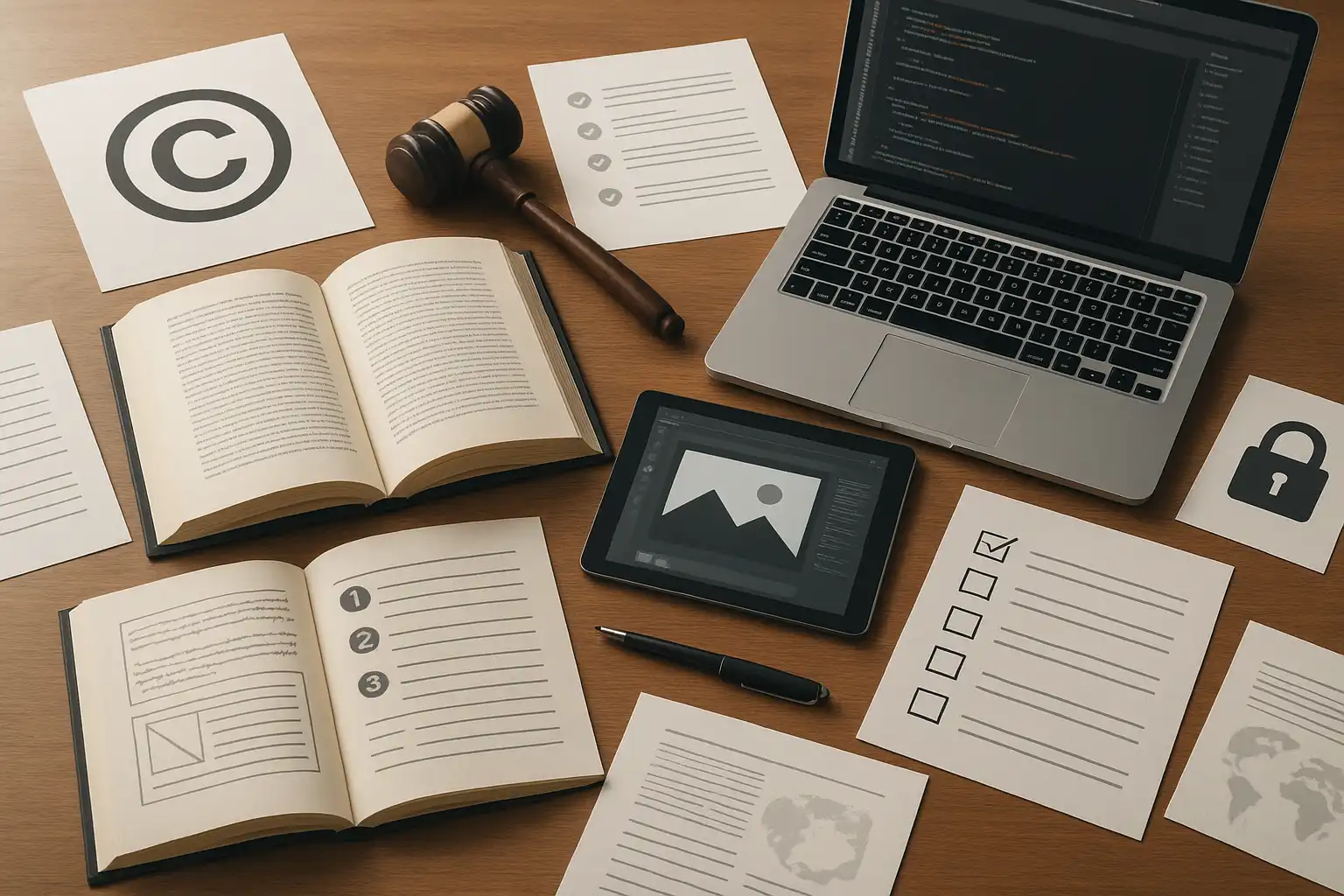
Whether you’re a blogger, artist, business owner, or content creator just getting started, understanding copyright is the foundation of safe and successful publishing. Copyright law protects your creative work — and failing to respect others’ rights can have serious consequences, from legal action to platform bans.
This guide covers everything clearly and practically: what copyright protects, how to secure your work, how to use others’ content legally, what to do when problems arise, and how copyright differs around the world.
What is content copyright and why does it matter?
Copyright is a set of legal protections automatically granted to the creator of original works. The moment you create something unique and record it in a tangible form — a written blog post, a photograph, a piece of music, a video — you own the copyright. This gives you exclusive control over how your work is used, shared, copied, or adapted.
Copyright laws exist to encourage creativity by ensuring creators can benefit from their work. Misunderstanding these laws — even accidentally — can lead to costly consequences.
What does copyright protect?
- Written articles, blog posts, and books
- Photographs, illustrations, and graphics
- Music, lyrics, and audio recordings
- Videos and films
- Software and code
- Websites and digital designs
What copyright does NOT protect: Facts, ideas, methods, and concepts. It’s the specific expression of an idea that’s protected — not the idea itself.
How long does copyright last?
In most countries, copyright lasts for the creator’s lifetime plus 50–70 years. After this period, the work enters the public domain. Most nations participate in the Berne Convention, administered by WIPO, which provides automatic copyright protection across member countries. Registration processes, duration, and fair use rules still vary — always check local regulations if your work or audience is global.
| Country | Duration | Registration Required? |
|---|---|---|
| United States | Life + 70 years | No, but strongly recommended |
| United Kingdom | Life + 70 years | No |
| Canada | Life + 50 years | No |
| Australia | Life + 70 years | No |
| India | Life + 60 years | No |
How to secure and protect your copyright
You don’t need to register your work to have copyright protection — the law grants rights automatically as soon as your original work is created and fixed in a tangible form. However, registration provides important advantages if you ever need to take legal action.
Steps to protect your work:
- Document your process: Save drafts, timestamps, and dated files to prove when and how you created your work.
- Watermark images and videos: Add your name or logo as a visible mark of ownership.
- Include copyright notices: Add a simple line like “© [Year] [Your Name]” to your content.
- Register with your copyright office: In the United States, registration with the U.S. Copyright Office provides a public record and enables you to claim statutory damages in lawsuits. Other countries have similar registration options.
- Monitor your content online: Use Google Alerts, Google Reverse Image Search, or Copyscape to find unauthorized copies of your work.
- Use digital tools: Platforms offering automatic watermarking, digital signatures, and secure content delivery make tracking and protecting your work easier.
How to use copyrighted material legally
If you want to use someone else’s work, you have several options:
- Ask for permission directly — ideally in writing. Keep a record of all approvals.
- Look for Creative Commons or similar licenses that allow specific types of reuse. Always read the exact terms — each CC license has different rules about commercial use, adaptation, and attribution.
- Purchase from trusted stock platforms — stock images, music, and video from reputable sources come with clear license terms.
- Use public domain materials — works with expired copyright are free to use. Resources like Unsplash (images) and Pixabay (music) offer royalty-free options.
- Understand fair use carefully — fair use allows limited use of copyrighted material for commentary, criticism, education, news reporting, or parody. However, it’s a legal defense, not an automatic right. If your use competes with or affects the creator’s income, it likely won’t qualify.
Types of content licenses explained
- All rights reserved: No use without explicit permission.
- Creative Commons: Allows specific uses depending on the version (e.g., sharing allowed but no commercial use; or sharing allowed with attribution).
- Public domain: No copyright — free to use by anyone.
- Royalty-free: Pay once (or sometimes nothing) and use according to the license terms.
Always read license agreements carefully and keep records of any permissions you obtain. When repurposing content in ways that may touch copyright — such as remixing, editing, or redistributing someone else’s work — this guide to how to repurpose content ethically covers the principles that keep your work legally safe.
Common copyright mistakes to avoid
- Using images or music found online without checking the license — even “free” images may have restrictions. Always verify.
- Assuming fair use always applies — it’s situational and country-specific. When in doubt, get permission.
- Ignoring Creative Commons license terms — each version has specific rules that must be followed.
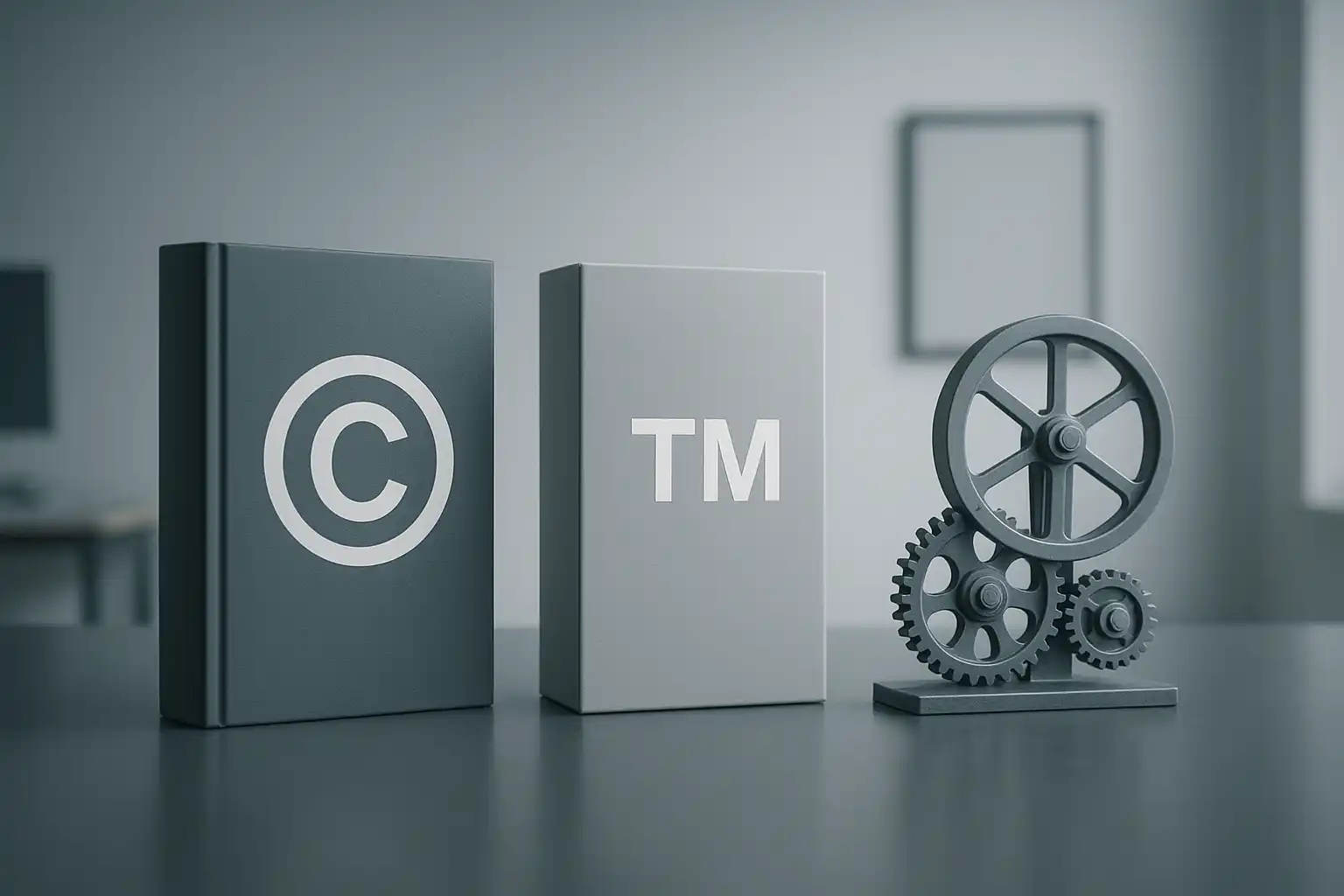
- Confusing copyright with trademarks or patents — these are distinct protections for different things.
- Not giving proper attribution — some licenses require credit to the original creator.
- Using content marked “free to use” without reading the terms — some sites use misleading language. Look for an actual license agreement.
How copyright, trademarks, and patents differ
| Protection | Covers | Relevant For |
|---|---|---|
| Copyright | Creative works (writing, music, images, video, code) | Content creators, artists, writers, developers |
| Trademark | Brand names, logos, and slogans | Businesses and brands |
| Patent | Inventions and new processes | Inventors and product developers |
What to do if someone uses your content without permission
- Contact them politely first — request removal or proper credit. Most disputes resolve quickly with direct communication.
- Send a formal takedown notice — in the U.S., a DMCA (Digital Millennium Copyright Act) notice can compel platforms to remove infringing content. Other countries have similar mechanisms.
- Report to hosting platforms or social networks — most major platforms have infringement reporting processes.
- Consider legal action — for serious or repeated violations, consult a lawyer. Keep copies of your original files and all correspondence as evidence.
What to do if you receive a copyright infringement notice
- Read the notice carefully — understand what content is in question and who is making the claim.
- Review your use — check whether you actually used copyrighted material and whether fair use or a license might apply.
- Respond promptly — if you made a mistake, remove or modify the content as requested immediately.
- Keep records — save all emails and actions you take in response.
- Don’t ignore it — ignoring a notice risks legal action and platform removal of your content.
- Seek guidance if needed — the U.S. Copyright Office, WIPO, and legal aid organizations can help you understand your rights.
Risks of ignoring copyright law
- Lawsuits resulting in damages and legal fees
- Content removal from websites, platforms, or search engines
- Account bans on social media or digital marketplaces
- Demonetization of YouTube or similar platform content
- Damage to your reputation and professional credibility
The risks apply to both creators whose work is stolen and users who unknowingly infringe on others’ rights. Staying within legal boundaries from the start builds credibility and protects your brand. For those new to content creation and wanting a practical starting point, this overview of copyright for beginners explains the key concepts clearly and helps avoid the most common early mistakes.
Legal documents content creators should know about
- Copyright registration forms — register key works for stronger legal protection.
- Content release forms — for contributors, models, or collaborators.
- License agreements — define the terms under which others can use your work.
- Terms of use and privacy policies — essential for websites and platforms.
- DMCA takedown notice templates — standard format for requesting removal of infringing content.
Templates for these are widely available from government copyright offices, legal aid organizations, and resources maintained by planmoon’s content creation guides.
FAQ
Do I need to register my content to have copyright protection?
- No — protection is automatic once your work is created and fixed in tangible form
- Registration isn’t required but is strongly recommended for valuable works
- Registering creates a public record and lets you claim damages in court
Can I use content under a Creative Commons license without worry?
- Not without reading the specific terms — CC licenses vary significantly
- Some allow commercial use, some don’t; some require attribution, some don’t
- Always read the exact license before using any CC content
How can I legally share quotes or small excerpts from someone else’s work?
- Keep excerpts short, add your own commentary, and always credit the source
- This may qualify as fair use for reviews, research, or education
- Rules are nuanced and country-specific — when in doubt, ask for permission
What happens if I ignore a copyright infringement notice?
- You risk escalating legal action and content removal by platforms or web hosts
- Always review the claim seriously and respond promptly
- Even if you believe the notice is incorrect, respond politely with your evidence
Are there free resources for learning more about copyright?
- Yes — the U.S. Copyright Office and WIPO offer free, trustworthy guides
- Many university legal aid sites also provide resources for creators at all levels

Related Posts