content strategy

What are the typical requirements for content strategy certifications?
Content strategy certification programs typically require a foundational understanding of content creation, relevant work experience, research and planning skills, and sometimes formal education. Applicants must often submit portfolios and pass exams, with requirements varying by certification level. Beginner certifications accept limited experience and smaller portfolios, while advanced ones expect a bachelor’s degree, multiple years of experience, and robust project examples. Essential skills include content auditing, audience research, content planning, SEO basics, analytics, communication, and writing. Leading certification providers include Content Marketing Institute, HubSpot Academy, ACCM, AMEC, and LinkedIn Learning. The certification process usually involves selecting the appropriate level, preparing documentation, applying, studying, taking exams, and possibly completing interviews or practical tasks. Exams cover topics such as content audits, persona mapping, SEO tools, governance, and team collaboration. Preparation involves studying guides, engaging in courses, practicing tools, and building portfolios. Content strategy certifications focus on planning and managing content assets, differing from content marketing certifications that emphasize content creation and distribution. While a college degree is not always mandatory, it is often preferred for advanced certifications. Certification durations vary from weeks to months, and beginner programs may accept project work or internships as experience.

A beginner-friendly content strategy course: what to look for
This beginner-friendly content strategy course guide outlines essential features for newcomers in content marketing. It emphasizes setting SMART goals, conducting market and competitor research, and creating detailed audience personas. Key topics include defining brand voice, managing editorial calendars, mastering content creation fundamentals, and understanding SEO basics like keyword research and metadata optimization. The course should also cover content distribution across owned, earned, and paid channels, plus analytics to track performance and refine strategies. Effective teaching methods include modular lessons, visual aids, practical exercises, interactive quizzes, and continuous feedback to enhance learning and application. Beginners are encouraged to use tools such as Google Keyword Planner, Trello, Google Analytics, and content optimization apps like Grammarly and Yoast SEO. The guide advises selecting courses with clear curricula, real-world examples, supportive feedback, and access to resources or certification. Transitioning from learning to doing involves applying skills on small projects, reviewing analytics, and continuously improving content based on results. Overall, a well-structured beginner content strategy course builds foundational skills in goal setting, audience targeting, content planning, SEO, and performance measurement—empowering learners to create engaging, discoverable content aligned with their brand purpose.

How to Choose the Best Content Strategy Certification Courses Online for Your Goals
Choosing the best online content strategy certification course requires aligning the program with your career goals, learning style, and schedule. Start by defining your objectives—whether upskilling, career switching, or specialization—and researching industry demands. Prioritize courses offering practical, project-based learning, expert instructors, and updated curricula covering skills like audience research, editorial planning, UX, and content analytics. Accreditation and recognition from reputable institutions enhance certificate value but should be balanced with practical skill development. Consider course flexibility: self-paced formats suit busy professionals seeking autonomy, while fixed schedules offer structure and peer interaction. Evaluate features like mentorship, career support, accessibility, and clear, job-relevant outcomes. Be cautious of outdated content or low engagement programs by reading reviews and previewing materials. Maximize certification value by actively engaging, building a portfolio, and leveraging networking opportunities. Certifications boost skills and credibility but don’t guarantee employment—combine them with experience and strong portfolios for best results. Typical course lengths vary from weeks to months, so choose one fitting your availability. Overall, thorough research and thoughtful selection ensure you find a content strategy certification that advances your career effectively in today’s digital landscape.

Is a Content Strategy Certification Worth It for Your Career?
A content strategy certification is a valuable credential for marketing, digital communications, and content management professionals. It validates expertise, enhances skills, and increases visibility to employers. These certifications teach how to plan, create, deliver, and manage content aligned with business goals, benefiting beginners, mid-career professionals, freelancers, and consultants. Key skills gained include content creation, management, audience segmentation, strategic planning, analytics, and collaboration. Certified professionals often enjoy improved job prospects, higher salaries (typically a 10-20% increase), and access to senior roles. However, certifications require time and financial investment, and their value depends on the provider’s reputation and the program’s practical focus. While certification boosts credibility, real-world experience and a strong portfolio remain essential for career advancement. Choosing reputable programs from recognized institutions or platforms like Coursera and HubSpot Academy is crucial. Certification is best viewed as part of ongoing professional development, complementing hands-on experience and continuous learning. Overall, a content strategy certification can accelerate career growth, enhance skills, and improve earning potential, especially for those new to the field or seeking formal recognition of their expertise.
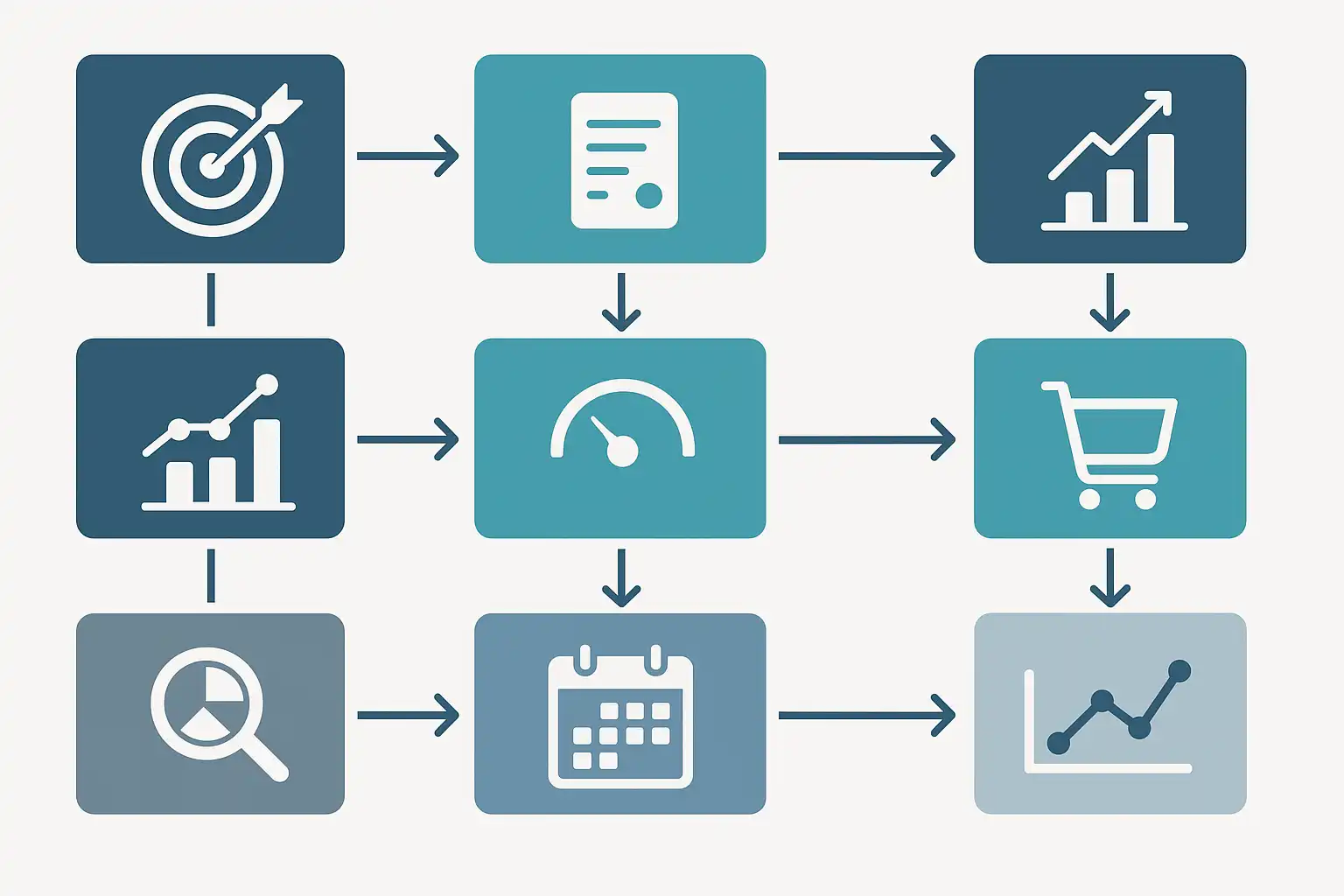
A KPI Framework Template to Connect Content to Business Outcomes
This article presents a comprehensive content strategy KPI framework template designed to link content efforts directly to business outcomes such as lead generation, sales growth, and customer retention. It emphasizes setting clear business goals, defining specific content objectives, selecting relevant KPIs beyond vanity metrics, and using tools like Google Analytics and HubSpot for accurate tracking. The framework encourages regular reporting, data-driven optimization, and actionable insights to demonstrate content value to stakeholders. Practical steps include aligning KPIs with business priorities, building simple tracking templates, and scheduling consistent reviews. Common pitfalls like focusing on irrelevant metrics or overcomplicating dashboards are highlighted. Real-world examples from B2B, e-commerce, healthcare, and nonprofits illustrate effective KPI application. The article also stresses the importance of attribution models to connect content touchpoints with conversions and recommends evolving KPIs as business needs change. Benefits include clearer communication, better budget justification, and continuous content improvement. The guide concludes with FAQs addressing KPI selection, reporting frequency, and suitability for small teams, making it a valuable resource for marketers aiming to prove content impact and drive measurable business growth.

Content strategy brief template for writers: a practical guide
A content strategy brief template for writers is an essential tool that streamlines content creation by providing clear, structured guidelines tailored to different projects and audiences. It includes key elements such as project details, target audience, content goals, SEO keywords, key messaging, deliverables, deadlines, approval processes, and file management instructions. Effective briefs are concise, easy to scan, and avoid vague goals, ensuring writers understand expectations and can deliver on-brand, high-quality content efficiently. Customizable for formats like blog posts, videos, landing pages, or campaigns, these templates enhance collaboration by aligning writers, editors, and marketing teams, reducing revisions and delays. Best practices for adoption include keeping the template accessible, limiting unnecessary details, assigning clear responsibilities, and incorporating feedback loops. Regular updates to the template reflect evolving business needs and content strategies. Success is measured by improved content performance, on-time delivery, fewer revisions, and smoother onboarding. Ultimately, a well-crafted content strategy brief template acts as a blueprint connecting business objectives to content execution, boosting productivity and consistency across all marketing assets.

A Content Audit Template with a Scoring Rubric That Makes Decisions Easier
This article explains how to use a content audit template combined with a scoring rubric to objectively evaluate website or marketing content. A content audit template catalogs all content assets with key details like title, type, publish date, URL, target audience, keywords, and performance metrics. The scoring rubric assigns clear, weighted scores to criteria such as originality, accuracy, clarity, impact, and brand alignment, ensuring consistent, evidence-based decisions. This system reduces subjective biases, facilitates team collaboration, and enables tracking progress over time. The article outlines steps to build an effective rubric, customize templates, minimize reviewer bias through calibration and blinded reviews, and leverage online tools for streamlined audits. It also covers best practices for scoring, frequency of audits, and adapting the method for various content types beyond text. Ultimately, using a content audit template with a scoring rubric transforms content evaluation into a transparent, repeatable, and actionable process that improves content quality, relevance, and strategic decision-making.

Content governance model template for teams and approvals
A content governance model template is a structured framework designed to streamline content creation, review, and approval processes within marketing, editorial, or product teams. It defines roles, responsibilities, workflows, and standards to ensure content accuracy, brand consistency, and compliance. Standardizing content governance prevents bottlenecks, miscommunication, and compliance risks, enhancing collaboration and speeding up approvals. Essential components include defined roles, workflow stages, policies, approval processes, feedback mechanisms, and ongoing reviews. Implementing this model improves clarity, accountability, consistency, and efficiency, often supported by digital tools like content management systems. Typical workflows cover ideation, assignment, creation, reviews (including legal if needed), approval, publishing, and archiving. Building or adapting a template involves identifying stakeholders, mapping workflows, setting clear roles, documenting policies, integrating tools, testing, training, and regular updates. Challenges include resistance to change and rigid workflows, which can be mitigated by treating the model as a living document. Best practices emphasize cross-functional collaboration, clear documentation, co-created policies, digital tracking, and continuous refinement. Effective content governance drives organizational value by increasing publishing speed, ensuring quality, reducing risks, and improving team collaboration. Even small teams benefit from tailored governance models. Tools like Trello, Asana, or specialized CMS enhance implementation. Unlike content strategy, governance focuses on managing execution, ensuring content aligns with strategic goals.

Content strategy outline for website redesign: an actionable guide
A content strategy outline is vital for a successful website redesign, ensuring all content aligns with business goals and user needs. It involves auditing existing content, identifying gaps, and planning updates or new material to enhance clarity, SEO, accessibility, and user engagement. Key components include a comprehensive content inventory, gap analysis, strategic goal alignment, SEO and accessibility checks, content governance, workflows, and resource planning. This structured approach reduces outdated or duplicate content, improves navigation, and fosters trust through accurate, user-focused messaging. Effective governance defines roles and approval processes, while careful content migration preserves SEO value. Common pitfalls to avoid include skipping audits, neglecting SEO/accessibility, unclear responsibilities, and ignoring multimedia content. Regular content audits, involving cross-functional teams, and setting measurable KPIs post-launch help maintain content relevance and optimize performance. Utilizing tools like CMS platforms, project management apps, and SEO checkers supports efficient strategy execution. Overall, a well-crafted content strategy outline ensures a user-friendly, engaging website that drives conversions and strengthens brand presence.

A Content Strategy Template for Ecommerce: Your Growth Roadmap
A content strategy template for ecommerce is a structured plan that helps online stores create, publish, and measure content effectively to drive growth and sales. It aligns content efforts with clear business goals, defines target audiences, maps customer journeys, and selects appropriate content types and channels. Key components include setting measurable objectives, assigning responsibilities, creating content calendars, and using tools like Google Analytics and project management platforms for tracking performance. Successful ecommerce content strategies focus on answering buyer questions, optimizing product pages, sharing customer stories, and promoting timely offers to convert visitors into loyal customers. Regular review and updates keep the strategy relevant amid changing market trends. Common pitfalls include lacking clear goals, targeting too broad an audience, or neglecting team collaboration. Even small online stores benefit from a simple, consistent content plan to maximize efficiency and impact. Integrating AI and automation can enhance content creation but should complement human creativity to maintain authenticity. Ultimately, a well-crafted content strategy template fosters clarity, consistency, and measurable results, empowering ecommerce businesses to compete effectively and grow sustainably.