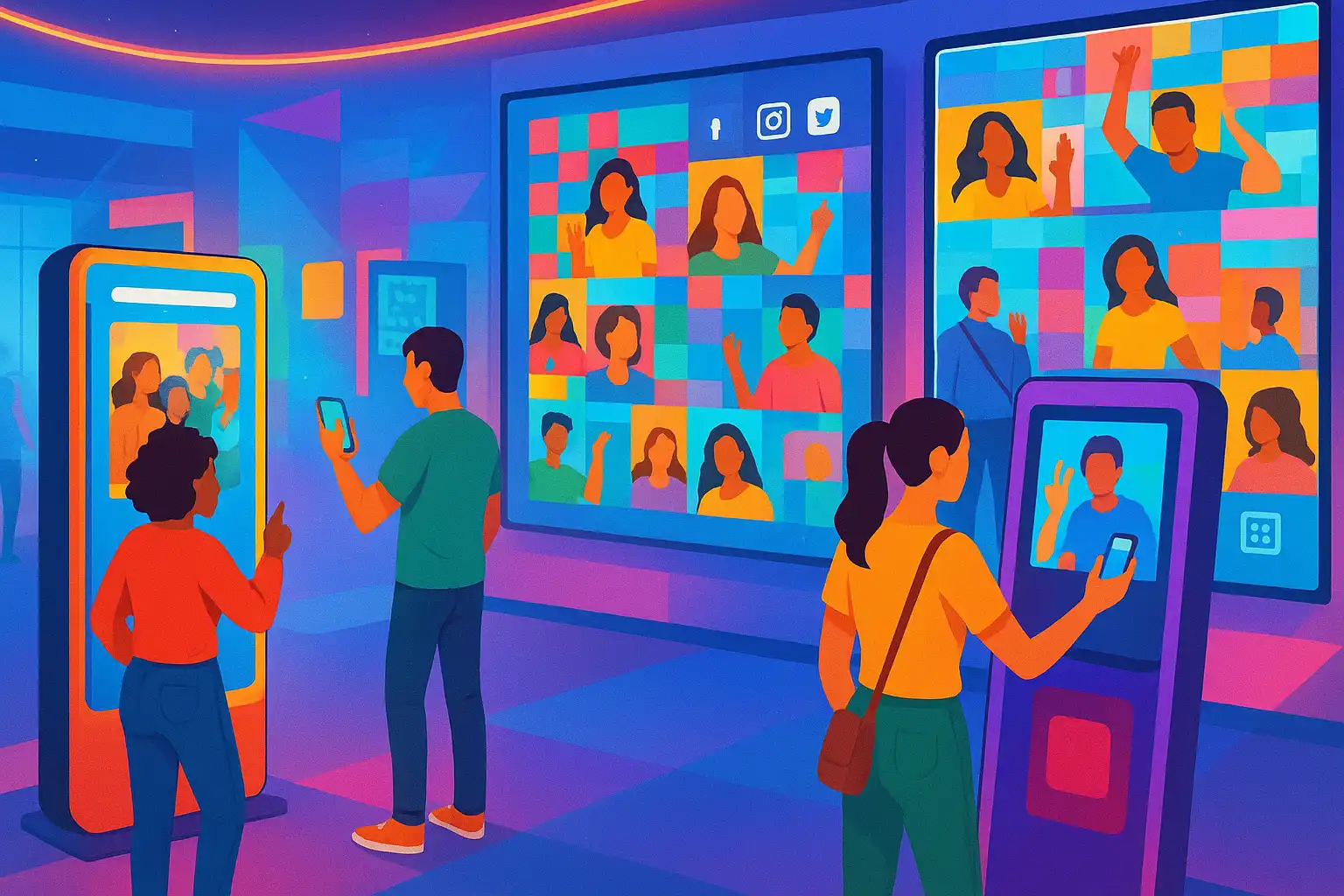
User generated content campaigns are one of the most effective ways to build genuine trust between brands and their audiences. When real people share their experiences, photos, reviews, and stories about a brand, it creates something no polished ad can replicate — authentic proof that your product or service delivers on its promises.
According to research from Stackla and Nosto, 79% of consumers say UGC highly impacts their purchasing decisions — compared to just 12% who say the same about branded content and 9% about influencer content. The same study found that 88% of consumers consider authenticity important when choosing which brands to support. Modern customers are skeptical of traditional advertising. They want real evidence. UGC fills that gap.
What is user generated content and why does it work?
User generated content (UGC) is any content — photos, videos, reviews, testimonials, or stories — created and shared by real users rather than the brand itself. When potential customers see actual buyers talking positively about a product or experience, it feels far more credible than seeing a branded message.
UGC works for several reasons:
- It’s authentic — audiences can sense the difference between genuine and manufactured content
- It removes doubt — seeing others enjoy your product reduces purchase hesitation
- It makes contributors feel valued and included, strengthening their relationship with your brand
- It scales content creation — your audience does the work, and you amplify it
Brands like GoPro, Starbucks, Coca-Cola, and Doritos have built entire campaigns around UGC — and consistently seen higher engagement and conversion rates than with traditional advertising.

Most effective UGC campaign ideas
1. Hashtag challenges
Create a unique, memorable hashtag and encourage users to post content using it. GoPro’s #GoProAwards invites people to showcase adventure moments — the result is thousands of authentic, inspiring photos and videos seen by millions. #ShareaCoke and #ShotoniPhone follow the same formula: give people a simple, branded framework for their own creativity.
2. Photo contests
Ask customers to submit photos showcasing your product in their daily life. Feature winners in your next campaign or on your website. Starbucks’ white cup contest asked fans to decorate cups and post their designs — thousands of creative entries, massive organic reach, zero ad spend.
3. Review and testimonial drives
Prompt your audience to leave honest reviews on Google, Trustpilot, or your website. Highlight the best ones on product pages to reassure new visitors. Written stories and mini case studies work especially well for service businesses.
4. Video testimonial booths at events
Set up AI-powered kiosks at events where attendees can record quick video testimonials. With their permission, share these clips to build peer credibility. Technology like real-time social walls or mosaic displays that show audience posts live can transform quiet events into vibrant, interactive experiences.
5. Competitions and creative contests
Host contests where people submit videos, stories, or designs. Doritos’ #CrashtheSuperBowl let fans create their own commercials — winners were featured during the actual Super Bowl. The combination of a huge prize and genuine creative freedom drove massive participation.
6. Interactive challenges
Run campaigns that invite creative responses. Apartment Therapy’s “Small Cool” home decorating challenge asks followers to submit their unique solutions — it delivers community spirit, practical inspiration, and a steady stream of authentic content.
7. Storytelling initiatives
Invite longer-form user stories about meaningful experiences with your brand. The Yosemite Conservancy’s story-sharing approach builds community and emotional connection by showcasing visitors’ personal moments — content that money can’t buy.
8. Social media takeovers
Let a customer or brand advocate “take over” your social media stories for a day, offering real insights and a fresh perspective to your audience.
9. Employee highlights
Invite staff to share behind-the-scenes content — this humanizes your brand and often encourages external followers to contribute their own stories.
For more inspiration with real-world tactics, this collection of UGC campaign ideas designed to build trust walks through proven concepts brands have used to drive participation.
How to launch a successful UGC campaign
- Set SMART objectives. Define Specific, Measurable, Achievable, Relevant, and Time-bound goals. Are you aiming for more brand awareness, higher engagement, sales, or a growing email list?
- Define your audience. Think carefully about who you want to reach. Your messaging, platforms, and campaign mechanics should all match their habits and interests.
- Craft compelling CTAs. Don’t just say “Share your story.” Give people a clear, exciting reason to participate: “Post your best coffee art for a chance to be featured on our page.”
- Pick the right platforms. Figure out where your audience is most active — Instagram, TikTok, LinkedIn, or Twitter/X — and design your campaign around those platforms’ native features.
- Create a unique hashtag. A campaign-specific hashtag gathers entries, makes finding UGC simple, and encourages organic sharing.
- Reward participation. Offer recognition, features on your official channels, gift cards, or public acknowledgment. People love seeing their content on brand accounts — often more than cash prizes.
- Use technology to amplify. AI photo booths, video testimonial kiosks, and branded digital frames lower the barrier to participation and generate higher-quality content. Real-time social walls displayed at events create FOMO that drives more people to join.
- Be transparent about usage rights. Clearly state your terms and conditions so participants understand how their content will be used. In the U.S., the FTC’s disclosure guidelines require clear labeling whenever UGC is sponsored or otherwise incentivized — and similar rules apply in most other countries.
How to encourage authentic contributions
Getting genuine, heartfelt content from your audience requires removing barriers and creating genuine reasons to participate:
- Make it easy. QR codes at events, simple submission forms, and clear instructions reduce friction dramatically.
- Offer genuine recognition. Reposting, thank-you messages, or featuring contributors in your newsletter can be just as motivating as big prizes.
- Create community excitement. Feature contributions in real time on screens, websites, or social feeds. This sparks FOMO and encourages more people to join.
- Recognize top contributors. A social media series highlighting customers or a spotlight section in your newsletter inspires others to participate.
- Ask for stories, not just photos. Personal narratives and testimonials feel more authentic and drive more trust than product images alone.
- Avoid over-editing. Resist the urge to polish UGC too heavily. Candid, unedited posts feel far more authentic than staged content.
How to showcase UGC to maximize trust
Collecting content is only half the equation — how you present it matters just as much:
- Feature UGC prominently. Place user testimonials, reviews, and images in visible spots on your website and product pages.
- Use multiple formats. Mix photos, videos, written reviews, and live streams to reach different audiences and preferences.
- Highlight spontaneous moments. Share unedited, candid posts that capture genuine reactions.
- Refresh content regularly. Update featured UGC frequently to show ongoing engagement.
- Link UGC to social proof. Show new visitors how many others have chosen your brand. Display participation counters or share the best-performing posts each week.
The more your audience sees real people sharing, the more transparent and trustworthy your brand becomes. For a closer look at the underlying business case, this overview of the benefits of running UGC campaigns covers how brands typically translate authentic content into measurable results.
How to measure UGC campaign success
Go beyond surface-level stats. Track metrics tied to your specific goals:
- Engagement: Likes, comments, shares, and unique hashtag uses
- Reach: Total impressions and unique viewers across platforms
- Lead generation: New contacts, newsletter sign-ups, or demo requests from the campaign
- Conversions: Sales, downloads, or actions taken after engaging with UGC
- Sentiment analysis: The overall tone of user content — positive, negative, or neutral
- Content library growth: Number of usable, authentic pieces generated
- Community growth: Increase in followers or group participation
Use a mix of quantitative data and qualitative insights to understand the complete picture. Positive comments and organic shares often signal impact that numbers alone don’t capture.
Combining UGC with creator partnerships is another way to multiply reach — this guide to making influencer content creation successful shows how pairing influencer support with authentic user content drives stronger results than either alone.
Pros and cons of UGC campaigns
Pros:
- Builds instant trust through real, unscripted voices
- Increases engagement and reach without large ad budgets
- Encourages community and long-term brand loyalty
- Offers diverse perspectives and creative content you couldn’t produce yourself
- Scales content creation efficiently
Cons:
- Requires active moderation to prevent spam or off-brand submissions
- Content quality can be uneven and inconsistent
- Legal considerations around permissions and usage rights
- Risk of negative or controversial submissions if guidelines aren’t clear
A successful UGC campaign depends on making participation simple, setting clear expectations, and showing contributors that their content genuinely matters. When people feel seen and appreciated, they are more likely to create, share, and support the campaign.
- Communicate the campaign goal and participation rules clearly.
- Make the activity easy and engaging for customers to join.
- Celebrate contributors by featuring their stories, reviews, photos, or videos.
- Use campaign mechanics that feel natural for your audience and brand.
- Keep the experience community-focused, especially for small businesses.
Small businesses can often benefit strongly from UGC because their customer relationships feel more personal. Featuring local customer stories, real reviews, or customer photos can build loyalty in a way that feels more authentic than large-scale branded campaigns.


Related Posts