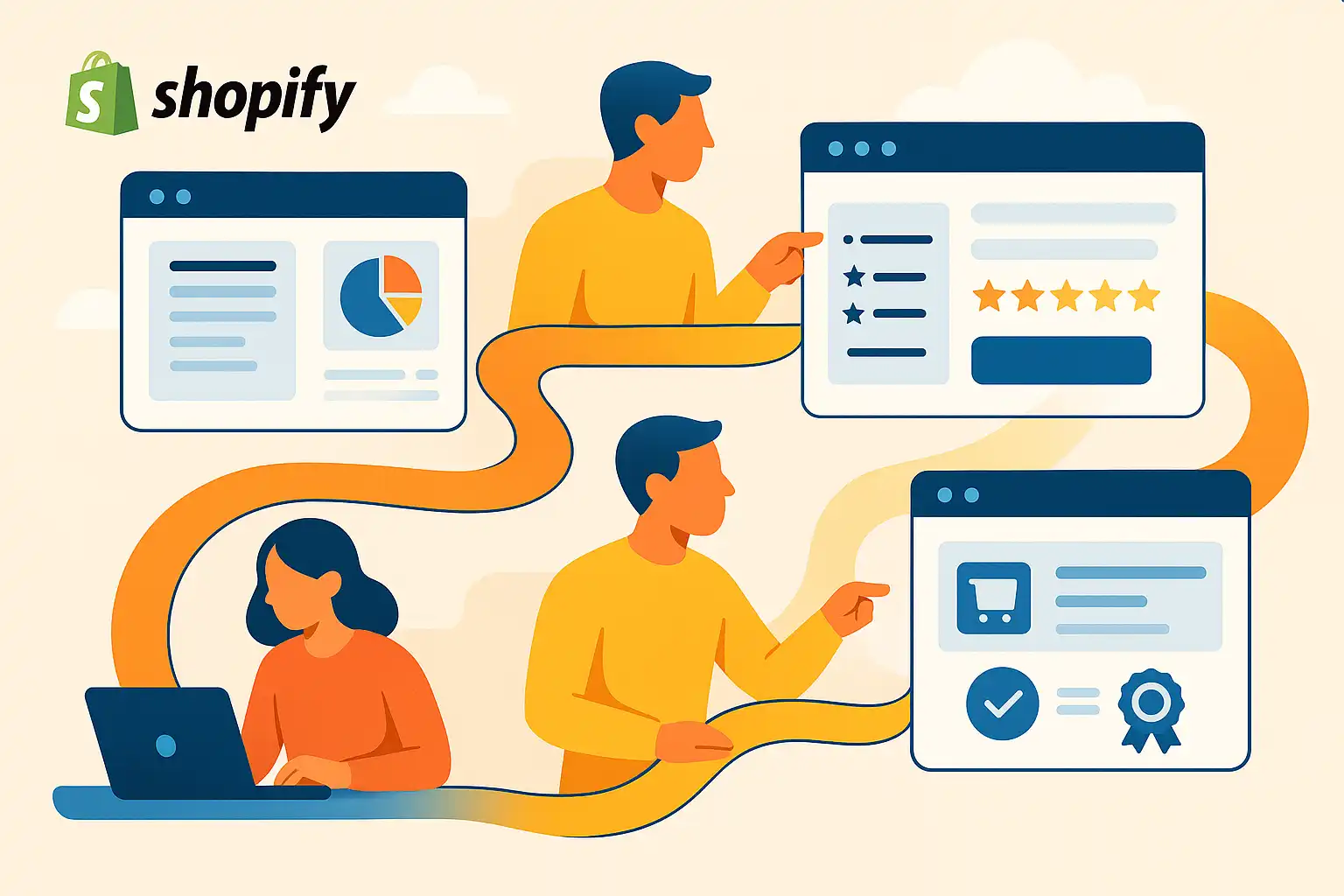
Creating high-converting content for different buyer journeys on Shopify is about understanding what shoppers need during every stage. In the first moments, address their questions: What is the buyer journey? How do you align your Shopify content to meet shoppers where they are? Simply put, the buyer journey is the path a customer follows, from discovering a need to making a purchase. Your content needs to match this journey. By doing so, you not only attract visitors but guide them toward becoming loyal buyers. Let’s explore how to craft content for different buyer journeys on Shopify, so every step feels smooth and natural for your audience.
What are the key stages of the buyer journey on Shopify?
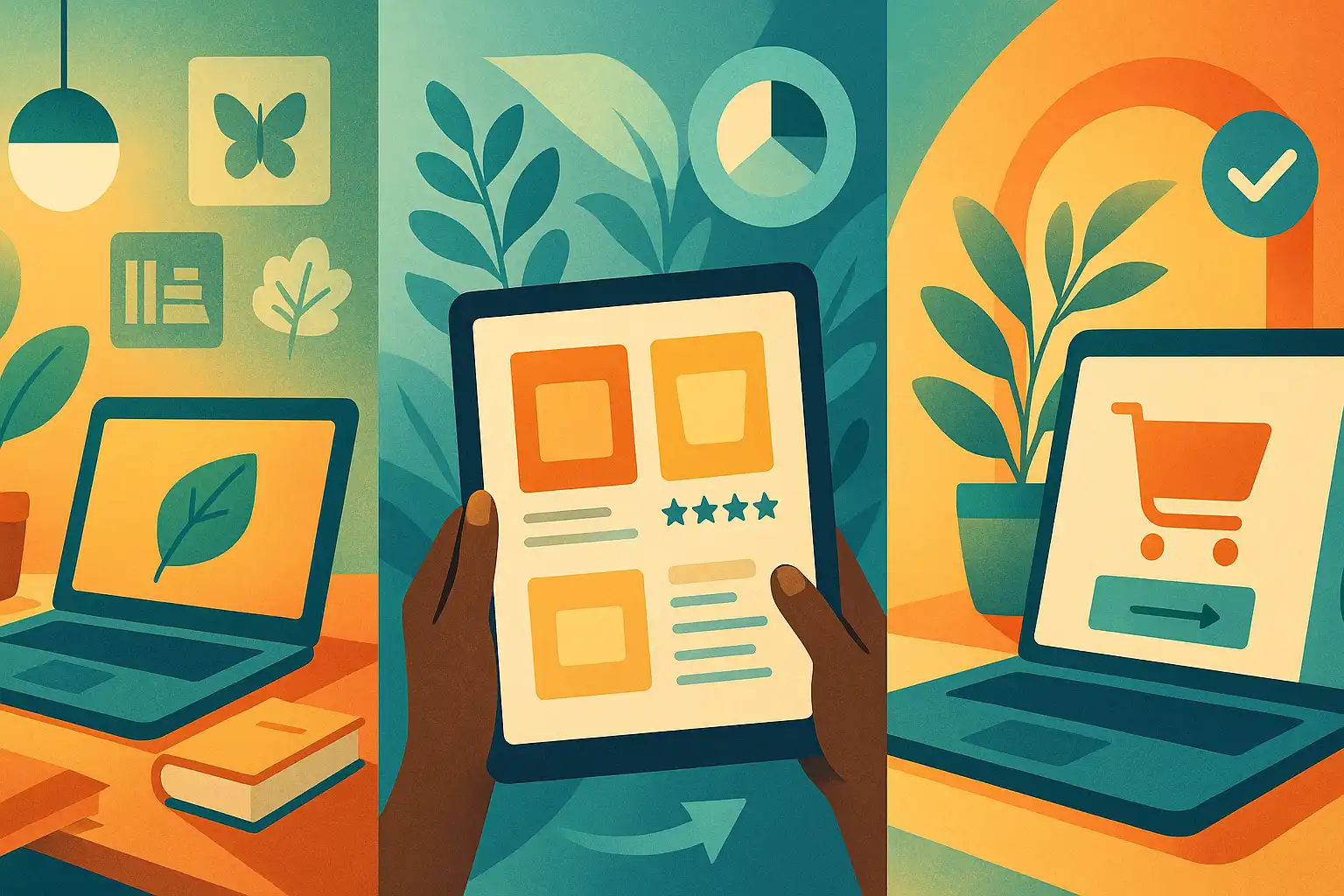
To build content that truly works, start by knowing the stages buyers move through. Each stage calls for a special approach, because customers have different needs as they get closer to a decision. The three main stages are:
- Awareness: The shopper realizes they have a problem or desire but are not sure how to solve it yet.
- Consideration: They explore solutions, compare options, and seek more information.
- Decision: The buyer is ready to choose and act—here, trust and reassurance matter most.
Mapping these stages helps you align your content, ensuring potential buyers always find helpful guidance, from blog posts to product pages and checkouts.
How do you create content for each buyer journey stage on Shopify?
Let’s break down how to approach each stage with the right content:
Awareness: Sparking Interest with Value
At this point, your shopper is just discovering a need. They search for answers, solutions, or inspiration. Your goal here is to educate and engage without pushing for a purchase. Effective content includes:
- SEO-optimized blog articles answering common questions
- Social posts that highlight problems or trends
- Educational videos or infographics
- Simple guides or checklists about the category
For instance, if you’re selling eco-friendly kitchenware, a blog about “Five Easy Ways to Reduce Plastic in Your Kitchen” attracts those who care about sustainability but aren’t ready to buy yet.
Consideration: Helping Buyers Compare and Evaluate
Now, your audience knows what they need, but wants to explore options. Here, you must build trust by offering detailed and unbiased information. Effective content for this stage includes:
- Comparison tables showing key features
- Customer reviews and testimonials
- Product-focused blog posts and buying guides
- Email sequences with helpful tips and product spotlights
As an example, you might share “Glass vs. Stainless Steel: Which Water Bottle Lasts Longer?” or real feedback from verified customers. If you’re analyzing your results, it’s a smart idea to look at funnel optimization strategies for better conversions and spot where buyers drop off or hesitate.
Decision: Making Purchase Simple and Reassuring
Now, your shopper is ready to buy. Reduce any friction and help them feel secure. Focus on:
- Crystal-clear product pages with specs and photos
- Fast, distraction-free checkout processes
- Visible guarantees and return policies
- Live chat or quick customer support
- Limited-time offers or free shipping incentives
For example, adding a countdown timer for a sale or an easy-to-find customer support chat builds confidence to finish the purchase. In this final stage, each word and design element should lead smoothly to “Place Order.”
What makes content truly convert at every stage?
Each stage has unique goals, but a few elements are always important if you want higher conversions:
- Clarity: Make every message simple and direct.
- Relevance: Show you understand the buyer’s needs and offer tailored solutions.
- Consistency: Use a consistent tone and look across all your content.
- Ease: Remove obstacles. Short paragraphs, clear CTAs, and easy navigation help shoppers progress.
- Trust: Display reviews, badges, and helpful support options to reassure buyers.
These basics matter, no matter if your visitor is reading a first-time blog or nearly clicking “Buy Now.”
Case Example: Mapping the Journey for an Eco-Shop
Let’s imagine a Shopify store selling organic teas.
- Awareness: Blog post on “How Herbal Teas Support Stress Relief.”
- Consideration: Comparison guide of loose-leaf vs. bagged teas, featuring reviews.
- Decision: Product page with customer testimonials, quick checkout, and a 10% discount for first-time buyers.
This structure ensures that wherever the customer lands, they find the right content to keep them moving toward purchase. If you want to define your priorities, reviewing eCommerce content goals and tracking success can help ensure your efforts are aligned.
How can Shopify owners personalize content for better engagement?
To truly connect, you need to go beyond basic audience targeting. Personalization means tailoring messages and offers based on what you know about each shopper’s journey, needs, and behaviors. Techniques include:
- Segmenting emails by browsing or purchase history
- Recommending products based on previous views
- Dynamic landing pages for repeat visitors
- Custom pop-ups or chat triggers depending on user path
You can use Shopify’s built-in tools, or connect with apps that provide deeper customer insights. Automated email sequences with personalized product suggestions work especially well during the consideration and decision stages.
Tools to Optimize Your Content Journey on Shopify
Several apps and built-in features can help you refine and automate your content strategy:
- Shopify Email: Send targeted messages and reminders.
- Product Reviews: Collect and display real customer feedback.
- Page Builder Apps: Create custom landing pages for different campaigns or personas.
- Analytics: Track page views, drop-off points, and conversions for ongoing optimization.
For inspiration, seeing how different brands create memorable experiences can spark ideas; you may find value in browsing inspiring branded content examples that connect with shoppers at every stage.
FAQ: Common Questions on Content for Different Buyer Journeys on Shopify
Q: How do I know which content type works best for each stage?
A: Use analytics to see where shoppers engage or drop off. For awareness, educational blogs and social posts work well; for consideration, opt for detailed product pages and reviews; for decision, focus on fast checkout, testimonials, and support.
Q: What is the biggest mistake Shopify owners make with buyer journey content?
A: Treating all shoppers the same. People at different stages need different messages. Generic content misses opportunities to nurture them toward a sale.
Q: How often should I update my content strategy?
A: Review and refresh your content every quarter. Consumer trends and technology change quickly, so regular updates help maintain relevance and conversions.
Q: Can I automate content delivery based on buyer behavior?
A: Yes! Using Shopify apps, email marketing tools, and analytics, you can segment and automate delivery of blogs, guides, recommendations, or offers so that each shopper sees what’s most helpful for their current journey stage.