If you want to turn more prospects into loyal customers, understanding funnel optimization strategies is essential. The core question most businesses face is simple: how can you get more people to move smoothly from discovering your brand to making a purchase? Funnel optimization strategies help you boost conversions at every stage, from the first moment someone learns about your company to the point they buy—and even beyond. In this article, we’ll break down step-by-step methods, common problems, and practical tools you can use to improve results and grow your business.
What are the Stages of the Marketing Funnel and Why Do They Matter?
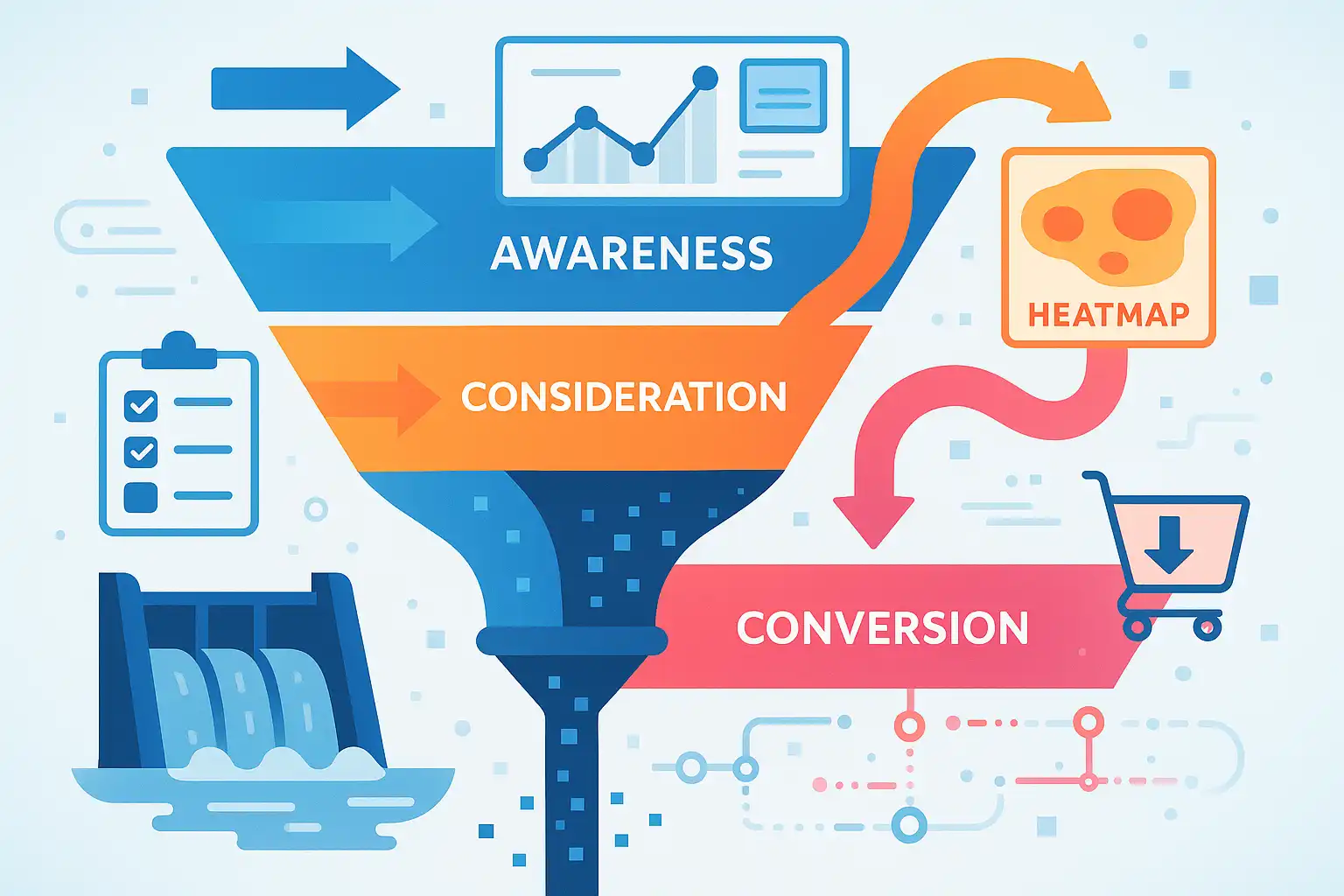
The marketing funnel is a model for understanding the steps people take before making a decision. It’s typically divided into three main stages:
- Awareness (Top of the Funnel, TOFU): Prospects discover your brand or product for the first time.
- Consideration (Middle of the Funnel, MOFU): Interested users seek more information, compare options, and weigh the benefits.
- Conversion (Bottom of the Funnel, BOFU): Ready-to-buy visitors take action—this could be making a purchase, signing up, or another key goal.
Each stage has its own challenges. Optimizing your funnel means tweaking each step so more people keep moving toward your goal rather than dropping off.
How Do You Identify and Fix Bottlenecks in Your Funnel?
Bottlenecks are places where users leave your funnel or fail to take the next step. Addressing these friction points is a vital part of any funnel optimization strategy. Here’s a simple process:
- Map the customer journey: Outline the typical steps from first touchpoint to conversion.
- Use funnel analytics: Tools like Google Analytics or Mixpanel help you spot where drop-offs occur.
- Gather behavior insights: Heatmaps (e.g., Hotjar, Crazy Egg) show where users focus or ignore. Session replay tools let you watch real user journeys and find stumbling blocks, such as confusing navigation or broken links.
- Collect user feedback: On-site surveys help uncover frustrations or hesitations you might not spot from data alone.
- Test solutions: Experiment with different fixes, like clearer calls-to-action, simpler forms, or better trust signals.
- Measure results: Revisit your metrics to see if your changes improved conversion rates or reduced drop-offs.
For example, if users consistently abandon their carts, a session replay might show that shipping costs appear late in the process—revealing how earlier transparency could prevent this bottleneck.

What Are the Most Effective Funnel Optimization Strategies for Each Stage?
Each funnel stage has unique needs. Here’s how to tailor your approach:
Top of Funnel (Awareness)
- Optimize acquisition channels: Track which sources (social, search, referrals) bring interested visitors. Invest more in what works.
- Clarify your message: Make your value clear in ads, headlines, and landing pages. People should know what you offer within seconds.
- Maximize engagement: Use eye-catching visuals or interactive content to grab attention and encourage first steps, like newsletter signups.
Middle of Funnel (Consideration)
- Use heatmaps and surveys: Identify which content or features people focus on, and where they get lost or frustrated.
- Address user concerns: Add FAQs, testimonials, or comparison charts to answer questions or overcome hesitations.
- Guide the journey: Make navigation easy. Use clear menus, helpful links, and logical page flows.
Bottom of Funnel (Conversion)
- Simplify forms and checkout: Fewer fields and clear instructions make it easier to complete purchases or sign-ups.
- Build trust: Show guarantees, privacy badges, or recognizable payment logos. Customer reviews increase confidence.
- Reduce last-minute friction: Use session replays to spot issues like confusing discount codes, slow-loading pages, or unclear totals.
Across all stages, keep an eye on key metrics like conversion rate per channel, cost per acquisition, and user feedback. This guides ongoing improvements.
How Can Data Analysis and User Behavior Insights Improve Conversions?
Data is at the heart of effective funnel optimization strategies. By combining numbers with real user feedback, you get a clear map for what to change. Key tactics include:
- Funnel analysis: See exactly where users drop off—between ad and landing page, during sign-up, or at checkout.
- Heatmaps: Visualize which parts of a page get attention and which are ignored. If your main button is “below the fold” and rarely clicked, you know what to fix.
- Session replay: Watch anonymous recordings of real user visits to spot points of frustration—like repeated attempts to click a broken link, or hesitations over form fields.
- Surveys: Ask direct questions at key stages (“What stopped you from buying today?”) to learn pain points.
Brands such as Shopify and HubSpot use these methods to refine their customer journey. For example, if a survey reveals many users worry about return policies, placing this information near the checkout can reduce abandonment and boost buying confidence.
Combining Quantitative and Qualitative Data
Numbers tell you where issues exist; words explain why. Mix metrics like drop-off rates with open-ended survey questions to form a complete picture. This dual approach ensures you target real issues and don’t just guess what users want.
What Tools and Metrics Should You Use for Funnel Optimization?
There are many tools available for customer journey analysis and improving conversion rates at each funnel stage. Popular options include:
- Google Analytics: Map out steps and spot where visitors exit the process.
- Mixpanel or Amplitude: Advanced funnel tracking and behavioral analytics.
- Hotjar, Crazy Egg: Heatmaps and session recording tools that make it easy to see user behavior visually.
- SurveyMonkey, Typeform: Collect user opinions and feedback at specific points in the funnel.
Essential metrics to track:
- Conversion rate: The percentage of visitors who take the desired action at each stage.
- Cost per acquisition (CPA): How much you spend to acquire a new customer.
- Bounce and exit rates: Where and why people leave your site.
- Time on page: Higher engagement often means better informational value.
Review these metrics regularly (weekly or monthly) to spot trends and act fast on changes that might affect your funnel’s effectiveness.
Common Mistakes and How to Avoid Them
- Ignoring mobile experience: If your site or funnel isn’t easy to use on phones, you risk losing a large audience.
- Overcomplicating the journey: Too many steps, fields, or unclear instructions lead to frustration and abandonment.
- Not testing changes: Always run A/B tests to compare new ideas and ensure improvements really work.
FAQ
What is funnel optimization?
Funnel optimization is the process of analyzing and improving each step of the marketing funnel to increase the number of visitors who move from awareness to conversion. It involves removing barriers, testing new ideas, and using data to guide decisions.
What are the best tools for funnel optimization?
Popular tools include Google Analytics for tracking, Hotjar or Crazy Egg for heatmaps and session replays, and SurveyMonkey or Typeform for gathering user feedback.
How often should I review my funnel metrics?
Check core metrics like conversion rates and drop-offs at least once a week, and after making any major changes. This helps you catch issues quickly and keep improving over time.
What’s the biggest mistake to avoid?
Don’t ignore real user feedback. Data tells you where problems are, but only users can explain why they hesitate or leave. Combine numbers and opinions for the best results.