If you’re wondering how brands consistently deliver meaningful content across their channels, the answer lies in a structured process. This guide offers the content strategy process explained in clear, simple steps. You’ll learn exactly how teams go from research and planning to creating and publishing content that reaches the right people, at the right time, with the right message. Whether you’re a solo creator or part of a marketing department, these steps will help you build an effective, repeatable content system.
What is the Content Strategy Process, and Why Is It Essential?
In short, the content strategy process is a series of steps that guide you from identifying your goals to measuring the results of your published content. It helps ensure your content serves a business purpose, reaches the right audience, and is produced efficiently. Without a thoughtful process, content can feel random, disconnected, or fail to deliver results.
A clearly explained content strategy process enables you to plan, produce, and distribute information that is both meaningful to your audience and valuable for your business. It also helps teams maintain consistency and optimize for search engines, user experience, and your brand’s voice.
What Are the Main Stages of the Content Strategy Process?
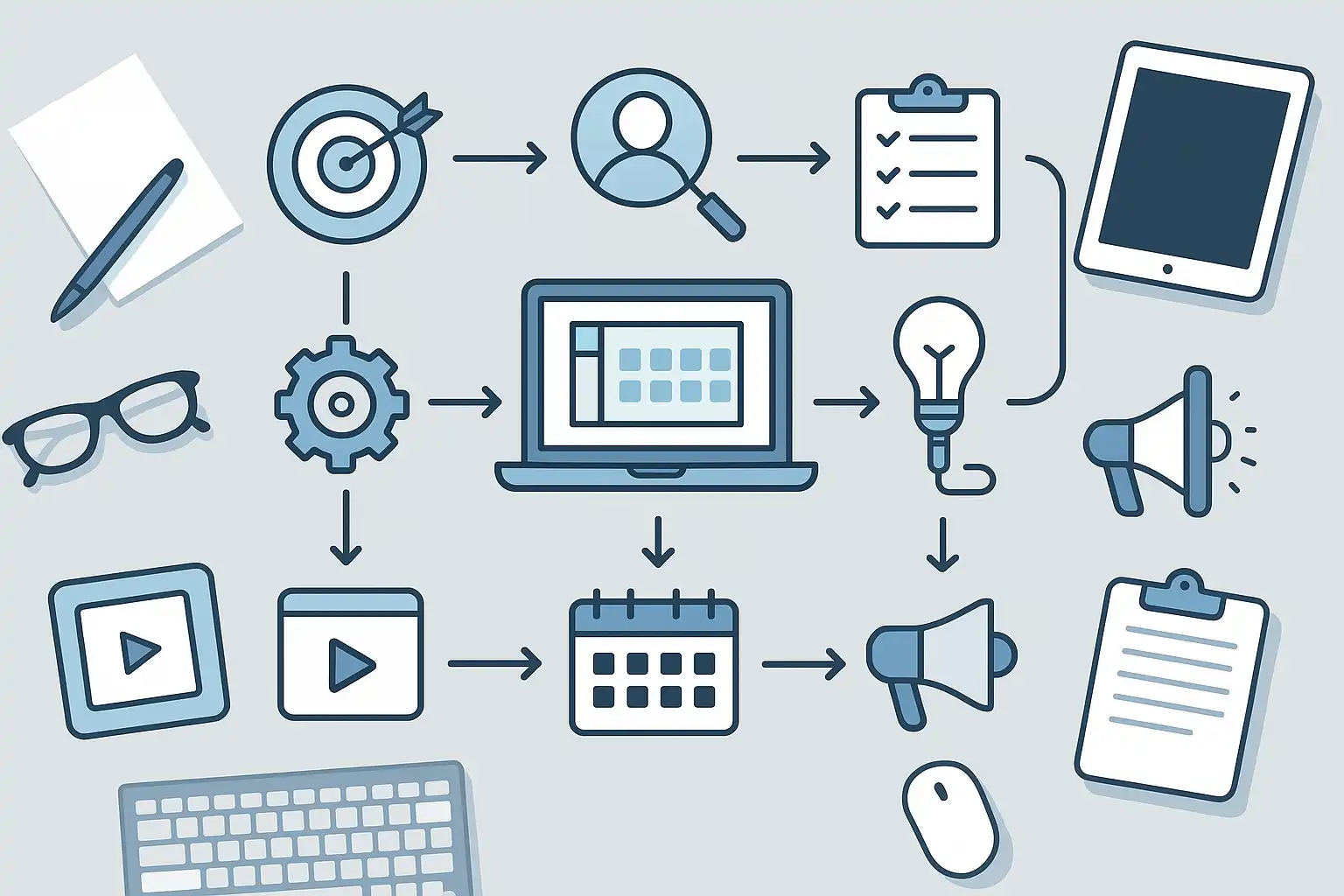
The content strategy process unfolds in several key stages. Each step sets the foundation for the next. Let’s walk through the journey from research to publishing, breaking down what you need to do at each phase:
- Set Clear Goals
- Conduct Audience and Persona Research
- Perform a Content Audit
- Select Platforms and Tools
- Brainstorm and Plan Content
- Create Content Calendars
- Produce and Review Content
- Publish and Promote
- Measure and Refine
1. Set Clear Goals Using SMART Framework
Every successful strategy starts with defining specific goals. The popular SMART framework recommends making goals Specific, Measurable, Achievable, Relevant, and Time-bound. For example, you might aim to increase organic website traffic by 20% in six months through blog content.
Setting goals helps everyone on your team stay focused and makes it easier to measure success later. These objectives could include boosting engagement, improving brand awareness, increasing sales, or building trust.
2. Conduct Audience and Persona Research
Understanding who you’re trying to reach is essential. Create audience personas that represent the needs, behaviors, challenges, and preferences of your target readers or customers. This research prevents wasted resources on content that doesn’t resonate. For instance, an educational technology company will target both teachers and parents, each with different content needs.
Use tools like surveys, social media polls, website analytics, or feedback from sales and customer support. These data points help you tailor content topics, tone, and formats for the best impact.
When you identify your target persona’s pain points and interests, you can craft stories that catch—and keep—their attention.
3. Perform a Content Audit to Identify Gaps
Next, review your existing content library. A content audit involves cataloging what you already have, what performs well, and what’s missing. This helps avoid duplicate efforts and highlights opportunities.
Look at performance metrics such as page views, engagement rates, search rankings, and conversions. Tools like Google Analytics or HubSpot’s Website Grader are useful for this step. You might find that certain topics or formats drive more results, while others need updating or removal.
Completing a content audit gives you insights into which areas to focus on, making your efforts more efficient.
4. Select the Right Platforms and Tools
Choose a Content Management System (CMS) that fits your needs. Popular options include WordPress, HubSpot CMS, or even a platform with HubSpot plugins if you want advanced analytics and automation. The right tools streamline workflows and publishing.
Consider additional tools for ideation (like Feedly or BuzzSumo), collaboration (such as Trello or Asana), visual design (Canva, Figma), and analytics (Google Analytics, SEMrush). The right technology stack supports consistent and organized content delivery.
5. Brainstorm and Plan Your Content
Now it’s time to develop topic ideas based on what your audience cares about and the gaps you uncovered. Use brainstorming tools such as Feedly to track industry trends, BuzzSumo to see what’s working for competitors, and BlogAbout or CoSchedule Headline Analyzer to generate catchy headlines.
Ask yourself:
- What problems does my audience face?
- What questions do they ask?
- What content formats (articles, infographics, videos) best suit their needs?
- How can I offer something unique from my competitors?
This phase ensures your topics are rich, relevant, and likely to engage your target audience.
6. Develop Content Calendars and Governance
Creating a content calendar is crucial for an organized approach. Outline what you’ll publish, when, and on which channels. Editorial calendars help balance evergreen content (always relevant) with timely pieces tied to industry news or events.
Governance means defining roles and responsibilities for everyone involved, from writers to editors and designers. Specify who reviews, approves, and owns each piece of content. This structure reduces confusion and delays.
When building your calendar, include:
- Topic/title
- Content type (blog post, video, guide, etc.)
- Assigned author/creator
- Planned publish date
- Distribution channel (website, email, social media)
- Status (draft, in review, scheduled, published)
7. Produce and Review Content
With a plan in place, move to content creation. Write, design, or record your materials. Follow your brand guidelines to maintain a consistent voice and style. Incorporate SEO best practices, such as using relevant keywords, optimizing headlines, and adding clear calls to action.
Quality checks are vital. Have a review process to ensure accuracy, grammar, and alignment with your goals. Editors or subject matter experts should review and approve content before it goes live.
Streamlined processes and strong governance keep everyone accountable and help maintain high standards throughout production.
8. Publish and Promote Content
Use your CMS to publish on schedule. Carefully coordinate publishing across channels, such as your blog, newsletter, and social media accounts. Promotion is just as important as creation; distribute each piece where your audience is active.
Leverage email marketing, social sharing, influencer partnerships, or paid ads as needed. Repurpose key content into multiple formats, like turning a blog post into a video or infographic. All these actions amplify your reach and engagement.
Effective publishing relies on best practices such as content governance, cross-team coordination, and tracking all activity in your editorial calendar.
9. Measure Results and Refine Your Strategy
Finally, evaluate the performance of your published content. Use analytics tools to track website visits, engagement, social shares, and conversions. Monitor KPIs (Key Performance Indicators) that match your original goals, such as increased traffic, more leads, or higher search rankings.
Review what worked and what didn’t. This insight guides adjustments to your topics, formats, or channels. Content strategy isn’t set in stone; it’s a cycle of learning and improvement.
How Do You Conduct Effective Research for a Winning Content Strategy?
Effective research forms the backbone of your content process. It ensures you’re not guessing about your audience’s needs or what will work. Here’s how to make your research count:
- Audience Persona Development: Dive deep into demographics, behaviors, and motivations.
- Competitor Analysis: Examine what your competitors are publishing, where they get engagement, and what audiences they target.
- Content Audit: Review your own content, as discussed above, for gaps and outdated material.
- Trend and Keyword Tools: Use Feedly, BuzzSumo, or Google Trends to identify rising topics and popular formats.
- Strategic Questioning: Ask which problems your content solves and how you can offer a unique perspective.
These effective content marketing research techniques ensure every piece of content is grounded in data, not guesswork. This approach boosts the likelihood that your efforts lead to real business value.

What Are the Best Practices for Smooth Content Publishing?
After months of planning and creating, publishing can become a bottleneck if not managed carefully. Here are best practices to streamline this crucial stage:
- Governance Models: Define clear roles for who creates, reviews, approves, and updates content. This minimizes confusion and slowdowns.
- Appropriate CMS: Select platforms like WordPress or HubSpot CMS that support your workflow.
- Calendar-Driven Scheduling: Use content calendars to plan posts in advance, ensuring a steady flow of high-quality material.
- Cross-Team Coordination: Align marketing, product, and sales teams to avoid overlap and maximize content impact.
- Performance Monitoring: Use analytics to spot issues quickly and optimize future content.
- Regular Updates: Refresh published content as information changes to keep it relevant and maintain SEO value.
These publishing best practices foster quality, efficiency, and a cohesive brand experience for your audience. Teams that follow these steps are more likely to see stronger engagement and better returns on their efforts.

How to Create Content Calendars and Ensure Consistent Governance?
Content calendars are more than just schedules—they’re strategic planning tools. To create one, list all planned topics, deadlines, responsible team members, and distribution channels in a shared document or tool (like Trello, Asana, or an Excel sheet).
Set up regular review meetings to check progress and resolve any bottlenecks. Include space for evergreen content, seasonal campaigns, and flexible slots for quick-turnaround news or trends. This balanced approach helps you adapt without losing focus.
Governance refers to the rules and processes that guide your content’s production and distribution. Establish clear guidelines for who creates, reviews, and publishes which types of content. For example, designate a main editor for all blog posts or a content manager to oversee social media.
For those exploring new approaches, studying content strategy implementations at various organizations can reveal how strong governance and planning boost results.
How Does the Content Strategy Process Look in Practice?
Let’s consider an example of how a B2B software company might use the content strategy process explained above:
- Goal: Increase software trial sign-ups by 30% in one year.
- Persona Research: Identify decision-makers in IT departments and their pain points (security, costs, scalability).
- Content Audit: Discover that most existing content is product-focused but lacks educational blog posts.
- Tool Selection: Choose WordPress with HubSpot plugins to integrate marketing automation and analytics.
- Brainstorm: Use BuzzSumo to find trending topics about cloud security and cost savings.
- Calendar and Governance: Map out monthly webinars, biweekly blogs, and weekly newsletters, assigning each to specific team members.
- Create: Write how-to guides, customer case studies, and FAQ videos.
- Publish: Launch content across all channels, syncing releases with product announcements.
- Measure: Track sign-ups and website traffic, adjusting topics and formats as needed.
For anyone getting started, resources like Blog Planning Techniques share practical advice on managing content calendars and workflows.
What Are Common Content Types and Their Uses?
Different content types serve different audience needs. Here’s a quick list of popular formats and their benefits:
- Blog Posts: Great for SEO, thought leadership, and evergreen information.
- Videos: Ideal for tutorials, product demos, and storytelling.
- Infographics: Perfect for summarizing data or simplifying complex topics.
- Podcasts: Useful for reaching on-the-go audiences and building community.
- Case Studies: Show real-world results to build trust and credibility.
- Whitepapers/Guides: Work well for lead generation and in-depth education.
Choosing the right mix depends on your audience’s preferences, available resources, and business objectives. Some organizations find that starting with an entry level content strategy helps clarify which formats deliver the most value for their market.
Tips for Iterating and Improving Your Content Strategy
Content strategy is an ongoing process. Here are a few ways to keep improving:
- Regular Reviews: Schedule quarterly or biannual strategy check-ins to assess progress.
- Stakeholder Feedback: Gather feedback from sales, customer support, or actual users to refine your topics and formats.
- SEO Updates: Stay up to date with search engine changes and adjust keywords or content accordingly.
- Test and Learn: Use A/B testing for headlines, calls to action, or visuals to see what resonates.
- Competitor Monitoring: Regularly check what others in your space are producing and find ways to differentiate.
For B2B marketers, exploring a Simple B2B Content Strategy can serve as a useful reference for continuous improvement and innovative ideas.
Content Strategy Process Explained: A Quick Checklist
- Define clear, measurable goals (use SMART framework)
- Research and build detailed personas
- Audit your existing content for performance and gaps
- Select the right CMS and supporting tools
- Brainstorm topics using data-driven insights and research tools
- Plan your calendar and assign clear roles (governance)
- Create, review, and edit content to ensure quality and relevance
- Publish across all chosen channels, coordinating teams for promotion
- Monitor and analyze results, then refine your strategy accordingly
FAQ
What does a content audit involve?
A content audit systematically reviews all your existing content assets—like blog posts, videos, or whitepapers. It assesses what’s performing well, what’s outdated, and where you have gaps. The audit helps you decide which content to update, remove, or repurpose, making sure everything aligns with your strategy and goals.
How often should I update my content strategy?
Review your content strategy at least once or twice a year. However, you should also make adjustments after major business changes, new product launches, or noticeable shifts in audience interests. Regular updates help maintain relevance and capitalize on new opportunities.
What’s the difference between a content strategy and a content plan?
A content strategy sets the vision, goals, and overall framework for your content efforts. It answers the “why” and “what.” A content plan is more tactical, outlining “how,” “when,” and “who”—the practical details of creating and distributing each piece of content.
Which tools can help manage content workflows?
Some top tools for managing content workflows include Trello, Asana, Monday.com, and Airtable for project tracking; WordPress or HubSpot CMS for publishing; and Google Analytics or SEMrush for performance measurement. Many teams also use collaborative writing tools like Google Docs for editing and approvals.