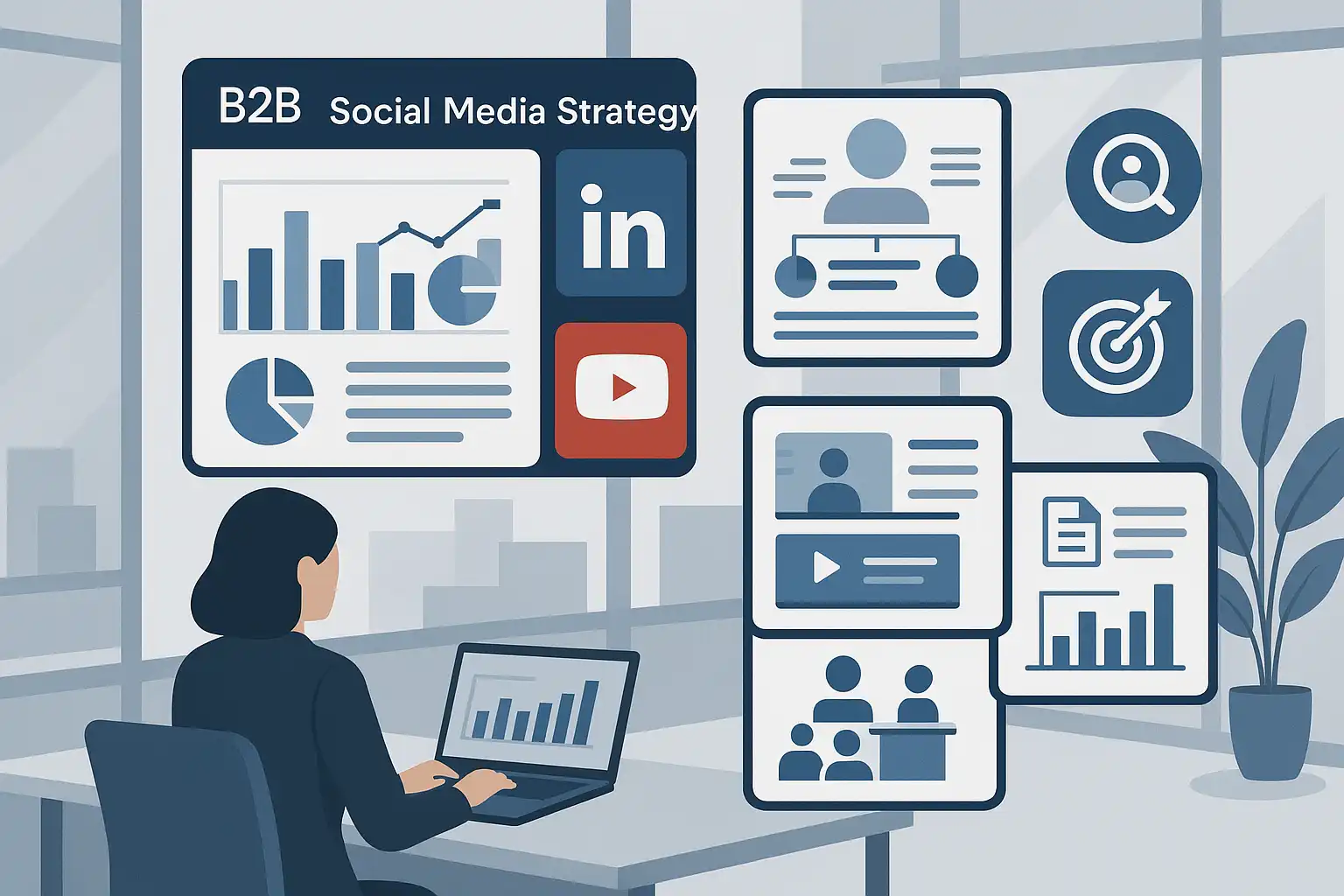
Looking for a B2B social media strategy example that truly delivers leads? Here’s the answer up front: A winning B2B social media strategy is practical, focused on clear goals, and tailored precisely to your audience—especially the decision-makers who matter most to your business. By using targeted content, smart platform choices, and ongoing analysis, any company can transform its social media into a consistent source of qualified leads. Let’s break down exactly how this works and see a real-world, step-by-step example to guide your own efforts.
What are the vital steps in a lead-generating B2B social media strategy?
Every successful B2B social media strategy example shares several essential components. It’s helpful to view these as a process you can follow:
- Set clear, measurable goals. Decide if your main aim is lead generation, brand awareness, website traffic, or industry authority. For lead generation, determine what a “lead” looks like for your sales team—maybe it’s a demo request or a whitepaper download.
- Choose the right platforms. LinkedIn is the top performer for B2B leads, thanks to its business-focused audience and robust targeting options. But don’t ignore others: Twitter (now X), Facebook, Instagram, and YouTube can each add value depending on your product and audience preferences.
- Know your audience well. The best strategies home in on decision-makers—executives, managers, and those researching for their companies. Use insights and build audience personas to tailor your content and messaging.
- Create value-driven content. Focus on educational posts, industry news, quick tips, and authentic stories from your own company. Engaging formats include infographics, short videos, webinars, case studies, and behind-the-scenes glimpses.
- Mix organic and paid strategies. Start by sharing helpful content organically. Use a modest paid ad budget to boost top-performing posts and target decision-makers by job title or industry, especially on LinkedIn.
- Benchmark and analyze competitors. Track what works for other companies in your field. Tools like Socialinsider or native platform analytics show you what content gets attention and where you can stand out.
- Track metrics and optimize. Measure engagement rates, lead conversions, content reach, and ROI. Adjust your strategy based on real data, not guesswork.
- Encourage participation and thought leadership. Get leaders and employees involved in sharing insights, responding to comments, and participating in industry events online.
Real-World Example: Tech Solution Provider’s LinkedIn Strategy
To illustrate this process, let’s look at a mid-sized technology company aiming to reach IT managers and directors in the financial sector. Their main goal is to generate demo requests through LinkedIn. Their strategy breaks down like this:
- Goal: Drive 100 qualified demo requests per month.
- Platform Focus: LinkedIn (primary), with occasional support from YouTube for explainer videos.
- Audience Targeting: Decision-makers in finance—targeted by job title and industry filters.
- Content Plan:
- Weekly LinkedIn posts: mix of tips, industry trends, and case studies showing their software in action.
- Monthly live webinar: “Solving Compliance Challenges in Finance IT”, promoted with LinkedIn Events.
- Short “how-to” videos on YouTube embedded in LinkedIn posts.
- Paid Promotion: Run a small ad campaign to boost best-performing posts to similar decision-makers, keeping spend focused on the content that already drives engagement.
- Benchmarking: They regularly review their key competitors’ top posts (using Socialinsider) to see how topics, posting times, and formats compare. This inspires their next quarter’s content calendar.
- Engagement: Account executives and tech experts comment on relevant industry posts and join ongoing conversations, adding credibility and visibility.
- Measurement: They track:
- Demo request form completions (direct lead metric)
- Post engagement rate (likes, shares, comments, clicks)
- Webinar signups and attendance
- Click-through rate on promoted posts
- Continuous Improvement: Each month, the marketing team reviews results and adjusts topics, formats, or ad targeting based on what performed best.
Following this simple but focused structure, the company doubled its demo requests in one quarter—just by consistently reaching the right audience with messages that matter.

How can your business tailor a B2B social media strategy to win more leads?
Every company is different, but the principles in the b2b social media strategy example above can be adapted to your unique needs. Here’s how you can adjust and personalize your approach for better lead generation:
Start by defining your audience’s needs
Before you create any content, invest time in understanding your best customers. Interview recent buyers, use LinkedIn analytics, or review past lead data. Find out:
- What are their most pressing challenges?
- Which topics catch their attention?
- Where do they spend the most time online?
- How do they make purchasing decisions?
Armed with this information, develop clear audience profiles. This way, all your posts, ads, and interactions will speak directly to potential leads—not a generic crowd.
Choose platforms with the highest potential
For most B2B brands, LinkedIn stands out due to its business context and targeting precision. But ask yourself: are your buyers also active on X (Twitter), specialized Facebook groups, or even Instagram? If so, experiment and measure the response. Some companies succeed by posting explainer videos or showing workplace culture on platforms outside the usual B2B world.
Mix content types and formats
Don’t just share blog links or product news. Educate, entertain, and build trust. Useful examples include:
- Quick tips or “did you know?” posts
- Customer success stories and testimonials (with permission)
- Interactive polls about industry trends
- Short how-to videos or simple infographics
- Webinar highlights and Q&A sessions
- Behind-the-scenes posts about your team or process
For a deeper look at content planning, you may want to review the B2B content strategy simple guide, which offers step-by-step methods for mapping out topics your audience cares about.
Combine organic and paid promotion wisely
Start with organic posts to gauge what gets the most engagement. Once you spot a post, video, or story that’s performing well, put a small paid boost behind it—targeting only job titles or industries that match your ideal customer. This is more cost-effective than running blanket ads. Paid promotion is especially powerful on LinkedIn and Facebook for B2B.
Benchmark your progress and learn from competitors
Success often comes from learning what others do well. Regularly compare your engagement and content performance to leading competitors in your industry. Tools such as Socialinsider, Hootsuite, or platform-native analytics help you spot where you’re winning, where you lag, and what tactics are trending. For content benchmarking, refer to guides like content strategy guide to learn about setting and measuring content KPIs.
Encourage employee and executive participation
Don’t underestimate the influence of your team’s voices. When employees share updates, insights, or company stories on their own profiles, it can multiply your reach and credibility. Consider formal employee advocacy programs—make sharing easy for your team.
Engage with your audience genuinely
Respond to comments, ask questions, and participate in discussions in industry groups or threads. This builds trust and opens the door for private conversations, which often lead to more qualified leads. Regular, authentic engagement signals that your brand values dialogue—not just broadcasting messages.
What kinds of content drive the most B2B leads?
The most effective B2B social media strategy examples focus on content that solves real problems, demonstrates expertise, and encourages interaction. Some proven winners include:
- How-to guides and tips: These help solve audience challenges and position you as a helpful advisor.
- Case studies and success stories: Real-world results carry much more weight than generic marketing claims.
- Thought leadership posts: Share your perspective on trends, offer predictions, or comment on industry changes. This builds authority and trust.
- Interactive webinars and live events: These allow for direct Q&A, making it easier to identify hot leads.
- Behind-the-scenes or employee stories: Authentic, people-focused posts show your company’s culture and build relatability.
- Quick polls and questions: These spark engagement and can reveal what topics matter most to your audience.
Blending these content types keeps your feed fresh and your audience engaged. For more on this theme, consider reading about effective social media content that is proven to spark interaction and trust among B2B buyers.
Why a content mix matters
No single format works for everyone. Testing different content allows you to spot what resonates most. Also, combining organic content with strategic paid campaigns—for example, boosting a strong whitepaper post to decision-makers—maximizes results without overspending.
How do you measure if your B2B social media strategy is generating leads?
Even the best-planned b2b social media strategy example falls short if you don’t track results and adapt quickly. Here are the key metrics to watch:
- Engagement rate: Likes, comments, shares, and direct messages show how interested your audience is.
- Lead generation numbers: Track form fills, demo requests, downloads, or registrations that come directly from your posts or ads.
- Content performance: Monitor reach, impressions, and click-through rates to see which posts attract attention.
- Follower growth: An upward trend usually signals you’re reaching new, relevant contacts.
- Campaign ROI: Weigh your investment in paid promotion against the leads and pipeline generated.
Set up analytics dashboards on each platform and review them monthly. Benchmark your results against industry averages and top competitors, refining your approach accordingly. For a comprehensive look at core concepts, see content strategy essentials for tracking KPIs and building long-term value in your B2B campaigns.
Optimizing based on real data
If one type of post is bringing in more qualified leads, shift budget and energy to similar content. If engagement drops off, re-examine your topics or posting schedule. A flexible, data-driven approach is what separates average from exceptional strategies.

FAQs
What is the best platform for B2B lead generation?
LinkedIn remains the top platform for B2B social media lead generation. Its professional focus, advanced targeting, and decision-maker audience make it especially effective. Depending on your industry and product, supporting platforms like Facebook, X (Twitter), or YouTube can also be useful.
How often should I post on my B2B social channels?
Consistency matters more than frequency. Aim for at least three quality posts per week to remain visible without overwhelming your audience. Adjust this based on engagement and available resources.
Should I rely only on organic content, or invest in paid promotion?
The most reliable approach is a smart blend. Organic content builds trust and authority over time, while targeted paid promotion helps you reach new decision-makers fast. Start small, test what works, and scale up investment on the posts and content types that drive actual leads.
Which metrics best indicate that my social strategy is working?
Track engagement rates, direct lead conversions (like form fills or demo requests), and the cost of acquiring each lead. These metrics show if your efforts are turning attention into real business value. Reviewing these monthly helps keep your strategy sharp and effective.