Saied

A Content Strategy Template for Ecommerce: Your Growth Roadmap
A content strategy template for ecommerce is a structured plan that helps online stores create, publish, and measure content effectively to drive growth and sales. It aligns content efforts with clear business goals, defines target audiences, maps customer journeys, and selects appropriate content types and channels. Key components include setting measurable objectives, assigning responsibilities, creating content calendars, and using tools like Google Analytics and project management platforms for tracking performance. Successful ecommerce content strategies focus on answering buyer questions, optimizing product pages, sharing customer stories, and promoting timely offers to convert visitors into loyal customers. Regular review and updates keep the strategy relevant amid changing market trends. Common pitfalls include lacking clear goals, targeting too broad an audience, or neglecting team collaboration. Even small online stores benefit from a simple, consistent content plan to maximize efficiency and impact. Integrating AI and automation can enhance content creation but should complement human creativity to maintain authenticity. Ultimately, a well-crafted content strategy template fosters clarity, consistency, and measurable results, empowering ecommerce businesses to compete effectively and grow sustainably.

Content strategy template for startups with limited resources
This comprehensive content strategy template guides startups with limited resources to create effective, focused plans that drive results. It emphasizes setting clear SMART goals aligned with business objectives such as brand awareness, lead generation, or customer retention. Identifying target audiences through personas and auditing existing content helps maximize efficiency. Startups should prioritize content types and channels that resonate with their audience and suit their capacity, such as blog posts, videos, or infographics. A simple, defined content creation workflow and editorial calendar ensure smooth execution. Tracking key metrics via free tools like Google Analytics and platform insights enables data-driven adjustments. Maintaining brand consistency through style guidelines and regular content reviews supports professionalism and growth. Strategic extras include SEO-focused content clusters, customer journey mapping, SWOT analysis, and competitive research. Recommended free or affordable tools cover content management, ideation, SEO, graphics, and analytics. Startups are advised to start small, repurpose existing assets, focus on high-ROI formats, and maintain a realistic publishing schedule. Regular review and adaptation fuel continuous improvement and sustainable momentum. This structured approach helps startups maximize limited budgets and teams, ensuring efficient content marketing that supports scalable growth and strong brand presence in competitive markets.

How to Write a Content Strategy Plan Step by Step Your Team Can Execute
This comprehensive guide explains how to create a practical, step-by-step content strategy plan that teams can confidently execute. It emphasizes setting clear SMART goals aligned with business objectives and conducting thorough market, audience, and competitor research. Developing detailed audience personas and establishing a consistent brand voice ensures focused, empathetic messaging. The guide highlights the importance of an editorial calendar and streamlined workflows for content production, approvals, and distribution across preferred channels. Measuring performance with analytics is crucial to track success and enable data-driven improvements. It also stresses user experience and accessibility to engage audiences effectively. To ensure smooth execution, involving stakeholders early, defining clear roles, tailoring strategies to team strengths, documenting processes, and maintaining ongoing communication and feedback are key. Using project management and collaboration tools enhances organization and accountability. Regular review and agility allow the strategy to evolve with changing goals and market conditions. The guide concludes with practical tips, a content plan template, and answers to common FAQs, making it an essential resource for teams aiming to translate content strategy into actionable results that drive growth, engagement, and alignment across the organization.
A Content Strategy Framework for B2B Buying Cycles: Step-by-Step Guide
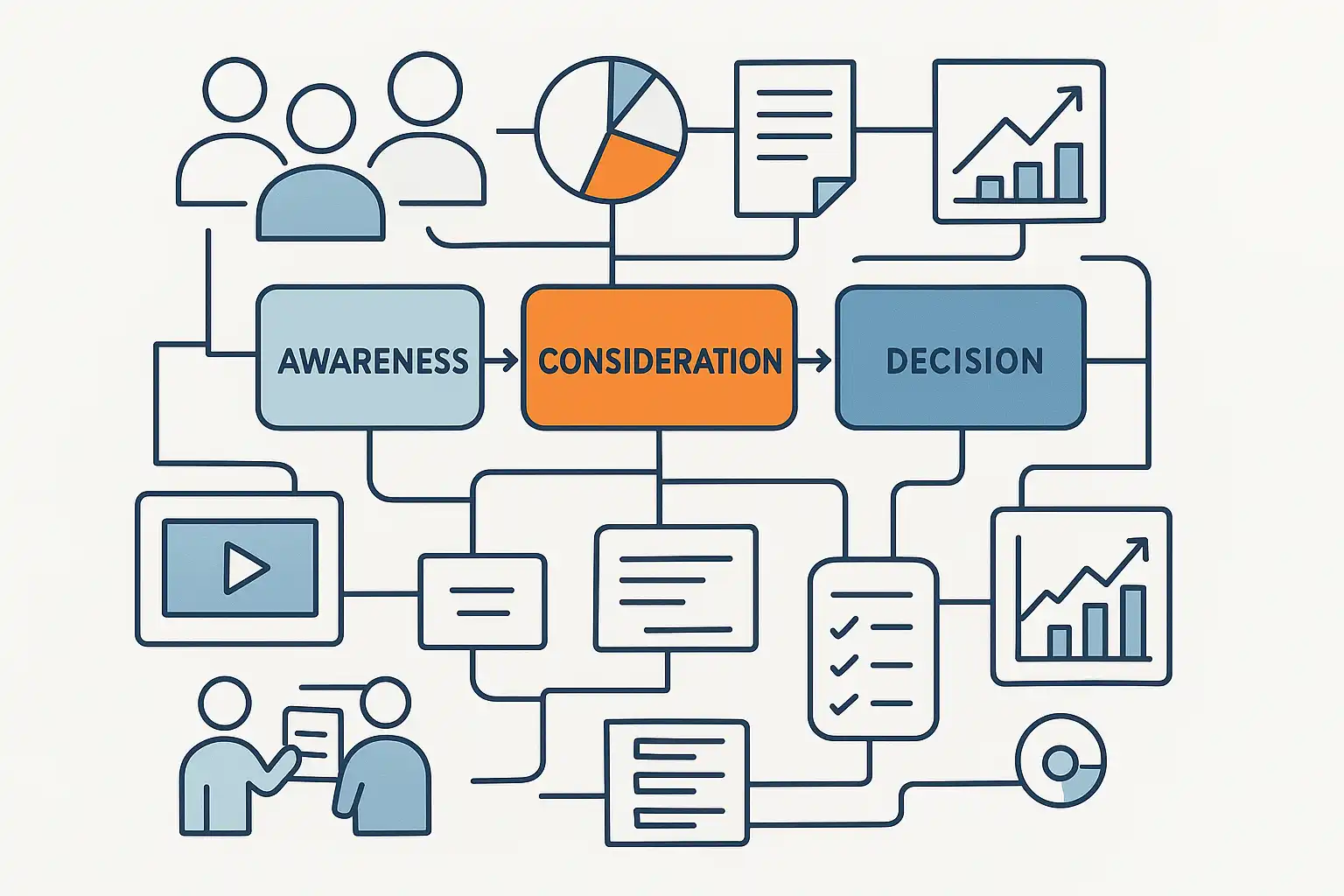
This comprehensive guide outlines a strategic content framework tailored for B2B buying cycles, emphasizing the importance of aligning content with each stage of the buyer’s journey: awareness, consideration, and decision. Effective B2B marketing requires understanding diverse decision-makers—such as technical evaluators, business executives, and end users—and customizing content formats and messaging to address their unique needs. The framework begins with defining target audiences, researching buyer personas, mapping journeys, auditing existing content, and setting measurable objectives. Key content types include educational blogs for awareness, in-depth white papers for consideration, and case studies or ROI tools for decision support. Regular content audits and updates ensure relevance and address gaps, while collaboration between sales and marketing enhances alignment and effectiveness. Success is measured through engagement, lead generation, conversion rates, content performance, and SEO rankings. Common pitfalls like siloed content creation and neglecting stakeholder diversity are addressed with solutions promoting integration and ongoing evaluation. Reviewing the content strategy every six months keeps it adaptive to market and buyer changes. This structured approach enables B2B marketers to deliver targeted, timely content that guides buyers through complex purchasing processes, ultimately driving qualified leads and sales growth.

A practical template for documenting your content strategy: Your essential guide
This comprehensive guide provides a practical template for documenting your content strategy, essential for marketers across all business sizes. It highlights key components such as mission statement, goals, audience personas, content planning, staffing, creation process, distribution, and measurement. A well-structured template ensures clarity, actionability, flexibility, and collaboration, helping teams stay aligned and accountable. Using tools like Google Docs or project management platforms enhances workflow and communication. The guide emphasizes making the template a living document through regular updates, team feedback, and integration with performance reports. It also addresses adapting templates for different industries and team sizes, managing complexity by starting simple, and linking strategy with execution to boost efficiency and consistency. Ultimately, a clear content strategy document streamlines teamwork, accelerates onboarding, maintains messaging consistency, and supports continuous improvement, making it a vital resource for successful content marketing.
Building a Content Strategy for SaaS Startups from Acquisition to Retention
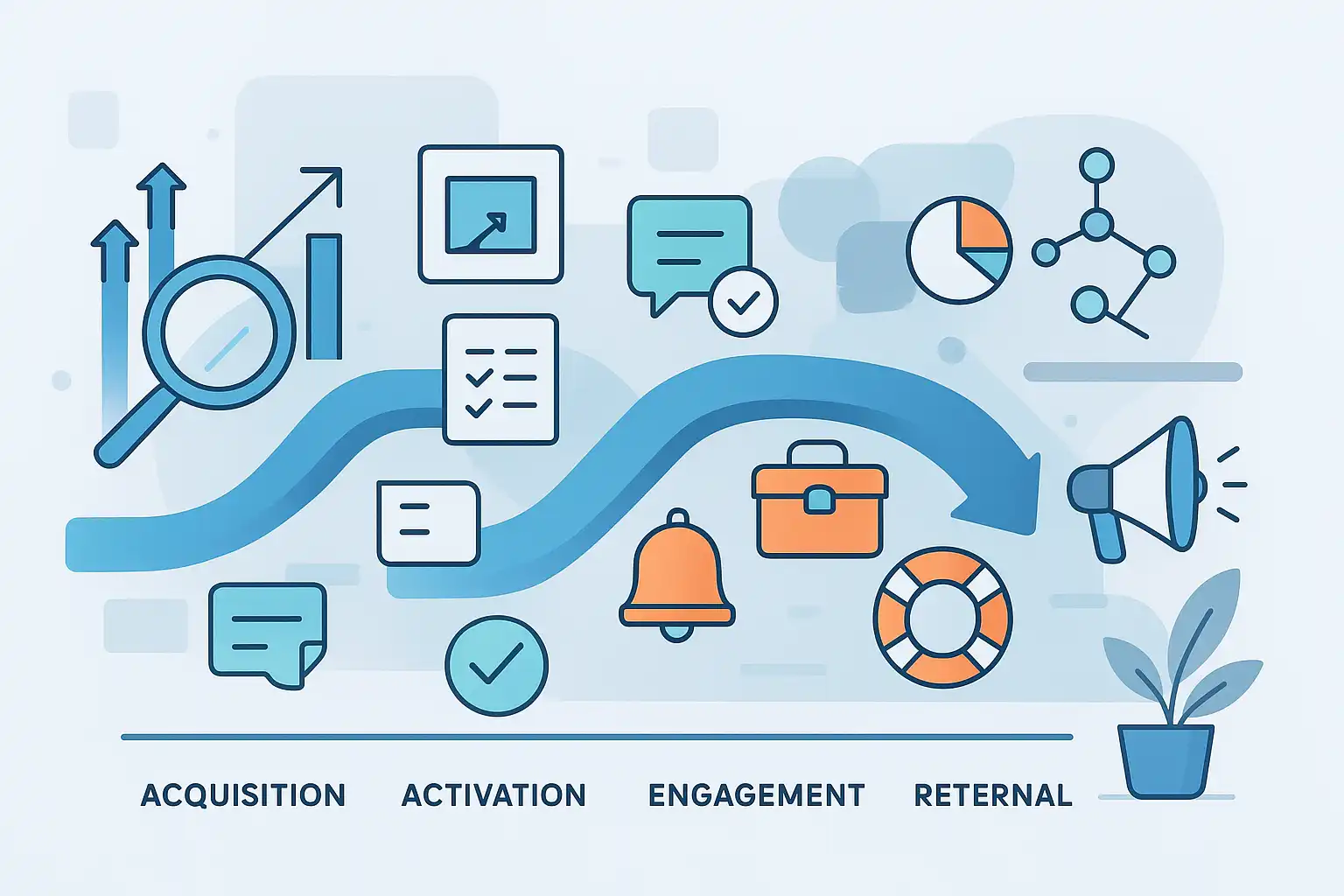
A successful SaaS startup content strategy covers all customer lifecycle stages: Acquisition, Activation, Engagement, Retention, and Referrals. At Acquisition, SEO-driven blog posts, landing pages, and social media build awareness and trust. Activation focuses on onboarding guides and tutorials to help users reach their “aha moment.” Engagement uses webinars, updates, and in-app messages to deepen product use. Retention relies on support resources, personalized offers, and customer stories to reduce churn. Referrals encourage sharing via programs and advocacy content. Tailoring content to each stage ensures users progress smoothly, boosting growth and loyalty. Effective channels include blogs, emails, webinars, videos, knowledge bases, and social media. Measuring success involves tracking metrics like sign-ups, activation rates, churn, and referral rates using tools like Google Analytics and Mixpanel. Common pitfalls include neglecting stages beyond acquisition, unclear goals, and ignoring user feedback. To build a content strategy, define your audience, map journeys, set objectives, plan diverse content, assign roles, and iterate based on data. SaaS teams benefit from tools like Trello, Ahrefs, Mailchimp, and Zendesk to streamline workflows. Regular quarterly reviews keep content aligned with evolving products and user needs, ensuring sustained growth and customer satisfaction.

Content strategy for ecommerce websites: a practical overview
A successful ecommerce content strategy focuses on understanding your audience, conducting keyword research, and delivering diverse, high-quality content that guides shoppers from discovery to purchase. Key content types include blog posts, product guides, customer reviews, videos, FAQs, and comparison charts, all tailored to meet user intent and build trust. Consistent publishing through a content calendar enhances SEO, brand visibility, and customer engagement. Distributing content across multiple channels—such as social media, email, and search engines—maximizes reach. Tracking metrics like organic traffic, bounce rate, conversion rate, and ROI using tools like Google Analytics and SEMrush enables ongoing optimization. SEO best practices include using relevant keywords, optimizing meta tags, ensuring mobile-friendliness, fast loading speeds, and maintaining fresh content. Incorporating social proof through reviews and user-generated content boosts credibility and conversions. Future-proof strategies emphasize AI-powered personalization, video-first content, voice search optimization, sustainability messaging, and omnichannel coordination. Regularly reviewing analytics and adapting your content plan ensures sustained growth and competitiveness in the evolving ecommerce landscape.

Who Owns Content Strategy on a Team and What They Do: Understanding Content Strategy Roles and Responsibilities
Content strategy ownership typically falls to a content strategist who leads planning, creation, distribution, and optimization of content to meet business goals. In smaller teams, this role may be shared among marketers, editors, or founders. Clear ownership ensures coordinated tasks, consistent messaging, and audience-focused outcomes. Core roles include content strategists/managers, creators, SEO specialists, social media managers, and analysts, each contributing to a unified strategy. Effective content strategists define goals, conduct audience research, plan editorial calendars, maintain quality, and track performance using tools like Google Analytics and project management platforms. Ownership models vary—centralized, decentralized, or matrix—each with pros and cons depending on team size and structure. Strong ownership fosters collaboration, reduces confusion, and aligns content with broader company objectives. Key skills for content strategy owners include communication, analytical thinking, project management, creativity, and empathy. Success depends on proactive leadership, regular strategy reviews, and clear reporting of content’s impact on business outcomes. Challenges include role ambiguity and shifting priorities, which require clear documentation and leadership support. Whether centralized or shared, effective content strategy ownership drives team efficiency, content quality, and measurable results.

Key deliverables to expect from a complete content strategy deliverables list
A complete content strategy deliverables list is essential for building a successful digital presence. It includes SMART goals, market and audience research, detailed personas, brand voice guidelines, an editorial calendar, content creation and distribution plans, SEO frameworks, analytics, and user experience guidelines. These elements ensure content aligns with business objectives, enhances engagement, and maintains brand consistency. Audience research is fundamental, providing insights that tailor content to customer needs and preferences. SEO strategies integrated within the deliverables improve search visibility and organic growth by guiding keyword usage, content mapping, and ongoing optimization. An editorial calendar organizes content production and publishing schedules, promoting consistency and flexibility. Clear content production and distribution practices maximize reach and quality across multiple channels. Key metrics like website traffic, engagement, conversion rates, social media growth, and SEO KPIs help measure performance and inform improvements. Common pitfalls include neglecting quality, skipping research, unclear roles, and ignoring SEO or user experience. The deliverables list should be scalable, adapting to business size and evolving needs, with regular reviews to stay relevant. Tools like Google Analytics, Trello, SEMrush, and Ahrefs facilitate management and measurement. Overall, a well-structured, flexible content strategy deliverables list transforms content into a strategic growth engine, driving measurable results and sustained audience connection.

Setting Clear Content Strategy Goals and Objectives You Can Actually Measure
Setting clear, measurable content strategy goals is essential for driving real results rather than just filling space. Effective goals go beyond vague wishes and use specific metrics like traffic, engagement, or conversions with defined timelines and accountability. By understanding your audience, defining precise objectives, selecting relevant metrics, and regularly reviewing progress, teams can align content efforts with broader business objectives. Tools such as Google Analytics, SEMrush, and project management software help track performance and encourage data-driven adjustments. Utilizing the SMART framework—Specific, Measurable, Achievable, Relevant, and Time-bound—ensures goals are actionable and realistic. Collaboration across marketing, sales, and customer service enhances alignment and outcome measurement. Common pitfalls include vague goals, tracking irrelevant metrics, and neglecting regular reviews. A well-maintained content calendar organizes publishing schedules and responsibilities, supporting consistent progress. Regular refinement based on analytics fosters continuous improvement. Clear measurement and reporting demonstrate content’s value to leadership, securing ongoing support and investment. Whether for B2B, SaaS, or e-commerce, focusing on relevant metrics and aligning goals with business priorities drives success. This strategic approach empowers teams to create impactful content that supports growth, engagement, and conversion targets effectively.