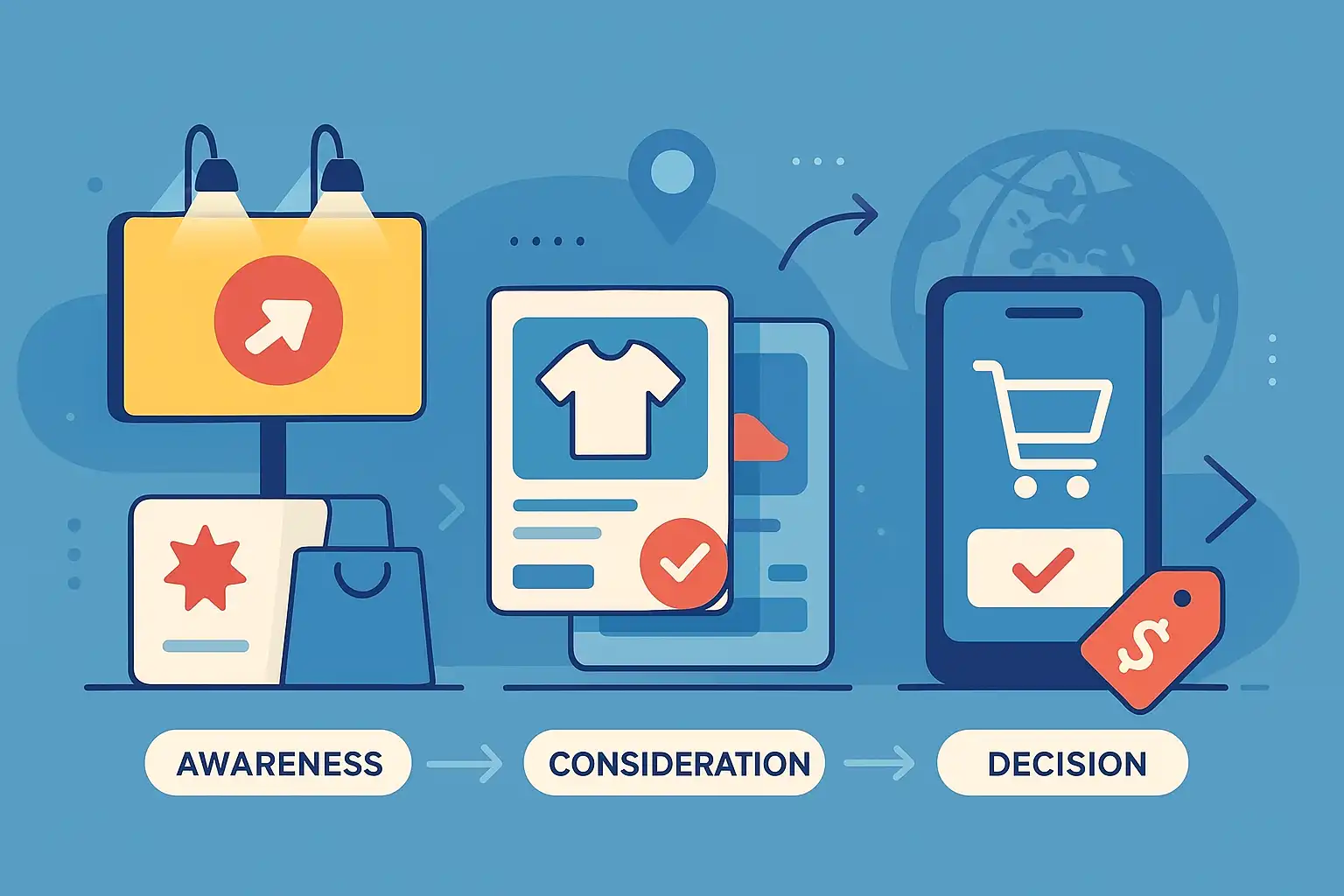
To sell successfully on eBay, creating content for different buyer journeys on eBay is essential. Buyers go through distinct stages before they click “buy,” and each stage needs specific information and motivation. Addressing the unique needs of buyers—whether they’re just browsing or ready to purchase—increases both trust and conversion rates. This article shares practical strategies for tailoring your eBay content, so you can connect with shoppers at each journey stage and boost your sales.
What is the Buyer Journey on eBay and Why Does It Matter?
The buyer journey on eBay describes the path a shopper takes from learning about a product to making a purchase. Understanding this path helps sellers match their listings with what buyers want at each stage. The journey typically includes these stages:
- Awareness: The buyer discovers a need or interest.
- Consideration: The buyer researches options and compares choices.
- Decision: The buyer feels ready to make a purchase.
On eBay, buyers can enter at any of these stages. Some may be casually browsing, while others search with clear intent. If your listings only address one group, you may miss out on other potential buyers. By matching your content to each stage, you help more shoppers find what they need and trust your offer.

How Can Sellers Create Content for Different Buyer Journeys on eBay?
Effective eBay sellers use content tailored to every stage of the journey. For the awareness stage, your goal is to grab attention and introduce your product. In the consideration phase, you must provide clear information that answers common questions and removes doubts. For the decision stage, the content should make it easy and safe for a customer to buy.
Awareness Stage: Getting Noticed
At this beginning stage, buyers may not know exactly what they want. Sellers should focus on visibility and appeal. Listing titles should be clear and use searched keywords. Visuals matter, too—high-quality images and videos increase interest.
- Localized content: Use words, measurements, and references familiar to your target audience. If you’re selling cross-border, adapt your content to local customs or popular trends.
- Brand storytelling: Share a brief story in your listing about what makes your brand or product unique. Storytelling can connect with buyers emotionally and help your product stand out. If you’re looking for inspiration in storytelling, reviewing branded content examples from different markets may offer helpful ideas.
- Multiple channels: Increase exposure by using social media or eBay’s own promoted listings to reach people who are just starting to look.
Consideration Stage: Inform and Persuade
Here, buyers are weighing their options. Your listing must provide details they care about, in a reassuring and engaging way. Focus on the following:
- Rich product descriptions: Go beyond specifications. Share how the product solves a problem or fits a lifestyle. Include usage scenarios, care instructions, or inspiration. This not only informs but also helps the buyer imagine owning and using your product.
- In-depth visuals: Offer multiple images, close-ups, and videos where possible. Show the product in use and from different angles.
- Local language and cultural relevance: Instead of just translating, localize your content. Tailor phrases, references, and tone to your audience’s location. On global marketplaces like eBay, this makes your listing stand out.
- Addressing concerns: Use your description to answer common worries—return policies, shipping times, or how the product compares to alternatives. This builds trust and helps buyers feel secure. For further guidance on mapping your content to specific buyer needs, reviewing comprehensive buyer journey content strategies can make your messaging even more thorough.
Decision Stage: Make Buying Easy
When buyers are ready to purchase, they want confidence and a smooth process. Your content should remove any last barriers:
- Clear pricing and offers: Make prices easy to understand. Consider using “Buy It Now” or bundle pricing to appeal to different shopping preferences.
- Strong calls to action: Simple, direct prompts like “Buy Now” or “Add to Cart” encourage buyers to act. Place them near your product’s key selling points.
- Social proof: Add reviews and feedback from past customers. Positive experiences reassure buyers and show that you’re trustworthy.
- Easy-to-follow steps: Explain what happens after purchase. Outline shipping timelines, payment methods, and how to contact you with questions.
What Content Types Drive Engagement at Each Buyer Journey Stage?
Each journey stage benefits from different kinds of eBay content. Let’s see which types work best and why.
| Stage | Effective Content Types | Purpose |
|---|---|---|
| Awareness | Social media posts, image-rich listings, stories, influencer features | Grab initial attention, introduce product or brand |
| Consideration | Detailed descriptions, videos, FAQs, comparison charts | Inform, persuade, and address concerns |
| Decision | Clear calls-to-action, customer reviews, “Buy It Now”, special offers | Encourage purchase, remove obstacles, build trust |
Incorporating these content types into your eBay strategy can improve relevance for buyers at every stage. For evolving platforms like Shopify, exploring buyer journey content tips can offer fresh ideas for boosting user engagement across digital storefronts.
Optimizing Listings for eBay’s Search and Buyer Intent
Writing journey-specific content does more than connect with real shoppers. It also strengthens your eBay SEO. When your listing addresses buyer intent—using clear keywords, natural language, and detailed descriptions—your products appear higher in search results. This leads to more clicks, better engagement, and increased sales. Additionally, eBay’s algorithm rewards listings that perform well with buyers, so optimizing your content can boost your rank over time.
Localization: Connecting With Cross-Border Buyers
For sellers targeting global markets, localizing content is crucial. Don’t just translate—adapt your offers, shipping methods, and descriptions to fit cultural preferences. For example, highlight local payment methods or tailor holiday messages for specific countries. This approach builds trust and signals to international buyers that you understand their needs, making them more likely to choose you.

How Can You Measure and Improve Content Effectiveness At Each Stage?
Tracking buyer behavior lets you see where your content is working—and where it needs improvement. Watch for these key signals:
- Impressions and clicks: High impressions but low clicks signal your listing might not be catching attention. Improve titles or thumbnails.
- Time on listing: If buyers leave quickly, enhance your description and images to be more engaging.
- Add to cart but no purchase: Check your pricing, shipping, and reviews. Address any hesitations directly in your content.
- Repeat questions: If customers often ask the same things, update your FAQ or description for clarity.
Keep refining your approach by testing new headlines, images, or calls to action. Over time, your understanding of what works will grow, leading to higher conversions and better reviews.
FAQ
How does journey-specific content on eBay improve my SEO and sales?
When your eBay listings match buyer needs at each stage of the journey, they attract more targeted traffic. This increases click-through and conversion rates—signals that eBay’s search algorithm values. The result is higher visibility in buyer searches, more engagement, and frequent sales.
What’s the difference between translation and localization for global sales?
Translation changes words from one language to another. Localization adapts your message, images, and even product offers to the local culture. For cross-border success on eBay, localization means using popular payment methods, references, and even holidays that match the buyer’s location, ensuring your content feels familiar and trustworthy.
Can I repurpose my eBay content for other marketplaces?
Absolutely. Well-crafted content tailored to buyer journeys can be adapted for other platforms, such as Shopify or Amazon. However, you should always adjust the content to reflect each site’s style and buyer behaviors for the best engagement.
How often should I review or update my eBay listings?
It’s best to review listings regularly—at least every few months or after major seasonal shifts. Watch for changes in buyer questions, trends, or competitor offers. Regular updates keep your content fresh, relevant, and appealing to eBay’s diverse shoppers.

Related Posts