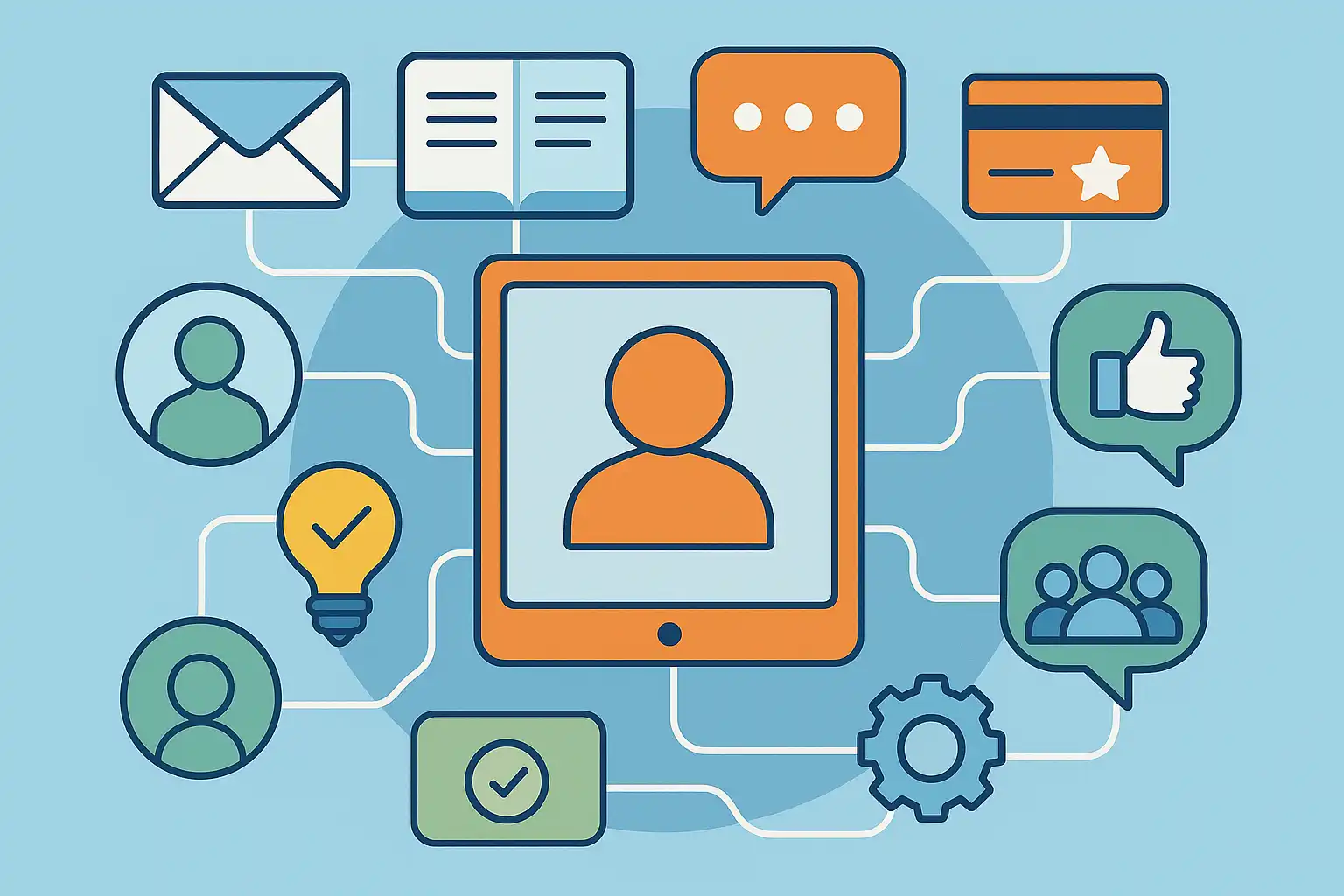
If you want to keep your customers coming back, a strong content strategy for customer retention is one of the most powerful tools at your disposal. The right approach builds trust, deepens loyalty, and reduces churn — not just through what you sell, but through how you communicate, educate, and engage at every stage of the customer journey.
In this guide, you’ll discover the most effective tactics, content types, personalization strategies, and metrics that drive real retention results.
What are the most effective content tactics for customer retention?
Effective customer retention content combines personalization, proactive engagement, and continuous education. The goal is to turn buyers into loyal fans who stay for the long haul. Here’s what works in practice:
- Personalize communication: Use data to address customers by name, recognize their preferences, and offer solutions that fit their specific needs.
- Educate and empower: Create guides, tutorials, and webinars that help users succeed. HubSpot, for example, shares step-by-step articles so customers extract maximum value from their platform.
- Engage proactively: Send helpful tips, updates, or reminders before a user runs into problems. Proactive content prevents avoidable frustration.
- Share success stories: Highlight real-world customer wins. Authentic stories reassure existing users they made the right choice and inspire continued loyalty.
- Request feedback: Regularly ask for customer opinions via surveys or interactive content. This signals that you care and opens the door for two-way communication.
- Loyalty rewards: Announce special perks, membership programs, or milestone gifts through personalized content. Starbucks, for example, uses its app to deliver tailored rewards and content updates to returning customers.
- Build community: Encourage discussion forums, user groups, or social media communities. This fosters connection beyond transactions.
- Transparent updates: Keep customers informed about new features, fixes, or roadmap changes. Consistent transparency builds trust.
Many leading brands rely on these methods because they work. For more practical ideas, our guide to customer retention marketing tips walks through onboarding guides, educational articles, and other tactics that help users realize value quickly and reduce early churn.
What types of content work best for keeping customers loyal?
Not all content is equal when it comes to retention. The most effective formats include:
- Educational resources (tutorials, setup guides, troubleshooting articles) — help customers get full value from your product, reducing frustration and early churn.
- Newsletters and product updates — keep customers informed on new features and can be tailored to their preferences and lifecycle stage.
- User-generated content (UGC) — reviews, testimonials, and customer stories build social proof and community. Brands like Apple and LEGO regularly feature customer projects, creating belonging and reinforcing product value.
- Webinars and Q&A sessions — interactive formats that deepen engagement and address real questions.
- Exclusive content — sneak peeks, early access, or special guides for returning customers make them feel valued.
- Quick-answer resources — FAQs, knowledge bases, and chatbots help customers resolve issues independently and fast.
Mixing formats and testing which ones your audience responds to most is key. What works for a SaaS company may differ from what works for an e-commerce brand.
How does personalized content improve customer loyalty?
Personalization is a game-changer in retention strategy. When customers receive messages tailored to their interests, needs, or previous behavior, they pay more attention — and they feel genuinely valued.
Studies show that 71% of consumers expect personalized interactions and 76% get frustrated when they don’t get them, according to McKinsey research. Here’s why this matters:
- Personalization creates relevance. Customers receive information that fits their situation, so they’re more likely to read and act on it.
- It addresses individual pain points, making customers feel their concerns are understood.
- It turns a transactional relationship into a partnership. Amazon’s product recommendations and Spotify’s custom playlists are prime examples — both keep users coming back because the experience feels built for them.
Platforms like HubSpot and Mailchimp enable you to segment your audience by purchase history, location, or interests and send tailored versions of your communications. Over time, this builds the familiarity and trust that are essential to retention.
Why is educational content vital for reducing churn?
No one likes feeling lost after a purchase. Educational content — setup guides, how-to videos, troubleshooting tips — gives customers the confidence to fully use your product. When people can solve small issues themselves, they’re far less likely to give up and turn to a competitor.
Brands like Microsoft invest heavily in knowledge bases and community forums so customers always have answers at their fingertips. This reduces pressure on customer service teams and keeps satisfaction high.
In the long run, teaching your customers is an investment that pays off in loyalty and positive word-of-mouth. According to Bain & Company research, increasing customer retention by just 5% can boost profits by 25% to 95% — making churn reduction one of the highest-leverage activities a business can invest in.
How can user-generated content strengthen your retention strategy?
UGC gives customers a voice — and that voice matters. When you highlight reviews, testimonials, or customer photos, you nurture stronger connection. People appreciate being recognized, and prospective buyers trust peer opinions more than brand messaging.
Setting up a system for customers to submit their stories, participate in challenges, or engage through a branded hashtag helps foster community. Over time, a vibrant customer community becomes your strongest retention asset — it makes leaving feel like leaving a group they genuinely care about.
For further inspiration, browsing a library of real customer retention examples can help identify what works in your industry.
How to build a strong customer retention content strategy — step by step
- Map the customer journey. Identify key moments — onboarding, first use, renewal, support interactions — where content can make a meaningful difference.
- Segment your audience. Group customers by needs, experience level, or lifecycle stage so you can match the right content to each person.
- Choose the right content types. Mix formats: how-to guides, videos, newsletters, user stories. Think about which medium best fits each message and channel.
- Personalize at every step. Use names, preferences, and behavioral data to tailor communications.
- Know your channels. Choose where your audience likes to engage — email, social media, in-app messages, community forums, or SMS.
- Automate wisely. Schedule onboarding sequences, check-ins, and reminders — but keep a human touch for complex or sensitive situations. For a deeper look at how to plan these touchpoints, see our breakdown of customer retention campaign ideas.
- Collect and act on feedback. Ask for input after major interactions, update your content regularly, and let customers see their feedback in action.
- Measure success. Track repeat purchase rate, churn, email engagement, and customer satisfaction scores. Use this data to continuously improve.
Which metrics help you measure retention content success?
Tracking the right numbers shows you what your content is actually achieving:
- Email open and click rates — High open rates signal your subject lines and timing are right. Click rates show whether your message motivates action.
- Churn rate — If fewer customers are leaving over time, your retention content is working. Track monthly or quarterly for meaningful trends.
- Repeat purchase rate — A direct indicator of loyalty and product satisfaction.
- Customer satisfaction scores (CSAT/NPS) — Surveys and support ticket data reveal whether your educational content is actually helping.
- User engagement — Comments, social shares, and community participation signal an active, invested customer base.
If numbers drop in any area, dig deeper. Maybe your content needs to be more relevant, more timely, or delivered through a different channel. Regular testing and listening to customers is key.
Common mistakes to avoid with retention content
- Too much automation: Relying only on auto-responders removes the human touch. Customers know when a message isn’t authentic.
- Irrelevant messaging: Content that doesn’t match the customer’s needs causes frustration or unsubscribes.
- Neglecting feedback: If you ask for input but don’t act on it, customers feel ignored.
- Inconsistent delivery: Only communicating during promotions weakens trust and makes your brand feel transactional.
- Overwhelming complexity: Confusing jargon or long instructions make customers feel lost instead of supported.
Focus on clarity, relevance, and timeliness in every interaction.
FAQ
What content formats work best for retaining customers?
Diverse formats tend to work best. Videos and webinars are engaging and easy to follow. Step-by-step guides, FAQs, and how-to articles address specific needs. Newsletters keep communication regular. Test different formats and focus on those your users respond to most.
How often should I send retention-focused content?
The ideal frequency depends on your product. Generally, reach out after key moments — sign-up, first use, purchase, or renewal. Monthly or biweekly newsletters are common. Avoid overwhelming your audience; prioritize relevance and value over sheer frequency.
Can small businesses benefit from customer retention content?
Absolutely. Retaining existing customers is almost always more cost-effective than constantly acquiring new ones. Small businesses can start with simple email sequences, personalized messages, or a knowledge base. Over time, scaling up to more sophisticated content strategies pays off in loyalty and growth.
How can I measure the impact of my retention content?
Track repeat purchase rates, subscription renewals, email engagement, and customer satisfaction scores. Review trends over time to see what’s working and where you can improve. Listening to feedback and adjusting your approach is essential for ongoing success.
What’s the difference between retention content and acquisition content?
Acquisition content is designed to attract new visitors and convert them into customers. Retention content is aimed at existing customers — it focuses on education, engagement, loyalty, and community to keep them coming back. Both matter, but retention content often delivers higher ROI because the relationship is already established.

Related Posts