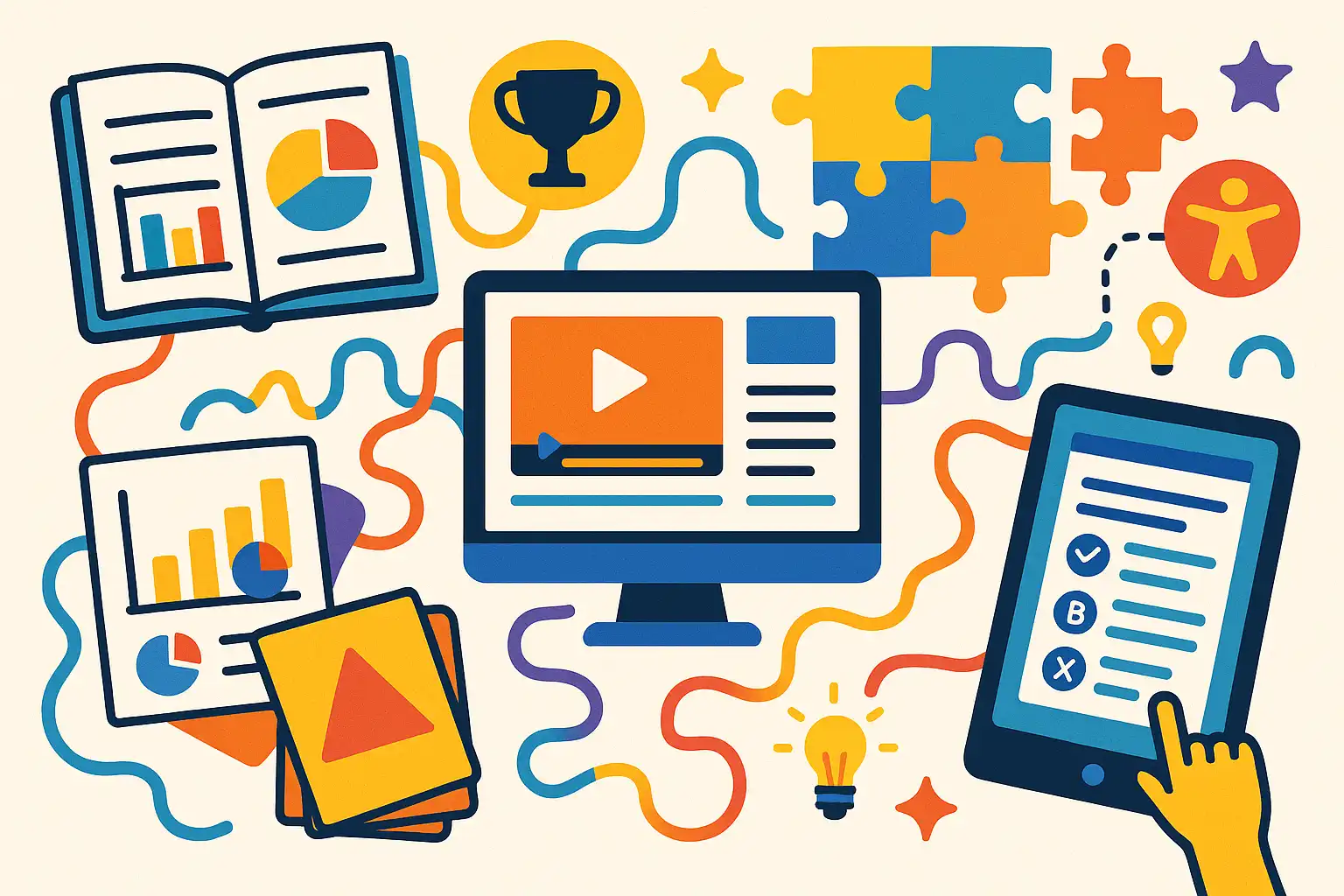
If you have ever wondered, “what is educational content?”—you are not alone. Educational content is any material created with the purpose of helping people learn. It goes far beyond simply sharing information. Its core goal is to guide learners towards gaining new skills, knowledge, attitudes, or abilities, all tied closely to clear learning objectives. Whether you are a teacher, student, business, or lifelong learner, understanding what educational content is, why it matters, and how to create it can open up powerful possibilities for growth and engagement.
In this detailed guide, we will explain exactly what educational content is, provide examples across formats and platforms, and offer practical ideas for creating your own engaging educational resources. Along the way, we will answer common questions, share actionable tips, and highlight tools and trends shaping the future of digital learning.
What defines educational content and how is it different from regular online materials?
At its simplest, educational content means material designed to support learning in a structured way. This could include knowledge, instructions, steps, skills, values, attitudes, or abilities—anything that helps a learner achieve specific goals. But what truly sets educational content apart from other online materials is intentionality. Unlike generic blog posts, entertainment videos, or social media updates, educational content is purpose-built to align with distinct learning objectives.
For example, a standard news article shares information, while a lesson plan or how-to guide is created with the learner’s progress in mind. Key features that distinguish educational content include:
- Clear objectives: Every piece is designed to help achieve certain learning goals.
- Learner focus: Modern approaches put the needs and backgrounds of the learner at the center.
- Structured organization: Content is arranged for logical progression and effective understanding.
- Assessment and feedback: Often includes ways to check knowledge, offer feedback, or encourage reflection.
- Adaptability and interactivity: Many resources now use technology to adjust the material to each learner’s pace and style.
Educational content can be found everywhere—from school textbooks and online courses to YouTube tutorials, company training modules, and even social media infographics. The unifying factor is their role as a foundation for meaningful, effective learning. For those interested in advanced applications, exploring smart content repurposing examples can demonstrate how educational materials can be adapted for multiple learning needs.
What are the main types and formats of educational content?
Educational content comes in many shapes and sizes. Each format caters to different learning preferences, attention spans, and goals. Here are some of the most effective examples of educational content formats:
- Educational magazines and articles: These offer in-depth features, visuals, and analysis on specific subjects. They are ideal for learners seeking broad context or current affairs related to academic themes.
- How-to guides and tutorials: Step-by-step instructions are perfect for skill-building, whether it is fixing a device, writing an essay, or learning to code.
- Infographics: Visual content that simplifies complex concepts or data in a glance. Infographics are popular on social media and in classrooms.
- Video lessons: From short clips to full lectures, video is engaging, accessible, and suits visual and auditory learners. Platforms like YouTube, Coursera, and Khan Academy are full of video educational content.
- Interactive quizzes and puzzles: These support active learning and critical thinking. Quizzes offer instant feedback, while puzzles make learning fun and memorable.
- Current events articles: Relating academic ideas to recent news helps learners see real-world relevance.
- Kid-friendly news: Articles that explain complex topics simply for younger audiences, often with illustrations or storytelling elements.
- Podcasts and audio lessons: Great for auditory learners or learning on the go.
- Gamified resources: Educational games, simulations, or apps that turn learning into a motivating experience.
- Virtual reality (VR) and augmented reality (AR) modules: Immersive formats allow learners to explore environments and scenarios not easily accessible in real life.
Creators now use a mix of formats, often blending text, video, interactivity, and assessment in a single resource. The right mix depends on the audience, goals, and context. For marketers and educators looking to create memorable experiences, reviewing inspiring branded content examples can reveal approaches that engage and educate at the same time.

How can you generate innovative educational content ideas that work?
Coming up with fresh and effective educational content ideas is crucial, especially given the diversity of learners and rapid changes in technology. Here are some proven strategies that can help:
- Start with clear objectives: Define what you want your learners to achieve—be as specific as possible.
- Ask questions: Use open-ended questions to spark curiosity and guide content creation, such as, “How does this work?” or “Why is this important?”
- Keep content concise and focused: Avoid overload. Break information into manageable steps or modules.
- Encourage interaction: Add quizzes, discussion prompts, simulations, or real-world challenges.
- Make it relevant: Use examples from learners’ lives, local contexts, or current events whenever possible.
- Embrace multimedia: Integrate visuals, audio, and animation to support different learning styles.
- Ensure accessibility: Design your materials so that everyone, including those with disabilities, can use them. This might include captions, audio descriptions, or easy-to-read layouts.
- Use technology wisely: Analytics tools can show what works and what needs improvement. AI-powered adaptivity can personalize content to each user’s needs.
- Keep updating: Educational content should evolve with new information, feedback, and learner needs.
For social learning and community engagement, exploring UGC campaign ideas to build trust can help foster a sense of belonging and motivation among learners.
What are the benefits of digital educational content?
Digital educational content has transformed how we learn, teach, and share knowledge. Compared to traditional print materials, digital resources offer several advantages:
- Accessibility: Learning materials can be accessed anytime, anywhere, on multiple devices.
- Flexibility: Learners can study at their own pace, repeat lessons, or skip ahead as needed.
- Up-to-date information: Digital content is easy to revise, ensuring learners always have the latest knowledge.
- Interactivity: Features like quizzes, games, and forums enhance engagement and retention.
- Personalization: Adaptive technologies adjust content to match each individual’s progress or style.
- Cost-effectiveness: Once created, digital content can be distributed widely at low cost, benefiting more learners.
- Data and feedback: Analytics can track learning progress and highlight areas for improvement.
For organizations seeking to demonstrate expertise and credibility, reviewing English thought leadership content examples can illuminate ways to create educational resources that position brands as trusted authorities.
Adaptive learning content strategies
Adaptive learning uses smart algorithms to personalize educational content for each learner. Instead of a one-size-fits-all approach, the material changes based on users’ responses, strengths, and gaps. This might look like extra practice where a learner struggles, or more advanced topics once foundational skills are mastered. Adaptive tools are now common on major learning platforms, making digital education more effective and inclusive.
Engaging online educational resources
Engagement is critical for learning success. The most engaging educational resources share several characteristics:
- Interactive elements like quizzes, flashcards, or live Q&A.
- Appealing visuals and layout that simplify complex information.
- Relevance to real-life situations or current trends.
- Opportunities for collaboration or peer feedback.
- Motivational features, such as progress bars, badges, or challenges.
Whether for schools, universities, or corporate training, online educational resources can spark curiosity and drive meaningful results when thoughtfully designed.

How can brands, teachers, and creators ensure their educational content is effective?
Success in educational content creation does not rely only on knowledge. It requires aligning each resource with the audience’s needs and the objectives set. Here are some ideas to boost effectiveness:
- Know your audience: Research their ages, backgrounds, motivations, and challenges. Tailor content tone and complexity accordingly.
- Focus on outcomes: Every lesson, video, or module should lead to a practical skill, new understanding, or measurable change.
- Use assessment: Include checkpoints, quizzes, or reflection exercises to help learners track progress.
- Gather feedback: Encourage learners to share thoughts on what works well or needs improvement, and adjust based on their input.
- Emphasize accessibility and inclusion: Make sure everyone can participate fully, regardless of ability or background.
- Promote active participation: Invite questions, discussion, or hands-on projects to deepen learning.
- Keep it updated: Regularly refresh materials to reflect new knowledge or changing circumstances.
FAQ: Common Questions About Educational Content
What are some innovative ideas for educational content creation?
Great ideas often begin with the learner’s experience. Try using scenario-based learning, real-world case studies, interactive simulations, or gamified challenges. Mixing multimedia—like video, infographics, and podcasts—keeps material fresh and accessible. Collaborating with learners to create content or using community-driven projects can also boost motivation and ownership.
How do I choose the best educational content format for my audience?
Consider your audience’s age, preferences, and needs. Visual learners might prefer infographics and videos, while others may engage better with written guides or podcasts. For mixed groups, offer content in multiple formats. Experiment, collect feedback, and adjust as you learn what resonates most.
Is adaptive learning content only for advanced learners?
No, adaptive content benefits all learners. It helps by personalizing lessons—providing extra practice for beginners or accelerating advanced learners. Adaptive technologies are increasingly user-friendly and available across many subjects and levels.
Can educational content be used for marketing or branding?
Absolutely. Many brands use educational content to build credibility and trust with their audience. By teaching, answering questions, or solving problems, organizations become valued resources. Educational content marketing is especially effective in complex industries, as it helps customers understand and appreciate what the brand offers.

Related Posts