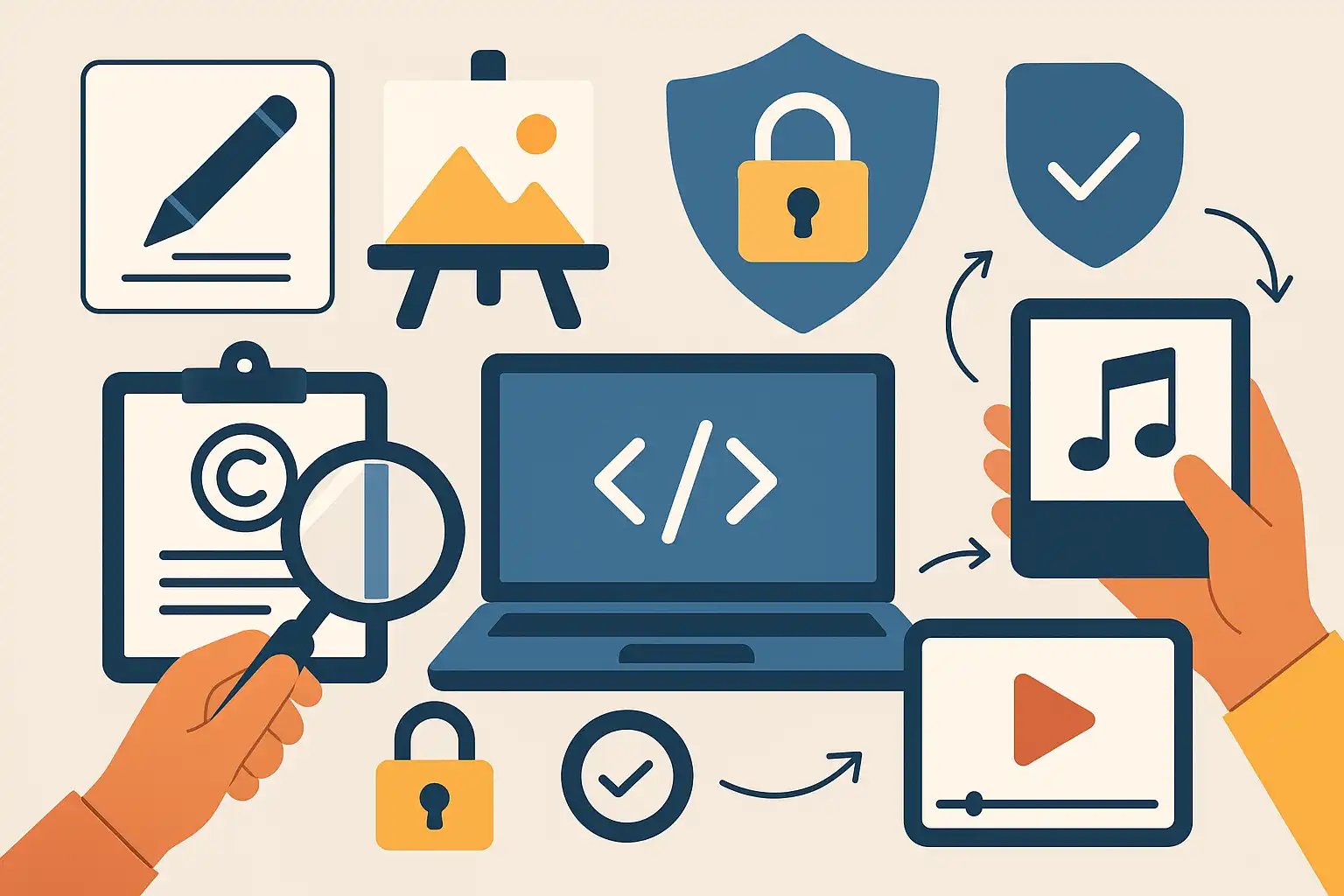
If you are new to creating online content, you may wonder how to avoid copyright problems and possible legal trouble. Understanding the essentials of content copyright and legal tips for beginners helps you protect your work and respect others’ rights. In this guide, you’ll learn what copyright means, why it matters, and how to safely use and share text, images, videos, and music online.
What is content copyright and why should beginners care?
Copyright is a set of legal protections for original works, like writing, photos, art, music, and videos. The moment you create something unique and record it—whether it’s a blog post, a drawing, or a song—you own the copyright. This gives you control over how your work is used, shared, or adapted. For beginners, it is vital to know that using someone else’s content without permission can lead to copyright claims, take-down requests, or even lawsuits.
Unlike patents or trademarks, copyright happens automatically. You do not have to register your work, but doing so can give you extra legal support if a dispute arises. In most countries, copyright usually lasts for your lifetime plus 70 years after your death. Treaties like the Berne Convention make sure works are protected internationally in many countries.
What does copyright protect?
- Written works (like blog posts, articles, and stories)
- Images and illustrations
- Videos and films
- Music and sound recordings
- Software and code
It’s important to remember that copyright does not cover ideas, facts, or methods—only the specific way they are expressed.
How can beginners use images, text, or media legally?
To stay on the safe side, always create your own content when possible. If you want to use someone else’s work, follow these steps:
- Check the source: Make sure you know where the content came from and who owns it.
- Look for licenses: Some works are released with licenses that allow reuse—like Creative Commons. Each license has its own rules, so always read them.
- Ask for permission: If you’re not sure, seek written permission from the creator or copyright holder.
- Use public domain or royalty-free materials: Public domain works have no copyright, and royalty-free resources let you pay (or not) for legal use. Examples include Unsplash for images and Pixabay for music.
- Attribute when required: Some licenses or creators require you to credit them appropriately. Failing to do so could still lead to problems.
- Understand fair use: In some cases, you can use small portions of works for things like commentary, criticism, or education. However, fair use laws are complex and depend on your country.
When working on an SEO strategy, understanding the content gap analysis importance helps you create original material that avoids accidental copyright overlap.
Common types of content licenses
- All rights reserved: You cannot use, share, or adapt the work without permission.
- Creative Commons: Lets you use content in specific ways; there are several versions (e.g., allow sharing but not altering).
- Public domain: No copyright exists; free to use by anyone.
- Royalty-free: You pay once (or sometimes nothing) and can use the material according to the terms.
What should you do if you receive a copyright infringement notice?
Receiving a copyright claim or notice can be stressful for any beginner. Here’s how to handle it step by step:
- Read the notice carefully: Make sure you understand what content is in question and who is making the claim.
- Check your use: Review whether you actually used copyrighted material, and if so, whether your use might fall under exceptions like fair use or a license.
- Respond promptly: If you made a mistake, immediately remove or change the content as requested. This can help avoid legal escalation.
- Keep records: Save copies of all emails and actions you take in response to the notice.
- Consult resources: The United States Copyright Office, professional legal advice, or informational sites like STOPfakes.gov can help you understand your rights and next steps.
Avoid ignoring such notices, as this can make the situation worse. Always approach these matters calmly and responsibly.
What are the basic principles of content copyright for beginners?
Start by knowing these essentials:
- Copyright protects the particular way ideas are expressed, not ideas themselves.
- All original content fixed in a “tangible form” (like a written file, audio, or image) is automatically protected.
- Registration is optional but may be helpful for legal proof and extra protection.
- Exclusive rights belong to the creator, including the right to copy, share, modify, or sell their work.
- Some exceptions exist, such as fair use for criticism, education, news, or research, but these rules are strict and vary by location.
- There is no single worldwide copyright—international protection depends on treaties between countries.
What are the risks of ignoring copyright law?
Beginners sometimes think no one will notice if they “borrow” a photo or quote. But even small uses can trigger copyright infringement, leading to:
- Removal of your website or social media content
- Monetization loss (such as demonetized YouTube videos)
- Legal action or payment of damages
- Damage to your reputation online
It’s safer to stay well within legal boundaries from the start. This practice also builds credibility and trust with your audience.
How can you protect your own content as a beginner?
New creators often worry about having their work copied or stolen. Here are easy ways to help safeguard your original content:
- Keep clear records: Save drafts, timestamps, and copies to show when and how you created your work.
- Watermark images or videos: This adds a visible mark to show ownership.
- Add copyright notices: A simple line like “© 2024 Your Name” helps signal your rights.
- Register with copyright offices: In some countries, you can register your work for extra legal advantages.
- Monitor for misuse: Tools like Google Reverse Image Search or Copyscape can help find unauthorized copies of your work online.
If you find your work used unfairly, reach out politely first to request removal or credit. If needed, you can submit a Digital Millennium Copyright Act (DMCA) takedown notice to the hosting platform.
FAQ: Content Copyright and Legal Tips for Beginners
Do I need to register my content to have copyright protection?
No. Your work is protected as soon as it is created and recorded in a fixed way. Registration is not required, but it can help if you need to prove your rights in court or claim damages.
Can I use anything labeled “free to use” without checking?
Not always. Some sites mark content as “free,” but there can be restrictions. Always look for an actual license agreement and read it carefully to know what is allowed. When in doubt, ask for clarification or choose content from trusted sources.
How can I legally share quotes or small parts of someone else’s work?
Quoting is possible under certain conditions: use short excerpts, add your own commentary, and always credit the source. This is often permitted as “fair use,” especially for reviews, research, and education, but be careful not to use more than necessary.
What happens if I ignore a copyright infringement notice?
If you ignore it, you risk legal action and may have your content removed by web hosts or social media platforms. It’s better to act quickly—review the claim, make changes if needed, and reply to the notice politely to resolve the issue.
Understanding content copyright and legal tips for beginners is crucial for every content creator. By following best practices, seeking permissions, and respecting the rights of others, you can confidently create, share, and grow your work online while building a trustworthy reputation.

Related Posts