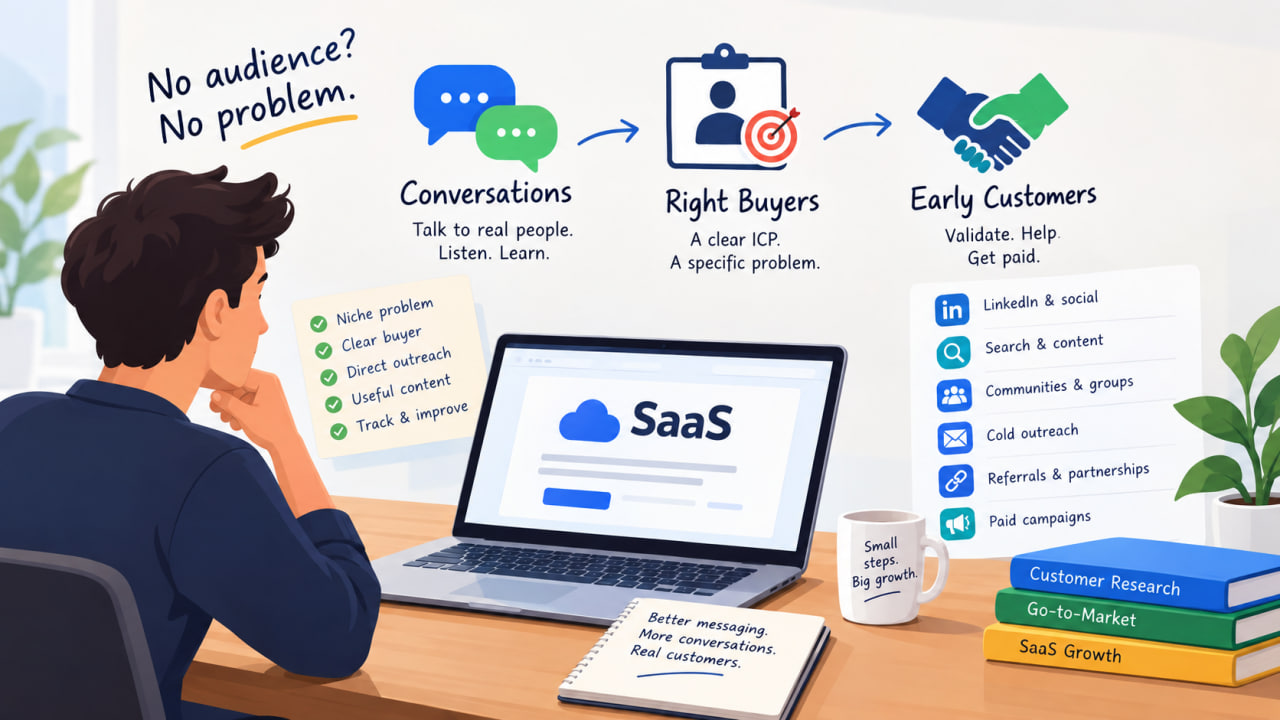
For most early-stage teams, the answer to SEO vs cold outreach for startups is not “pick one forever.” Start with the channel that gives you the fastest useful learning, then build a lighter version of the other channel beside it. If you need customer conversations, revenue signals, and positioning feedback now, begin with cold outreach. If people already search for the problem you solve and you can publish useful answers consistently, begin investing in SEO early. The best sequence depends on your market, sales cycle, budget, and founder capacity.
Cold outreach creates direct conversations with people you believe may have a problem. SEO creates content and pages that help interested people find you through search. One is usually faster. The other can become more durable. A startup that understands this difference can avoid wasting months on content nobody needs or sending messages to prospects who are not a fit.
Why This Is Not a False Choice
Founders often frame this decision as inbound versus outbound. That framing makes the choice feel larger than it is. In reality, outreach can teach you which topics deserve SEO investment, while SEO can make later outreach more credible. A useful article, customer story, comparison page, or calculator gives sales messages a stronger reason to start a conversation.
Think about the two channels as different learning engines. Outreach tells you whether a named buyer will reply, book a call, and pay. Search content tells you whether a wider audience is looking for a specific question or solution. Both can reveal gaps in your positioning, but they move at different speeds and require different kinds of work.
A founder selling a high-value B2B product usually needs direct customer contact early. A founder building a self-serve tool in a known category may benefit from SEO sooner. However, neither rule is absolute. Your job is to match the first move to the evidence you need most.
How Do SEO and Cold Outreach Differ?
SEO creates discoverable assets
SEO, or search engine optimization, improves your chances of appearing when people search on Google or ask AI search tools questions. It includes researching topics, creating useful pages, improving site structure, earning relevant mentions, and making pages easy to understand. Good SEO content can continue attracting visitors after publication, especially when it answers a durable question clearly.
The tradeoff is time. Search engines need to crawl, evaluate, and trust new pages. Competition can also be intense. In fact, Ahrefs research on ranking timelines found that only 1.74% of one million newly published URLs reached Google’s top 10 within one year, which explains why SEO rarely solves an immediate pipeline problem for a brand-new startup.
SEO works best when your audience has clear search intent. They may search for a problem, a workflow, a category, a comparison, or a template. It also works when you can add a genuinely better angle. That might mean clearer examples, original customer insight, better product education, or a page designed for a specific industry.
Outreach creates conversations
Cold outreach means contacting people who have not asked to hear from you. This can include cold email, LinkedIn messages, partner introductions, founder-led calls, and carefully selected community outreach. The goal is not to send huge volumes of generic messages. The goal is to begin relevant conversations with people who have a plausible reason to care.
Outreach is fast because it puts your idea in front of real buyers immediately. You can learn whether your problem statement feels accurate, whether your offer is understandable, and who actually makes the buying decision. Those lessons can change your homepage, pricing, onboarding, and content plan within days.
Still, fast does not mean easy. Hunter’s analysis of 11 million cold emails reported an average campaign reply rate of 4.1% in 2024, so even thoughtful campaigns require enough qualified prospects and steady testing to create a reliable pipeline.
Compare the Channels Before Choosing
The comparison below helps founders decide which channel should receive the first focused block of effort. It does not declare a permanent winner. Instead, it shows what each channel is built to do well during the earliest stages of growth.
| Factor | SEO | Cold outreach |
|---|---|---|
| Speed of feedback | Usually slower | Usually faster |
| Compounding value | High when content ranks | Lower without repeatable systems |
| Best for | Existing search demand | Specific high-fit buyers |
| Cash cost | Content, tools, and time | Data, tools, and time |
| Sales model | Self-serve or educated buyers | Complex or higher-ACV sales |
| Early learning | Topics and intent | Objections and buying triggers |
After reviewing the matrix, consider PlanMoon if you want a practical bridge between both approaches. It is designed for founders who should not have to choose one channel forever, helping research high-fit prospects and tailored outreach while building SEO and GEO content that can compound. The aim is to make early experiments more connected, not to claim that one channel always wins.
For example, an AI SEO & GEO tool can support topic research and content planning while your founder-led sales work reveals the words customers actually use. When outreach calls reveal repeated objections, those objections can become articles, landing pages, and comparison content.
When Should a Startup Start With Cold Outreach?
Start with cold outreach when you need direct evidence before investing heavily in marketing assets. This is common when the product is new, the buyer is hard to identify, or the price is high enough that a few customers can materially change the business. Outreach is also useful when search demand is weak because buyers do not yet know the category name.
Cold outreach should probably come first if your startup has several of these conditions:
- You sell to a narrow list of companies, roles, or industries.
- Your annual contract value is large enough to justify personal selling.
- You need to validate pain points, pricing, or product positioning.
- Your category is new and few people search for it directly.
- You can identify buying triggers, such as hiring, funding, or expansion.
- You have a founder who can run discovery calls and follow up quickly.
Do not confuse targeted outreach with spam. Build a small list first. Review every company and contact. Explain why you chose them, connect your message to a visible business context, and make a modest request. A good first email often asks whether the problem is relevant, rather than pushing for a full product demonstration immediately.
Suppose you sell compliance software for logistics teams. Search traffic may take time because prospects use many different terms. However, you can identify companies operating in regulated regions, research their workflows, and contact the right operations leaders. Ten meaningful calls may teach you more than ten broad blog posts written before you understand the market.
If prospect research is the bottleneck, tools that help you find potential customers can reduce manual work while keeping the final targeting decision human. Relevance still matters more than volume, especially when your brand is new and every message shapes market perception.
When Should You Start With SEO?
Start with SEO earlier when customers already search for the problem and your product can meet that intent without a long sales process. It is especially useful for software, templates, marketplaces, education products, and tools with a broad addressable audience. In these cases, useful content can create a steady path from question to trial.
SEO should move closer to the front of your plan when these signs are present:
- Prospects use consistent language to describe the problem.
- Search results show active demand but weak or outdated content.
- Your product solves recurring questions that can be explained publicly.
- Users can sign up, evaluate, or buy without many sales meetings.
- You can publish consistently for several months without neglecting customers.
- Your team can update content as products, competitors, and search behavior change.
Early SEO does not require publishing dozens of shallow articles. Begin with pages close to product value. Create a clear homepage, a focused solution page, an honest comparison page, and a handful of guides based on real customer questions. Each page should help someone make a decision, not merely attract a click.
For B2B founders, a useful next step is to study how to get your first B2B SaaS customers while documenting the questions prospects ask repeatedly. Those questions reveal content opportunities with stronger commercial intent than broad, generic traffic topics.

How Can You Run Both Without Spreading Thin?
Many startups should run a lightweight version of both channels. The key is to avoid treating each channel as a separate department. Use outreach to collect language, objections, and use cases. Then use that information to improve your site and create one useful piece of content each week. Use content insights to make outreach more relevant.
A simple operating model works well. Spend most early growth time on the urgent channel, usually outreach, and reserve a smaller fixed block for compounding work. For example, a founder might spend three days weekly on prospecting, calls, and follow-up, then use one day to turn customer questions into site improvements or articles.
This approach protects focus. It also prevents a common startup mistake: stopping SEO completely because results are slow, then rebuilding from zero later. Small, consistent content work creates a foundation. Meanwhile, direct outreach gives you the feedback needed to make that foundation more accurate.
A Practical Ninety Day Sequence
A ninety-day plan gives you enough time to compare signal quality without pretending either channel delivers instant certainty. Adapt the pace to your product and available team, but keep the feedback loop short.
- During the first month, define your ideal customer, build a small prospect list, and run founder-led outreach.
- Record every objection, question, trigger, and phrase prospects use during calls, emails, and demonstrations.
- During the second month, improve core product pages using those insights and publish two to four high-intent resources.
- Test several outreach messages, but change one major element at a time so results remain understandable.
- During the third month, review qualified conversations, conversion paths, search impressions, and content engagement together.
- Increase investment in the channel producing the strongest qualified opportunities, not merely the most activity.
The point is not to force equal effort. It is to create a repeatable relationship between customer learning and discoverability. If outreach produces strong meetings but SEO gets no impressions, keep SEO narrow. If helpful pages begin attracting relevant visitors, build more around the winning topic cluster.
Measure Learning, Not Just Leads
Leads matter, but early-stage metrics need context. A hundred website visitors with no clear intent may be less valuable than three conversations with buyers who explain their budget and urgency. Likewise, a campaign with few replies can still be useful if it reveals that your target segment, message, or offer needs adjustment.
Track outreach through positive replies, meetings, qualified opportunities, conversion to paid pilots, and recurring objections. Track SEO through impressions, relevant clicks, email signups, trials, assisted conversions, and the quality of questions visitors bring to calls. Review both weekly, then make one clear improvement at a time.
Market maturity matters too. In established categories, SEO may capture demand efficiently because buyers know what to search for. In emerging categories, direct education may be necessary before demand becomes visible. Your channel choice should reflect buyer awareness, not simply advice copied from another startup.

Frequent Questions About SEO vs Cold Outreach for Startups
Is cold outreach cheaper than SEO for a new startup?
Cold outreach can cost less in cash at first, especially when founders handle research and messaging. However, it consumes focused time and requires consistent follow-up. SEO may require content production, technical support, and patience. Compare the real cost of founder hours, tools, and delayed learning before deciding.
Can SEO generate customers before a startup has traction?
Yes, but it is more likely when demand already exists and your pages answer high-intent questions better than current results. Early traction also improves SEO because customer conversations reveal useful topics. Start small with pages tied closely to your product, rather than trying to cover an entire industry.
How many prospects should a cold outreach campaign include?
There is no universal number because list quality, deal size, and reply rates vary. Begin with a manageable segment of carefully selected prospects. Send enough messages to identify patterns, then refine targeting and positioning. Expanding a poor message to thousands of people only creates more noise and weakens trust.
What is the best long-term approach for early-stage founders?
Use outreach to create immediate learning and early opportunities, then turn validated customer language into focused SEO and GEO content. As your site earns visibility, let inbound demand reduce dependence on manual prospecting. The strongest strategy is usually a sequence: direct conversations first when needed, followed by durable discoverability.

Related Posts